President Donald Trump indicated a potential opening for a deal with Iran amid ongoing nuclear negotiations, while Iraq welcomed Ali al-Zaidi as its new Prime Minister, signaling a shift in regional dynamics and domestic leadership.
Key Highlights:
- President Trump suggested Iran is amenable to reaching an agreement.
- Nuclear talks with Iran are continuing amidst this new diplomatic overture.
- Ali al-Zaidi has officially assumed office as the Prime Minister of Iraq.
- The transition in Iraq marks a significant development in the nation’s political landscape.
Shifting Sands: Iran Talks and Iraqi Leadership Transitions
The international stage is witnessing a delicate dance of diplomacy and domestic change, with President Donald Trump making a notable statement suggesting Iran’s “interest in reaching an agreement” amidst protracted nuclear talks. This remark, delivered against a backdrop of complex negotiations aimed at curbing Tehran’s nuclear program, injects a new layer of possibility into a long-standing geopolitical challenge. Simultaneously, in the heart of the Middle East, Iraq has officially welcomed Ali al-Zaidi to its highest executive office, as he assumed his duties as the nation’s new Prime Minister. This dual focus on Iran’s nuclear ambitions and Iraq’s internal political restructuring highlights the intricate web of international relations and regional stability.
The Nuances of Iran’s Nuclear Diplomacy
The Trump administration’s approach to Iran has been characterized by a strategy of “maximum pressure,” which included withdrawing the United States from the Joint Comprehensive Plan of Action (JCPOA) in 2018 and reimposing stringent sanctions. Despite this, President Trump’s recent comments suggest a potential recalibration or at least an acknowledgment of a diplomatic pathway. The remarks could be interpreted in several ways: as a genuine signal of potential progress, a tactical maneuver to influence ongoing negotiations, or an attempt to manage domestic and international perceptions of the administration’s foreign policy. The specifics of any proposed agreement remain opaque, but the mere suggestion of Iran’s willingness to negotiate is a significant development, given the history of stalled talks and mutual distrust. The international community, particularly signatories to the original JCPOA, will be closely monitoring any concrete steps or proposals that emerge from these discussions.
Iraq’s New Dawn Under Prime Minister al-Zaidi
In parallel, the leadership transition in Iraq represents a pivotal moment for the war-torn nation. Ali al-Zaidi’s official assumption of the Prime Minister’s office follows a period of political maneuvering and public anticipation. His appointment is seen by many as an opportunity for Iraq to chart a new course, addressing pressing domestic issues such as economic reconstruction, security, and the provision of essential services. The new Prime Minister faces the formidable task of unifying a diverse political landscape and fostering stability in a region still grappling with the lingering effects of conflict and external interference. His administration’s priorities and its ability to navigate the complex socio-political currents within Iraq will be crucial for the nation’s future prosperity and security. The international community, including the United States, will be watching closely to see how al-Zaidi’s government engages with regional powers and international partners.
Interconnected Regional Dynamics

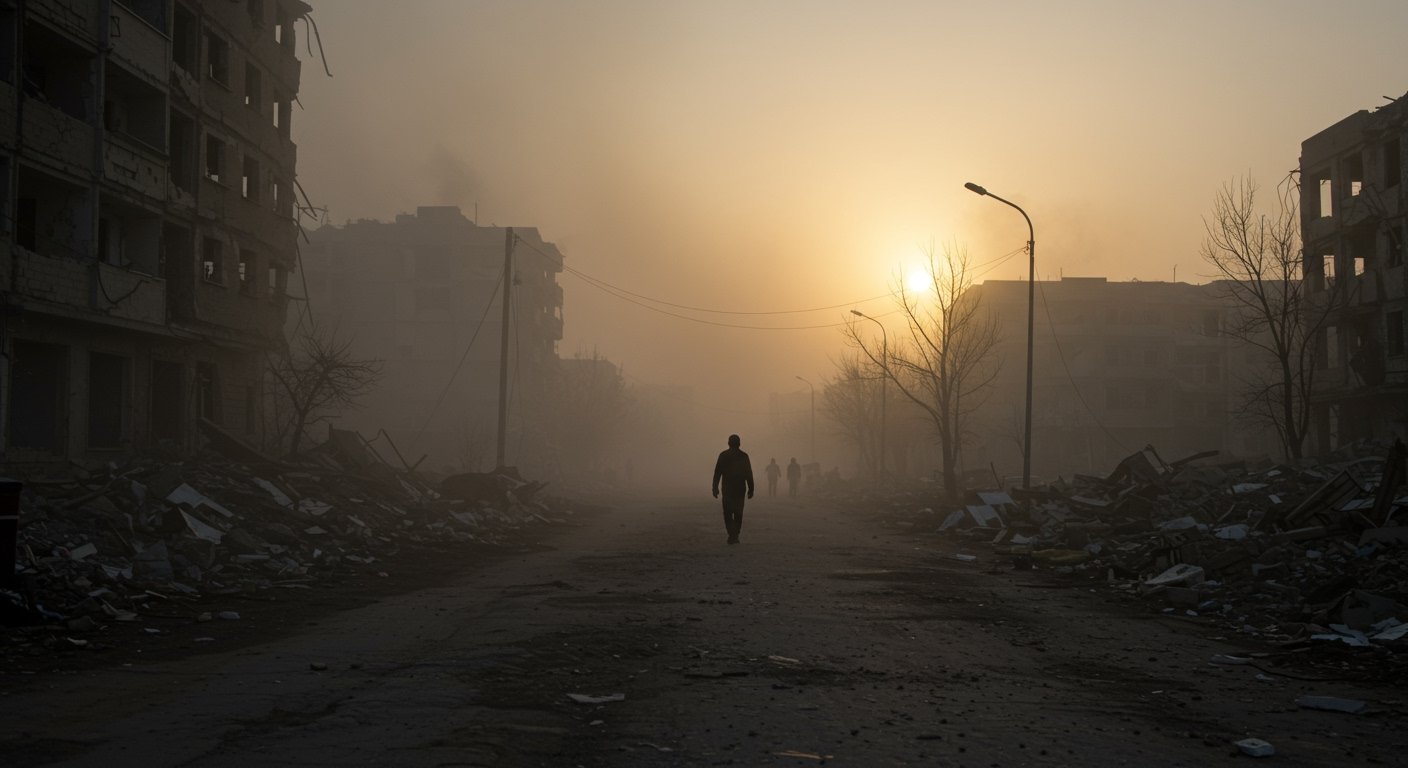


The developments concerning Iran and Iraq are not isolated events but are intrinsically linked to the broader geopolitical landscape of the Middle East. The stability of Iraq is of significant concern to its neighbors, including Iran, which has considerable influence within Iraq’s political and security spheres. Any progress or impasse in the Iran nuclear talks could have ripple effects on regional security dynamics, potentially influencing the posture of various actors in the Middle East. Conversely, a stable and effectively governed Iraq could serve as a moderating influence in regional affairs. The new Prime Minister’s foreign policy approach, particularly his engagement with Iran and other regional players, will be a key determinant of Iraq’s role in the coming years.
Historical Context of US-Iran Relations
The current nuclear talks and the potential for an agreement are situated within a decades-long history of complex and often adversarial relations between the United States and Iran. This history includes the 1953 coup, the 1979 Islamic Revolution, the Iran hostage crisis, and more recently, the aforementioned withdrawal from the JCPOA. Understanding this historical context is crucial for interpreting the current diplomatic overtures and the deep-seated mistrust that often characterizes interactions between the two nations. Each side brings a legacy of perceived grievances and strategic imperatives to the negotiating table, making any potential resolution a testament to intricate diplomacy and compromise.
Economic Implications of Sanctions and Agreements
The economic impact of US sanctions on Iran has been profound, significantly affecting its oil exports, financial transactions, and overall economic growth. A comprehensive agreement that leads to the lifting of sanctions could provide a substantial boost to Iran’s economy, potentially reintegrating it into the global financial system. For Iraq, the economic implications of its internal stability and regional engagement are equally critical. A stable Iraq can attract foreign investment, rebuild its infrastructure, and diversify its economy away from its heavy reliance on oil revenues. The economic policies of Prime Minister al-Zaidi’s government will be closely scrutinized for their potential to foster sustainable growth and improve the living standards of the Iraqi people.
Future Outlook: Navigating Uncertainty
The path forward for both Iran’s nuclear program and Iraq’s political future is fraught with uncertainty. In the case of Iran, the success of any agreement will depend on the willingness of all parties to adhere to its terms and the ability to build lasting trust. For Iraq, the challenge lies in consolidating political stability, addressing internal divisions, and fostering economic development. The interplay between these two critical developments will undoubtedly shape the geopolitical contours of the Middle East for years to come, presenting both opportunities and risks for regional and global security.
FAQ: People Also Ask
What is the Joint Comprehensive Plan of Action (JCPOA)?
The JCPOA, commonly known as the Iran nuclear deal, is an agreement reached in 2015 between Iran and the P5+1 countries (the United States, United Kingdom, France, China, Russia, and Germany) plus the European Union. It aimed to limit Iran’s nuclear program in exchange for sanctions relief. The US withdrew from the deal in 2018.
Who is Ali al-Zaidi, Iraq’s new Prime Minister?
Ali al-Zaidi is the newly appointed Prime Minister of Iraq. His selection comes after a period of political transition and aims to bring stability and effective governance to the country. Details about his specific background and policy platform are emerging as he assumes his duties.
What are the primary concerns regarding Iran’s nuclear program?
The international community’s primary concerns revolve around Iran’s potential to develop nuclear weapons. The JCPOA was designed to prevent this by imposing strict limitations on Iran’s uranium enrichment capabilities and other nuclear activities, with robust inspection mechanisms.
How does Iraq’s internal stability affect regional dynamics?
Iraq’s stability is crucial for the entire Middle East. A fractured or unstable Iraq can become a breeding ground for extremist groups, create refugee crises, and become a theater for proxy conflicts involving regional powers like Iran and Saudi Arabia. Conversely, a stable Iraq can act as a bridge between different regional blocs.
What are the potential consequences of a renewed Iran nuclear deal?
A successful renewed deal could lead to significant sanctions relief for Iran, potentially revitalizing its economy and altering its international relations. It could also de-escalate regional tensions and provide a more predictable framework for nuclear non-proliferation in the Middle East. However, challenges remain regarding verification and the scope of any new agreement.