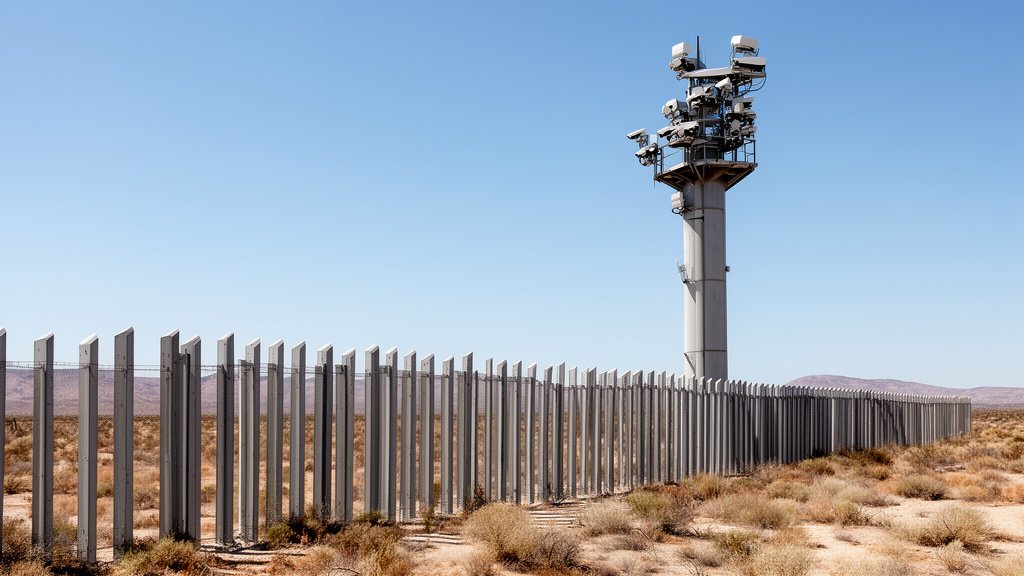
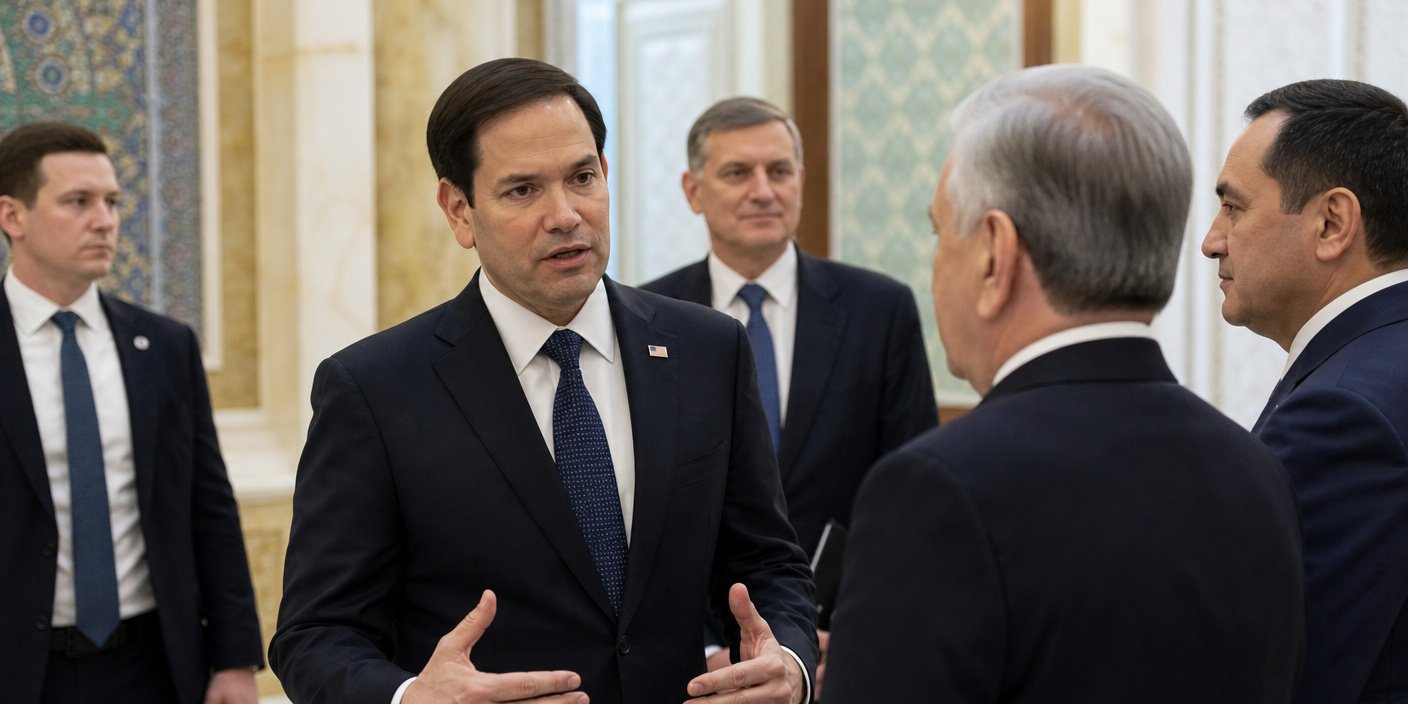
President Donald Trump has officially confirmed that United States military forces have executed a series of ‘large and powerful’ strikes against Iranian targets, marking a significant escalation in tensions between Washington and Tehran. The military action, localized near the strategically vital Strait of Hormuz, serves as a direct response to recent provocations, specifically an attempted mining of the strait and a deadly missile strike on a U.S. military base in Jordan. As the kinetic military operation unfolds, the administration is simultaneously doubling down on a comprehensive strategy of economic isolation intended to degrade Tehran’s capability to project power across the Middle East.
Key Highlights
- Military Retaliation: U.S. forces successfully targeted Iranian positions near the Strait of Hormuz following aggressive actions against American assets.
- Strategic Justification: The strikes were explicitly launched in retaliation for a missile attack on a U.S. base in Jordan and documented attempts to mine the critical Strait of Hormuz shipping lane.
- Dual-Track Policy: The administration is operating under a two-pronged strategy: applying immediate, powerful military force while enforcing long-term, systemic economic isolation to stifle regime capabilities.
Escalation and Response: The Strategy of Deterrence
The current military posture represents a departure from containment, shifting toward active, retaliatory deterrence. The authorization of strikes near the Strait of Hormuz is particularly significant, as this waterway functions as the world’s most important oil chokepoint. According to military analysis, by targeting the infrastructure capable of disrupting this transit, the U.S. is signaling a zero-tolerance policy for interference with global energy supplies. The strike on the U.S. base in Jordan—an attack that resulted in U.S. casualties—appears to have been the final catalyst for this decisive military action.
The Strait of Hormuz: A Global Chokepoint
Central to this conflict is the Strait of Hormuz. Through this narrow passage, roughly 20% of the world’s petroleum consumption flows daily. Any attempt by regional actors to mine the strait or impede navigation is viewed by the international community, and specifically the U.S. Department of Defense, as an act of economic warfare. The recent retaliatory strikes were designed not only to degrade the specific launch capabilities utilized by Iranian forces but also to serve as a demonstrative act of force, proving that the U.S. maintains the capacity to strike precisely and overwhelmingly, regardless of the geographic complexity of the region.
Analyzing the Economic Isolation Strategy




While the kinetic strikes have garnered immediate headlines, the long-term strategic pillar of this policy is economic isolation. The administration is pursuing an aggressive campaign to sever Iran’s access to global financial markets. By systematically targeting the sources of revenue that fund regional proxy operations, the U.S. aims to force a structural change in Iranian behavior. This involves a mix of secondary sanctions, the freezing of overseas assets, and intense pressure on international banking institutions to cease transactions with entities linked to the Iranian security apparatus.
Analysts note that this economic warfare strategy is designed to create a cumulative effect. By limiting the regime’s access to hard currency, the administration seeks to neutralize the capability of state-backed militias to operate across borders. Unlike sporadic trade restrictions, this is a calculated effort to create an untenable fiscal environment, forcing the regime to choose between continued external adventurism and domestic economic stability.
Examining the Military Doctrine
From a military perspective, the strikes utilize the doctrine of proportional, yet overwhelming, force. The goal is to maximize the cost of aggression for the opponent while minimizing the risk of a full-scale conventional war. By targeting specific military infrastructure involved in the missile attack on the Jordan base, the U.S. is sending an unambiguous message: strikes on U.S. personnel will meet immediate and significant kinetic consequences. This approach relies on precise intelligence, ensuring that the targets destroyed are essential to the adversary’s offensive capabilities, rather than engaging in broad, indiscriminate conflict.
FAQ: People Also Ask
Q: What is the primary objective of the US strikes near the Strait of Hormuz?
A: The primary objective is to re-establish deterrence. By striking the infrastructure used for mining the strait and attacking U.S. assets, the U.S. aims to protect the free flow of global energy supplies and ensure the safety of American personnel stationed in the region, specifically following the attack in Jordan.
Q: How does the economic isolation strategy differ from previous sanctions?
A: Unlike past sanctions that often focused on specific industries, the current strategy emphasizes systemic isolation—pushing to cut off the regime’s entire banking and trade network. It is designed to degrade the financial ability of the state to fund proxy operations and missile programs.
Q: Could these military actions lead to a broader conflict?
A: The administration frames these strikes as specific, retaliatory, and defensive in nature. The goal is to impose a high cost for aggression, theoretically preventing escalation by demonstrating overwhelming military readiness and resolve.
Q: Why is the Strait of Hormuz considered so critical to this situation?
A: The Strait of Hormuz is a vital global energy chokepoint. Controlling or threatening this area gives the regime leverage over global oil prices and, by extension, the global economy. Protecting this waterway is a top priority for U.S. national security and international stability.