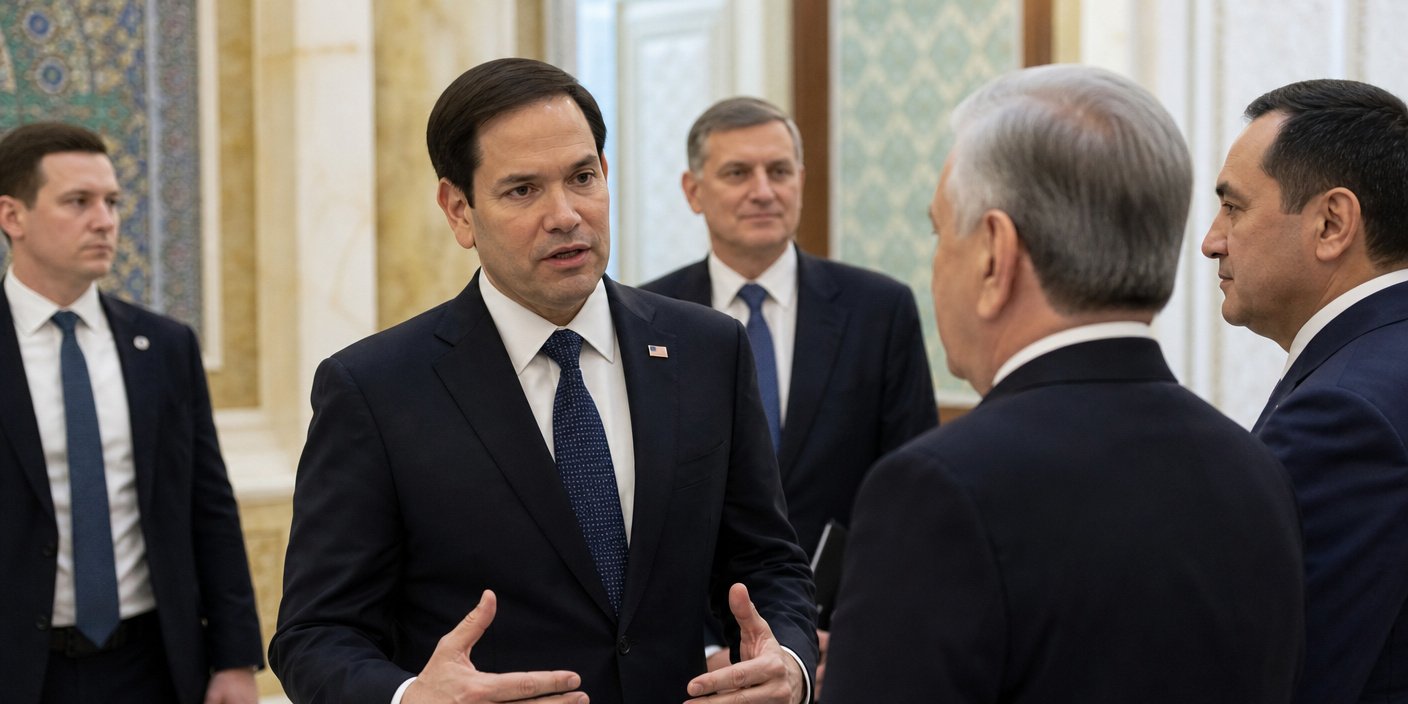
U.S. Secretary of State Marco Rubio met with India’s External Affairs Minister Subrahmanyam Jaishankar in Mumbai on October 20, 2026. This high-level dialogue in India’s financial capital serves as the culmination of months of behind-the-scenes negotiations, aimed at bridging regulatory gaps and establishing a framework for a comprehensive trade agreement that promises to reshape the economic landscape of both nations. The meeting underscores a deepening strategic alignment between Washington and New Delhi, shifting the focus from mere diplomatic discourse to tangible economic integration.
Key Highlights:
- Strategic Meeting: U.S. Secretary of State Marco Rubio and External Affairs Minister Subrahmanyam Jaishankar held critical discussions in Mumbai on October 20, 2026.
- Trade Finalization: The primary objective of the session was to iron out the final details of a major trade agreement designed to boost bilateral commerce.
- Economic Partnership: The deal is expected to streamline supply chains, enhance technology transfer, and solidify the partnership in critical and emerging sectors.
Cementing the Strategic Economic Bridge
The meeting between Secretary Rubio and Minister Jaishankar in Mumbai represents more than just a diplomatic visit; it marks a decisive acceleration in the U.S.-India economic trajectory. By choosing Mumbai—the nerve center of India’s commercial operations—the two leaders signaled that the priority for this administration is private sector growth and regulatory harmonization.
The iCET Framework and Beyond



At the core of the discussions is the Initiative on Critical and Emerging Technology (iCET). While previous agreements have focused on defense and energy, this proposed trade deal seeks to lower the barriers for cross-border investment in sectors like artificial intelligence, quantum computing, and space exploration. By addressing tariff structures that have historically hindered American firms from entering the Indian market, and vice-versa, the agreement aims to foster a more seamless digital ecosystem. The focus is on establishing a mutual recognition of standards, which would dramatically reduce the time-to-market for tech products manufactured in India for global distribution.
Supply Chain Resilience and Diversification
One of the secondary angles being explored by analysts is the broader geopolitical strategy of “friend-shoring.” With global supply chains increasingly fragile, both the U.S. and India are looking to reduce dependency on over-concentrated manufacturing hubs. This trade agreement is widely viewed as a mechanism to incentivize American corporations to relocate critical manufacturing—specifically semiconductors and pharmaceutical APIs—to India. During the Mumbai talks, both delegations acknowledged that while policy-level incentives are necessary, long-term success will require infrastructure development and regulatory stability. The trade deal is intended to serve as a bedrock for this stability, offering companies the long-term guarantees needed to justify massive capital expenditure in the Indian market.
Historical Context: The Long Road to Alignment
Historically, the U.S.-India trade relationship has been characterized by “cautious engagement.” Decades of protectionist policies on both sides—ranging from India’s emphasis on domestic market control to American regulatory hurdles—have prevented the bilateral trade volume from reaching its full potential. However, the current geopolitical environment has catalyzed a shift. The 2026 talks indicate a departure from the tit-for-tat tariff disputes of the previous decade. By tackling systemic issues such as intellectual property rights and data localization requirements, this deal seeks to move past the transactional friction that has long defined the relationship. The meeting in Mumbai is a testament to the political will on both sides to prioritize long-term economic resilience over short-term protectionist gains.
Future Predictions: What Comes Next?
Assuming the final signatures are applied in the coming months, the impact will be immediate. Financial markets are already pricing in a rise in bilateral investment flows. Looking ahead, experts predict that this trade deal could serve as the foundation for a much larger, multilateral framework involving other regional partners in the Indo-Pacific. This would create a cohesive economic bloc capable of balancing regional challenges while ensuring that technological standards remain aligned with democratic values. The Mumbai meeting is not the finish line; it is the starting point for a deeper, more integrated economic architecture.
FAQ: People Also Ask
Q: Why was the meeting held in Mumbai instead of New Delhi?
A: Mumbai is India’s financial and commercial capital, home to the Reserve Bank of India and major corporate headquarters. Holding the meeting there emphasizes that the primary goal of the talks is economic and private-sector focused.
Q: What is the biggest hurdle to this trade deal?
A: The main challenges historically involve intellectual property rights, data localization requirements in India, and market access for U.S. agricultural products. Negotiators have been working to find a compromise that satisfies domestic industry concerns in both nations.
Q: How does this deal affect U.S. tech companies?
A: The agreement is expected to lower regulatory barriers for U.S. tech firms, making it easier to integrate Indian manufacturing and engineering talent into their global value chains, particularly in semiconductors and software development.
Q: Is this a free trade agreement (FTA)?
A: While not a traditional, full-spectrum FTA, it is a comprehensive trade pact designed to achieve similar objectives regarding tariff reduction and regulatory alignment in key strategic sectors.