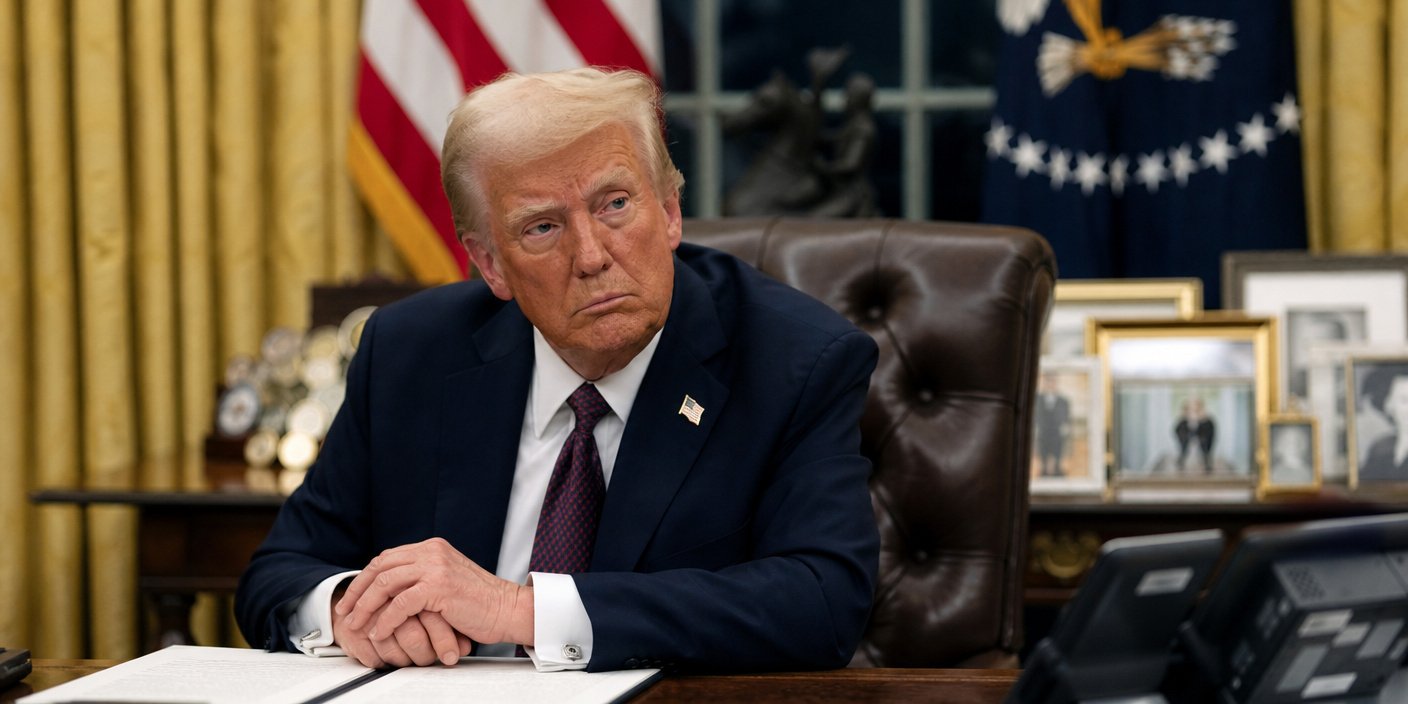
In a pointed public statement, former United States President Donald Trump has sharply criticized the newly launched political entity reportedly founded by tech entrepreneur Elon Musk. The party, referred to as the “America Party,” has emerged amid apparent disagreements between Musk and the former president.
Former President Trump’s Reaction
Speaking on the development, Mr. Trump did not mince words. He publicly mocked the formation of the “America Party,” describing the initiative as “ridiculous.” The former president went further, commenting that he views the creation of such a party as something that would be beneficial for “chaos” within the political landscape. His remarks underscore a potential rift between two of the nation’s most prominent and often controversial figures.
The specific context and platform of the “America Party,” as reportedly launched by Mr. Musk, remain under close scrutiny. However, the stated reason for its formation, according to available reports, stems from disagreements Mr. Musk reportedly had with former President Trump. This suggests a potential divergence in political philosophy, strategy, or personal dynamics between the billionaire entrepreneur and the former head of state, leading to Musk’s reported decision to pursue an independent political path.
The Emergence of the ‘America Party’
Elon Musk, widely known as the CEO of Tesla and SpaceX and the owner of X (formerly Twitter), is a figure whose influence extends far beyond the technology and business sectors. His ventures have reshaped industries, and his public commentary on social and political matters often garners significant attention. The prospect of a figure with Musk’s profile and resources establishing a new political party is, in itself, a development of considerable interest.
The concept of a third party in American politics is not new, but successful long-term third parties have been historically rare. The political system is heavily structured around the two major parties, the Democratic and Republican parties. Third parties often face significant hurdles, including ballot access laws, fundraising challenges, limited media coverage, and the challenge of overcoming voters’ ingrained allegiances. However, a party potentially backed by a figure of Musk’s wealth and public recognition could theoretically mitigate some of these traditional barriers, though the scale of the challenge remains immense.
The name itself, “America Party,” evokes broad nationalistic sentiment, a theme that has resonated strongly in recent political cycles, particularly within segments of the electorate that supported former President Trump. The choice of name could be seen as an attempt to appeal to a wide base, potentially seeking to capture voters disillusioned with both established parties. However, without a clearly defined platform or organizational structure publicly detailed beyond its reported existence, the party’s specific ideology, goals, and target demographic remain subjects of speculation.
Analyzing Trump’s ‘Chaos’ Remark
Former President Trump’s characterization of the “America Party” as “ridiculous” and beneficial for “chaos” provides insight into his perspective on challenges to the existing political order, particularly from figures who might draw support from his own base or who he perceives as rivals. The term “chaos” in this political context often refers to the disruption of established power structures, potential vote splitting that could impact the outcomes of elections, and the introduction of unpredictable variables into political campaigns.



From a strategic standpoint, a new party positioned potentially to the right or in a populist lane could draw support from voters who might otherwise align with the Republican Party or independent voters leaning towards it. For a candidate or figure associated with the Republican Party, like Donald Trump, the emergence of such an entity could be viewed as a threat, potentially siphoning off votes in future elections, thereby creating electoral “chaos” from the perspective of maintaining or consolidating support within the existing two-party framework.
Alternatively, some political observers might interpret Trump’s comment as a form of rhetorical dismissal, intended to discourage potential supporters from taking the “America Party” seriously. By labeling it “ridiculous,” he seeks to undermine its credibility from the outset. The mention of “chaos” could also be a deliberate framing device, suggesting that any deviation from supporting the established major parties (or, implicitly, his own political movement) leads to undesirable instability, a narrative he has often employed. It is a tactic aimed at reinforcing loyalty and portraying alternative political avenues as disruptive or unviable.
The Trump-Musk Relationship: A Shifting Dynamic
The reported formation of the “America Party” following disagreements between Musk and Trump highlights a relationship that appears to have evolved over time. Both individuals command significant public platforms and have, at various points, interacted or commented on each other. While the precise nature of the “disagreements” leading to the party’s formation has not been fully detailed in public reports, it signals a breakdown in whatever level of rapport or shared perspective may have existed between the two figures.
Musk has previously expressed views that sometimes align with conservative or libertarian viewpoints, particularly concerning issues of free speech (especially regarding his acquisition and management of X) and government regulation. His public commentary has, at times, drawn praise from conservative circles. However, he has also criticized specific political figures across the spectrum, including President Joe Biden. The reported disagreements with former President Trump suggest a point of contention significant enough to potentially motivate an unprecedented foray into direct party-building.
The dynamic between prominent non-politicians and established political figures is often complex. While endorsements or public support can be valuable, independent political action by influential figures who have previously shown some alignment can be perceived as a challenge. Trump’s reaction underscores the competitive nature of political influence and the potential for friction when wealthy or influential individuals choose to exert their power outside traditional alliances.
Potential Impact on the Political Landscape
The long-term impact of the “America Party,” assuming it moves beyond its reported nascent stage, remains highly uncertain. The history of third parties in the United States is replete with examples of promising starts that failed to achieve lasting national significance. Figures like Ross Perot in the 1990s demonstrated that an independent candidate could garner substantial support in a presidential election, but building a sustainable party structure across the country is a far more challenging endeavor.
A party founded by Elon Musk could potentially leverage his vast wealth for funding and his social media presence (particularly on X) for direct communication and mobilization. This could provide advantages that other third parties have lacked. However, converting personal popularity and financial resources into a durable political organization requires more than just capital and a platform; it demands grassroots infrastructure, a coherent and appealing policy platform, effective leadership, and the ability to attract and retain a diverse coalition of voters and volunteers.
The “chaos” that former President Trump alluded to could manifest electorally. In closely contested elections, even a small percentage of votes drawn away by a third party can significantly alter the outcome. Both the Republican and Democratic parties would likely view a well-funded, visible third party as a potential spoiler, though which party it might harm more would depend on the “America Party’s” eventual platform and the specific demographics it manages to attract.
The political environment is currently characterized by deep polarization. While this might theoretically create an opening for an alternative that appeals to a broad center or a specific disaffected group, it also means that political allegiances are often strongly held, making it difficult for a new entity to break through. The success or failure of the “America Party” will depend on numerous factors, including its ability to articulate a compelling vision, build an organization, overcome systemic hurdles, and navigate the intense scrutiny that will undoubtedly accompany its efforts.
Conclusion
Former President Donald Trump’s dismissal of Elon Musk’s reported “America Party” as “ridiculous” and a catalyst for “chaos” marks a significant moment in the intersection of business, technology, and politics. The reported formation of the party, stemming from disagreements between the two powerful figures, signals a potential new dynamic in the political arena.
While the “America Party” is still in its nascent stages and its future trajectory is unclear, the public reactions from prominent figures like Mr. Trump highlight the potential for disruption. The coming months will likely reveal more about the party’s structure, goals, and whether it can overcome the historical challenges faced by third parties in the United States to become a significant force, or if it will fade, proving Mr. Trump’s initial assessment correct.