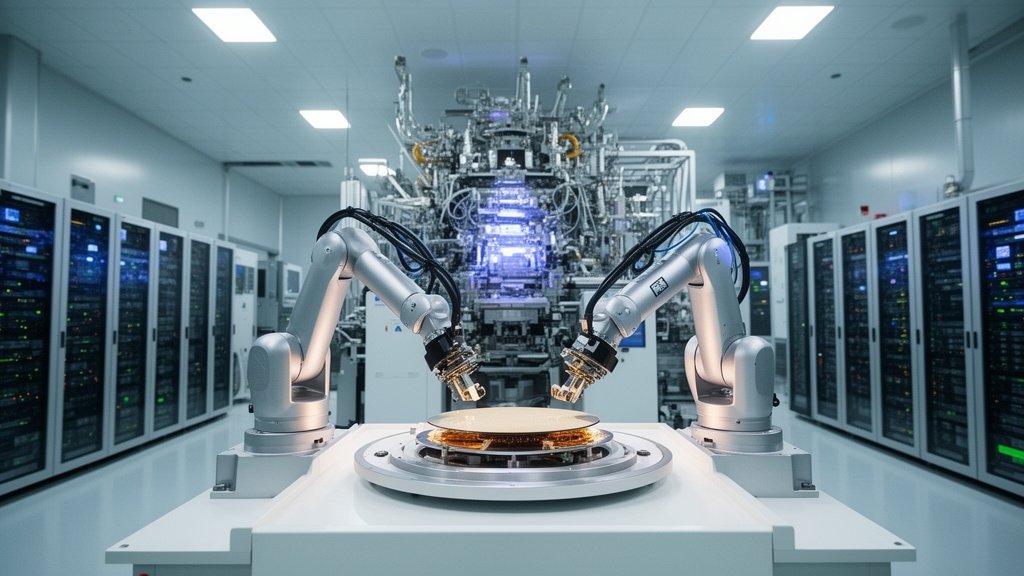
Shanghai, China – Huawei Technologies Co., Ltd. has announced the launch of a new artificial intelligence (AI) chip, the 910C, positioning it as a direct competitor to Nvidia Corporation’s high-end processors within the Chinese market. The move comes as U.S. export restrictions continue to reshape the landscape for advanced computing hardware in China, creating significant opportunities for domestic players like Huawei.
The introduction of the 910C is widely seen as a strategic maneuver by Huawei to address the market vacuum left by the U.S. government’s prohibition on the sale of certain advanced AI chips, including Nvidia’s H20 processor, to Chinese customers. This ban, part of broader measures aimed at limiting China’s access to cutting-edge semiconductor technology, has curtailed the availability of leading foreign AI accelerators essential for training and deploying complex AI models.
Capabilities and Market Positioning
The 910C chip is built upon Huawei’s Ascend architecture, integrating two of its 910B processors. While specific performance benchmarks were not detailed in the original announcement, the chip is stated to offer performance comparable to Nvidia’s H100 chip, a benchmark in the global AI computing market. This positioning suggests Huawei is targeting demanding workloads in data centers and AI research.


Huawei has indicated ambitious plans for the new chip, aiming to commence mass shipments of the 910C in May 2025. This timeline allows the company to ramp up production and distribution channels, preparing for what is anticipated to be robust domestic demand driven by the scarcity of comparable foreign alternatives.
The Impact of US Export Controls
The U.S. export controls have significantly impacted the operations and market strategies of major global chipmakers like Nvidia and Advanced Micro Devices (AMD). These companies, which have heavily invested in AI accelerator technology, have faced restrictions preventing them from selling their most powerful chips, or specifically designed variants like Nvidia’s H20 intended for the Chinese market, without special licenses. Reports have noted that these restrictions have, at times, negatively impacted the stock performance of both Nvidia and AMD as investors gauge the financial implications of losing access to a significant portion of the lucrative Chinese market.
For Huawei, which itself has been subject to extensive U.S. sanctions for several years, these restrictions on its foreign competitors paradoxically create an opening. Unable to rely on foreign suppliers for critical components and technology, Huawei has prioritized developing its own semiconductor capabilities, including AI processors, under its Ascend series. The 910C represents the latest iteration of this self-reliance strategy, directly targeting the high-end AI computing segment where Western suppliers are now constrained.
Future Outlook and Production Challenges
Looking ahead, Huawei is reportedly planning the release of another advanced AI chip, the Ascend 920, later in 2025. This subsequent chip is expected to potentially offer even greater performance, further intensifying the competitive dynamics with Nvidia and other players in the AI hardware space, assuming its development and production proceed as planned.
A critical factor influencing the success and scalability of Huawei’s advanced chip ambitions, including both the 910C and the future Ascend 920, is the production capability of Semiconductor Manufacturing International Corporation (SMIC), China’s leading chip manufacturer. Manufacturing such cutting-edge processors requires advanced fabrication processes, and SMIC’s ability to produce these chips reliably and at scale, particularly given its own challenges and restrictions related to accessing the most advanced photolithography equipment, remains a key variable. The performance and availability of Huawei’s chips are intrinsically linked to SMIC’s technological progress and manufacturing yield for these advanced nodes.
Broader Implications
The emergence of chips like the Huawei 910C underscores the accelerating pace of indigenous AI hardware development in China, driven by geopolitical factors and a national push for technological self-sufficiency. While still facing significant technological hurdles and production challenges, Chinese companies are actively working to build domestic alternatives across the technology stack, from design to manufacturing.
This competition, fueled by export controls, highlights the complex interplay between global technology markets, national security concerns, and the quest for leadership in foundational technologies like artificial intelligence. The success of Huawei’s 910C and subsequent chips will be a crucial indicator of China’s progress in building a viable, high-performance domestic AI ecosystem capable of meeting the country’s growing demand for computing power.