Global equity markets are showing remarkable resilience, with major indices recording gains as investors prepare for the highly anticipated Federal Reserve interest rate decision. The long-awaited transition from a restrictive monetary policy to a potential easing cycle has shifted investor sentiment, fueling optimism that a ‘soft landing’ for the U.S. economy is within reach.
Key Highlights
- Market Anticipation: Global indices, including the S&P 500 and MSCI World Index, are trending upward as markets price in a high probability of a rate cut.
- The Pivot: The Federal Reserve is signaling a shift in focus from rampant inflation fighting to safeguarding the labor market, a move widely supported by recent cooling employment data.
- Yield Sensitivity: Treasury yields have fluctuated, reflecting investor uncertainty regarding the exact magnitude of the initial rate reduction.
- Sector Dynamics: Tech and high-growth stocks, historically sensitive to interest rates, are leading the charge, while defensive sectors are adjusting to the shifting macroeconomic backdrop.
The High-Stakes Pivot: Assessing Global Market Sentiment
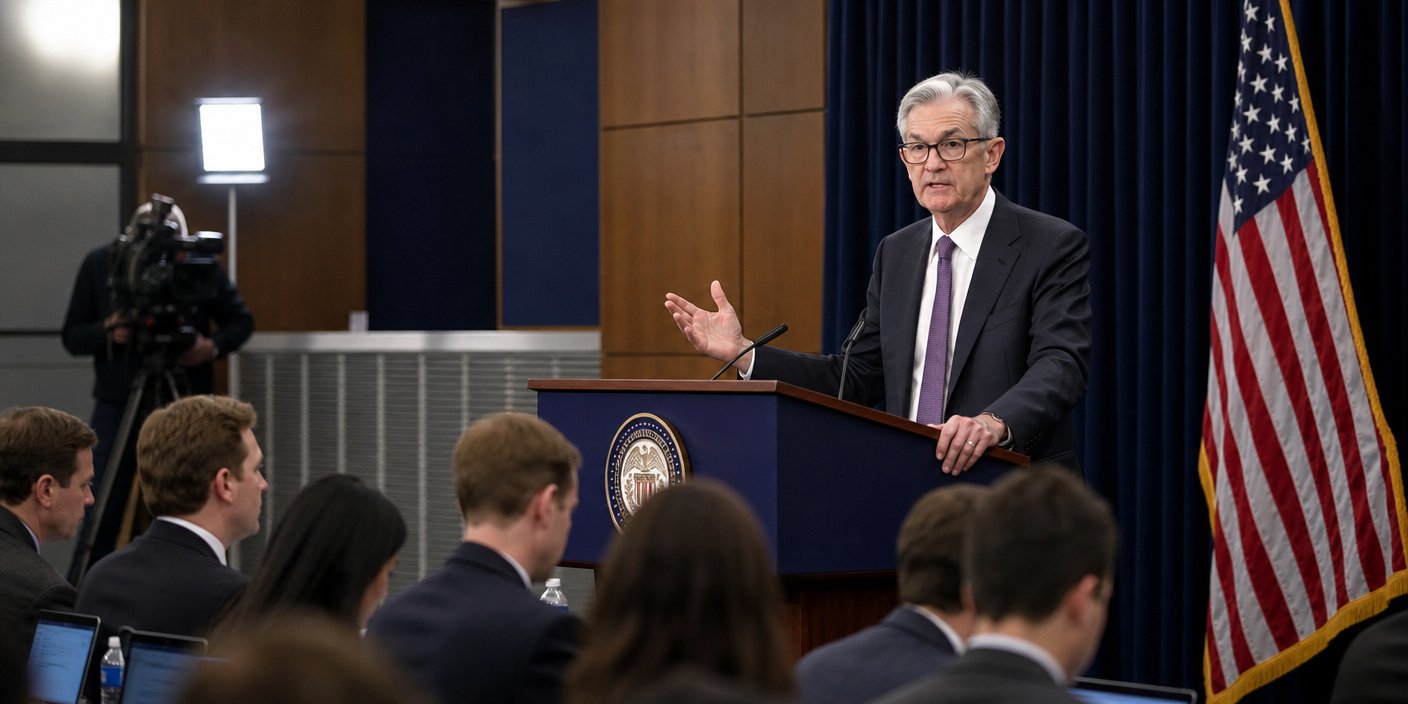
The narrative driving global financial markets today is dominated by a singular event: the Federal Reserve’s upcoming policy meeting. For months, investors, analysts, and institutional traders have parsed every utterance from Chairman Jerome Powell and the Federal Open Market Committee (FOMC) for clues regarding the timing and scale of the initial rate reduction. As the meeting date approaches, the consensus has coalesced around a narrative of cautious optimism, driving stock valuations higher across both developed and emerging markets.
The Shift from Inflation to Employment
For the better part of two years, the Federal Reserve’s ‘higher for longer’ interest rate strategy was the primary weight on global equity prices. The Fed’s primary mandate was to break the back of sticky inflation, which reached levels not seen in decades. However, as the latest Consumer Price Index (CPI) and Personal Consumption Expenditures (PCE) data reveal a downward trajectory toward the 2% target, the calculus has changed.
We are witnessing a profound structural shift in central bank communication. The focus has decisively moved toward the dual mandate: ensuring maximum employment. Recent labor market data, including the latest Non-Farm Payrolls (NFP) and rising unemployment claims, have signaled a cooling in the labor force. Investors are reading this not as a sign of imminent recession, but as the necessary prerequisite for the Fed to start lowering rates. This ‘bad news is good news’ dynamic is providing the ‘Fed put’ that equity markets have been craving.
Sector Rotation in a Lower-Rate Environment



As the yield environment shifts, astute market participants are recalibrating their portfolios. The technology sector, which has been the primary engine of stock market growth, remains highly sensitive to the cost of capital. A lower rate environment reduces the discount rate used in valuation models, effectively increasing the present value of future earnings for growth companies.
However, the rotation is becoming more nuanced. We are observing a broadening of market participation. Small-cap stocks, which have significantly lagged behind the ‘Magnificent Seven’ mega-cap tech giants, are seeing renewed interest. Investors are rotating into industrial and consumer discretionary sectors, anticipating that lower borrowing costs will stimulate capital expenditure and boost consumer spending power. This rotation is a critical indicator of a maturing bull market, suggesting that the rally is gaining fundamental structural support rather than relying solely on a handful of high-growth tech stocks.
The Global Ripple Effect: Beyond Wall Street
While the Federal Reserve is a U.S. institution, its decisions are the heartbeat of the global financial system. The U.S. Dollar Index (DXY) has seen increased volatility as markets speculate on the magnitude of the rate cuts. A weaker dollar, should the Fed embark on a sustained easing cycle, often acts as a tailwind for emerging markets (EM). Many EM central banks have been hamstrung by the need to maintain interest rate differentials to prevent capital flight to the U.S.
As the Fed eases, these emerging economies gain the ‘policy space’ to lower their own interest rates, potentially fueling local economic growth. Conversely, European markets and the Japanese Nikkei 225 are monitoring the Fed closely. The divergence in monetary policy between the European Central Bank (ECB) and the Federal Reserve has created complex currency dynamics that are forcing institutional investors to hedge against FX risk more aggressively than they have in years. The global stock market’s upward trajectory is therefore not just a reflection of domestic U.S. confidence, but an alignment of global monetary policy expectation.
Managing Volatility and Risk
Despite the prevailing optimism, risk remains persistent. The market has priced in a specific path for interest rates. Should the Federal Reserve signal that it will proceed more slowly than the market anticipates, or if economic data suddenly reverses and spikes inflation expectations, the market could face a sharp ‘repricing’ event. The VIX (CBOE Volatility Index) remains at elevated levels, suggesting that while investors are optimistic, they are not complacent. Portfolios are being positioned for a ‘Goldilocks’ scenario—moderate growth with moderate inflation—but the margin for error remains thin. As we move closer to the meeting, volume and liquidity are likely to tighten, making markets increasingly susceptible to sudden headline-driven volatility.
FAQ: People Also Ask
Q: Why does a Federal Reserve rate cut help stock prices?
A: Generally, lower interest rates reduce the cost of borrowing for corporations, which can increase profitability and encourage expansion. Additionally, lower rates make bonds less attractive relative to stocks, causing investors to shift capital into equities in search of higher returns.
Q: How does the labor market data impact the Fed’s decision?
A: The Fed has a ‘dual mandate’ to promote maximum employment and stable prices. If the labor market shows signs of significant weakness, the Fed may be more inclined to cut rates to support the economy, even if inflation hasn’t fully reached the 2% target.
Q: What is the ‘Fed Pivot’?
A: The ‘Fed Pivot’ refers to the anticipated change in monetary policy where the central bank stops raising interest rates (or holding them at restrictive levels) and begins cutting them to stimulate economic activity.
Q: How do interest rate decisions affect the U.S. Dollar?
A: Typically, higher interest rates make a currency more attractive to foreign investors seeking higher yields, strengthening the dollar. Conversely, when the Fed cuts rates, the dollar may weaken as the yield advantage over other currencies decreases.