The global energy market is reeling as Saudi Arabia’s critical oil infrastructure faces its most significant threat in recent history. A confirmed attack on the East-West Pipeline has forced a total shutdown, a disruption the Saudi energy ministry anticipates will last for several weeks. This structural failure, occurring in the shadow of escalating Houthi-led military advancements throughout the Red Sea, has triggered an immediate and volatile reaction in commodities markets. Brent Crude futures have surged to $109 a barrel, reflecting acute investor anxiety over the security of major export routes and the potential for a prolonged supply squeeze that could ripple across the global economy.
Key Highlights
- Critical Infrastructure Shutdown: The East-West Pipeline (Petroline), a vital artery for Saudi oil exports, remains offline, with restoration expected to take weeks rather than days.
- Market Volatility: Global oil prices have spiked to $109 per barrel, as traders price in the risk of sustained supply disruptions.
- Geopolitical Instability: The attack occurs amidst an intensification of Houthi militant operations in the Red Sea, directly threatening both land-based pipelines and maritime tanker traffic.
- Strategic Risk: The disruption highlights the vulnerability of the “choke points” in global energy delivery, particularly the region surrounding the Bab el-Mandeb Strait.
Crisis at the Core: Securing Global Energy Infrastructure
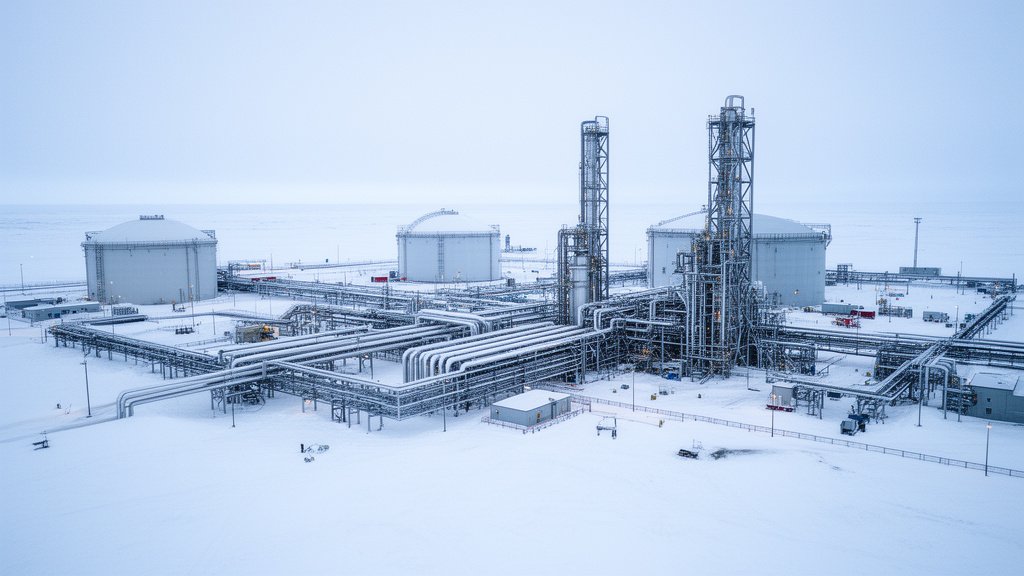
The current crisis surrounding the East-West Pipeline—often referred to as the Petroline—represents a watershed moment for energy security. Running 745 miles (1,200 kilometers) from the Abqaiq processing facilities in the Eastern Province to the Yanbu terminal on the Red Sea coast, the pipeline serves as a strategic bypass to the Persian Gulf. By allowing crude to be pumped directly to the Red Sea, Saudi Arabia avoids the necessity of sending all tankers through the Strait of Hormuz. When this line is compromised, as it is now, the entire logistical apparatus of Saudi Aramco is forced to rely on maritime channels that are increasingly under the direct gaze of hostile regional actors.
The Anatomy of the Supply Disruption
For international energy markets, the math of this disruption is stark. Saudi Arabia is the world’s largest exporter of crude oil, and the Petroline has a capacity of approximately 5 million barrels per day. While not all of this capacity is always utilized, the cessation of flow forces a massive logistical re-routing. With the pipeline incapacitated by the recent attack, oil that would typically reach the Red Sea export terminals is essentially bottled up or forced to transit via the conventional, yet currently dangerous, maritime routes.



Industry analysts note that this isn’t merely a localized structural repair. The attack indicates a sophisticated understanding of Saudi vulnerability. By targeting the pipeline, militants have effectively weaponized the supply chain, turning the infrastructure itself into a driver of inflationary pressure. The market’s reaction—pushing prices to $109—is a preemptive hedge against a “worst-case” scenario where oil cannot reach international tankers efficiently.
Houthi Strategy and the Maritime Theater
The involvement of Houthi forces in the Red Sea theater introduces a level of complexity that traditional energy market analysts are ill-equipped to model. Traditionally, oil price fluctuations were driven by OPEC+ quotas, demand cycles, and storage levels. Today, the price is being dictated by drone capabilities, missile ranges, and the security of shipping lanes like the Bab el-Mandeb Strait. The Houthi strategy appears to be a multi-pronged approach: disrupt the land-based conduits (like the Petroline) while simultaneously harassing the maritime corridors that serve as the only alternative for global exports.
This creates a “pincer movement” on energy security. If the pipeline is down, the tankers must move. If the tankers are threatened at sea, the export flow grinds to a halt. The convergence of these two realities is why the market is exhibiting such profound volatility. The risk is no longer theoretical; it is a tactical reality that insurance premiums for tankers operating in the Red Sea have skyrocketed, further driving up the landed cost of crude oil for consumers in Europe and Asia.
Economic Contagion: The Cost of Energy Volatility
While $109 a barrel is a lucrative figure for oil-producing nations in the short term, the macroeconomic impact is largely negative. Sustained oil prices at this level act as a tax on the global economy. For import-dependent nations in Europe and the developing world, the price surge threatens to exacerbate existing inflationary pressures. Energy is a foundational input for agriculture, transport, and manufacturing. When the cost of crude rises sharply, it creates a cascading effect through the consumer price index (CPI).
Furthermore, the “weeks-long” timeline for repairs offered by authorities is being viewed with skepticism by some market observers. Given the tense security climate, mobilization of repair crews, materials, and heavy machinery to remote pipeline locations becomes a security operation in itself. The uncertainty surrounding the repair timeline is arguably as damaging to market stability as the attack itself. Until Saudi Aramco can confirm the pipeline is back at full pressure, traders are likely to maintain a significant risk premium on oil, meaning $109 could serve as a floor, rather than a ceiling, for the near future.
FAQ: People Also Ask
Q: How does the shutdown of the East-West Pipeline affect global oil prices?
A: The shutdown forces a logistical bottleneck, limiting the speed and volume at which oil can reach export terminals. This creates a fear of supply shortages, driving speculators and refiners to bid up the price of available crude, resulting in the current spike to $109 per barrel.
Q: Why is the East-West Pipeline so critical to Saudi Arabia?
A: The pipeline allows Saudi oil to bypass the Strait of Hormuz, providing a direct route to the Red Sea and faster access to European markets. It acts as an essential security valve for Saudi export capabilities.
Q: Are Houthi threats in the Red Sea expected to escalate further?
A: Security analysts monitor the situation closely, noting that as Houthi capabilities evolve with increasingly long-range precision weaponry, the threat level to both land infrastructure and maritime traffic remains elevated, keeping global energy markets in a state of high alert.