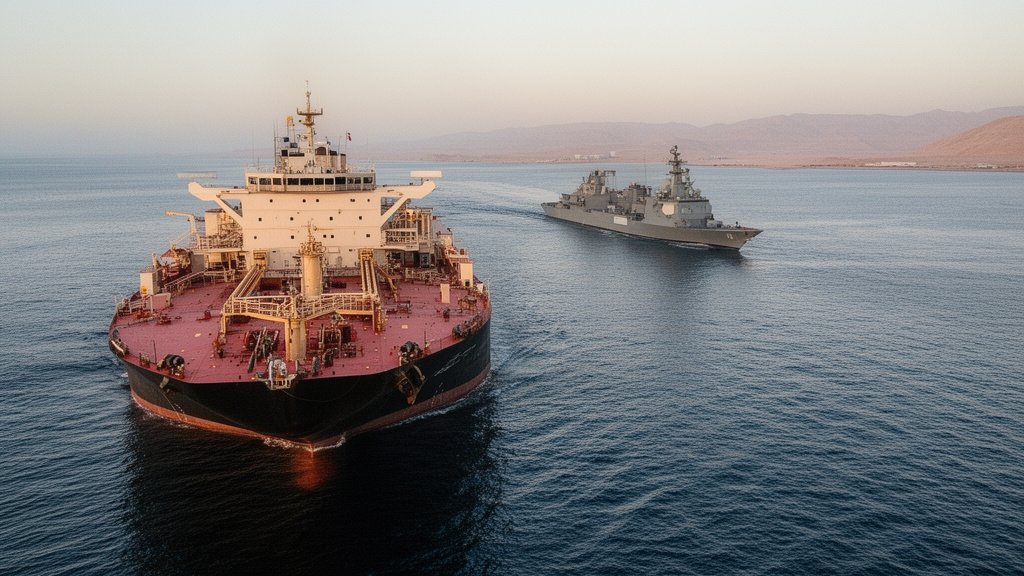
US naval forces have intercepted and disabled an Iranian-flagged cargo ship, the M/V Touska, in the Gulf of Oman after the vessel defied an ongoing US naval blockade. This high-stakes confrontation, which occurred on Sunday, marks the first time American forces have used kinetic force to seize a vessel since the blockade of Iranian ports commenced on April 13, 2026. The incident, characterized by President Donald Trump as a necessary enforcement of international pressure, has immediate ramifications for the stability of global shipping routes and the fragile diplomatic process currently centered in Islamabad.
Key Highlights
- Kinetic Enforcement: The USS Spruance, an Arleigh Burke-class guided-missile destroyer, disabled the M/V Touska after a six-hour standoff, firing on the vessel’s engine room when it refused to stop.
- Strategic Escalation: This interception serves as the first major boarding operation since the US-led naval blockade began, testing the resolve of both Washington and Tehran regarding the freedom of navigation and port access.
- Diplomatic Uncertainty: The incident threatens to derail high-level negotiations in Pakistan, with Iranian officials labeling the seizure an act of “piracy” and signaling potential retaliatory measures.
- Containment Strategy: As of the latest reports, CENTCOM indicates that approximately 25 vessels have been turned away from Iranian ports since the blockade’s inception, highlighting the operational strain on regional maritime commerce.
Maritime Flashpoint: US-Iran Standoff Deepens as Washington Seizes Iranian Cargo Vessel
The interception of the M/V Touska represents a critical turning point in the 2026 Iran conflict, moving beyond diplomatic posturing and into the realm of direct tactical engagement. For over a week, the naval blockade has served as a primary tool of economic leverage for the United States, aiming to constrict the flow of goods into and out of Iranian ports. However, the defiance shown by the Touska has fundamentally altered the calculus for both sides of the conflict.
The Interception: A Tactical Breakdown
According to US Central Command (CENTCOM), the engagement began in the northern Arabian Sea. The M/V Touska, a nearly 900-foot-long cargo vessel, was identified by US monitoring assets as it maintained a course toward the Iranian port of Bandar Abbas. Despite repeated verbal warnings issued over a six-hour period, the vessel’s crew failed to deviate from their path.
The USS Spruance, executing standard interdiction protocols for the blockade, eventually escalated the response. In a move confirmed by presidential social media communication and corroborated by CENTCOM, the destroyer fired rounds from its MK 45 gun into the Touska’s engine room, effectively neutralizing the ship’s propulsion and stopping it dead in the water. This allowed helicopter-borne US Marine boarding parties to rappel onto the deck and take control of the vessel. The operation underscores the precise, albeit aggressive, nature of the blockade enforcement.
Diplomatic Fallout and Retaliatory Rhetoric


The timing of the interception is particularly volatile. It occurred just as diplomatic delegations were preparing for critical talks in Islamabad. Iran’s military command was swift to denounce the seizure, categorizing it as “armed piracy” and a violation of the existing, albeit fragile, ceasefire that has been in place since early April.
Tehran’s response was characteristically defiant. Official channels stated that the Islamic Republic would “respond soon,” raising fears that Iran may attempt to leverage its remaining assets in the Strait of Hormuz. The blockade has already induced a significant slowdown in global shipping, with major firms suspending operations to avoid the risk of entanglement. By seizing a cargo vessel, the US has essentially forced Iran’s hand: either accept the blockade or escalate into a wider, more dangerous maritime confrontation that risks further damaging global supply chains.
The Broader Strategic Context: The Blockade of 2026
To understand the significance of this incident, one must view it within the framework of the broader 2026 conflict. Since the failure of earlier peace talks in Geneva and the subsequent military escalations in late February, the geopolitical map of the Middle East has been redrawn. The blockade is not merely a tactical maneuver; it is a strategic attempt to isolate the Iranian economy, specifically targeting oil revenues and imports.
However, the strategy carries immense risk. With Iran threatening to close the Strait of Hormuz—the world’s most critical energy artery—in response to the blockade, the global energy market remains on edge. The US maintains that the blockade only applies to vessels servicing Iranian ports and that the Strait remains open for international transit. Yet, the reality on the ground—or rather, on the water—is far more ambiguous. With 25 vessels turned back and now the first successful seizure, the lines between international law, military enforcement, and economic warfare are increasingly blurred.
As Washington and Tehran navigate this latest crisis, the world watches the Strait of Hormuz with bated breath. The interception of the Touska is a reminder that in 2026, the peace is as thin as the hull of a ship, and the next incident could be the one that shifts the conflict from a regional standoff to a global energy catastrophe.
FAQ: People Also Ask
Why was the M/V Touska intercepted?
The vessel was intercepted because it was identified as attempting to breach the US-mandated naval blockade of Iranian ports. Despite multiple warnings to change course, the crew continued toward Bandar Abbas, forcing the US Navy to disable the ship for inspection.
What is the current status of the naval blockade?
The blockade has been in effect since April 13, 2026, aimed at preventing commercial traffic from entering or leaving Iranian ports to exert economic pressure on Tehran. CENTCOM has reported that 25 vessels have been successfully diverted since the policy was implemented.
How has Iran responded to the seizure?
Iran has officially denounced the interception as an act of “piracy” and a violation of the ceasefire agreement. Iranian military officials have vowed a swift, unspecified retaliation, further complicating the ongoing peace negotiations in Islamabad.