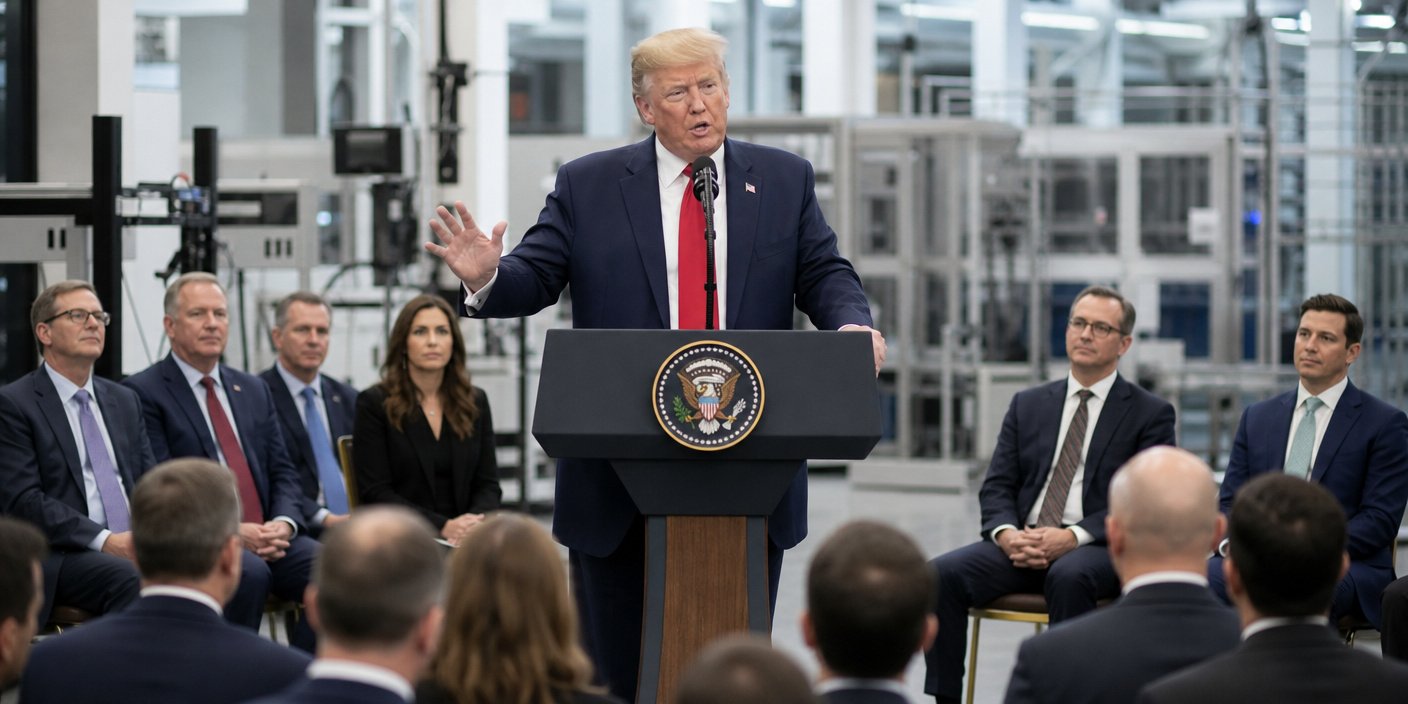
France’s President Emmanuel Macron has strongly condemned United States tariffs, calling them unacceptable pressure tactics in the escalating Greenland Sovereignty Dispute. The conflict, which centers on President Donald Trump’s attempted acquisition of Greenland, has introduced significant Transatlantic strain. Trump announced new tariffs targeting nations that oppose his plan, a move Macron, speaking at the World Economic Forum, declared an unacceptable misuse of trade measures. He emphasized that trade should not be used to leverage sovereign nations. The USA has framed Greenland as vital for its national security, with Trump insisting on his unwavering stance, fueling the US-Europe relations tension. Denmark, Greenland’s governing nation, has unequivocally rejected the sale, stating that Greenland is not for sale. This stance has ignited protests in Greenland and Denmark, with demonstrators holding signs proclaiming “Greenland is not for sale” and “Yankee, Go Home!”
Trump’s Provocative Tactics in the Greenland Sovereignty Dispute
President Trump escalated his provocative stance in the Greenland Sovereignty Dispute by sharing private messages. One such message was from President Macron, questioning Trump’s Greenland acquisition plan, and another from NATO’s chief. Trump further amplified his position by posting AI-generated images, including one of himself planting a US flag in Greenland. He linked the tariffs to not winning a Nobel Peace Prize and cited national security concerns, including those related to Russia and China, as reasons for the USA needing Greenland. He even suggested military force was not off the table, heightening fears and threatening to unravel NATO, an alliance that has secured Western safety for decades.
European Unity and Trade Retaliation Amidst the Greenland Sovereignty Dispute
European leaders united in condemnation of Trump’s actions regarding the Greenland Sovereignty Dispute, labeling them as “new colonialism.” Macron championed respect over bullying and the rule of law over brutality, stating that new imperialism has no place in modern international relations. In response to the US tariff threats and potential EU trade retaliation, the European Union prepared its countermeasures. Leaders discussed options using their “anti-coercion instrument,” nicknamed the “trade bazooka,” designed to counter Economic intimidation. France urged the EU to target US tech firms, warning of a dangerous downward spiral and vowing an unflinching, united, and proportional response. The deployment of troops to Greenland for joint military exercises by European nations, including Denmark, France, Germany, the UK, Sweden, the Netherlands, and Finland, was cited by Trump as opposition, leading to his tariff threats against these countries.
Economic and Diplomatic Fallout of the Greenland Sovereignty Dispute
The new US tariffs stemming from the Greenland Sovereignty Dispute threatened vital trade relations and risked igniting a global trade war. The EU planned its own retaliatory measures, including a substantial package of tariffs and restricted market access for US goods, which could significantly impact supply chains in sectors like automotive and pharmaceuticals. This dispute has strained ties between allies, testing the cohesion of the NATO alliance. Diplomatic efforts at the World Economic Forum aimed to de-escalate the conflict, but fundamental misunderstandings persisted, leaving the situation tense and highlighting a significant shift in the global order. The USA’s actions challenged existing international norms and profoundly impacted US-Europe relations, with national security concerns being central yet pursued through highly controversial methods.
Future Outlook on Greenland Sovereignty and International Relations
The conflict over Greenland Sovereignty raises critical questions about future trade agreements and the reliability of allies, underscoring the urgent need for European autonomy. The EU’s response demonstrated its readiness to protect its interests. The long-term consequences of the Greenland Sovereignty Dispute remain uncertain, but it has vividly illustrated the complexities of the Geopolitical landscape and the potent use of economic pressure. This incident serves as a stark reminder that international relations necessitate robust diplomacy and unwavering respect for sovereignty. As the world watches for a resolution, this event is poised to shape future alliances and potentially redefine global trade dynamics. The USA’s actions have tangible consequences, while Europe’s unified stance offers a significant counterpoint, signaling a shifting geopolitical chessboard with global reverberations.