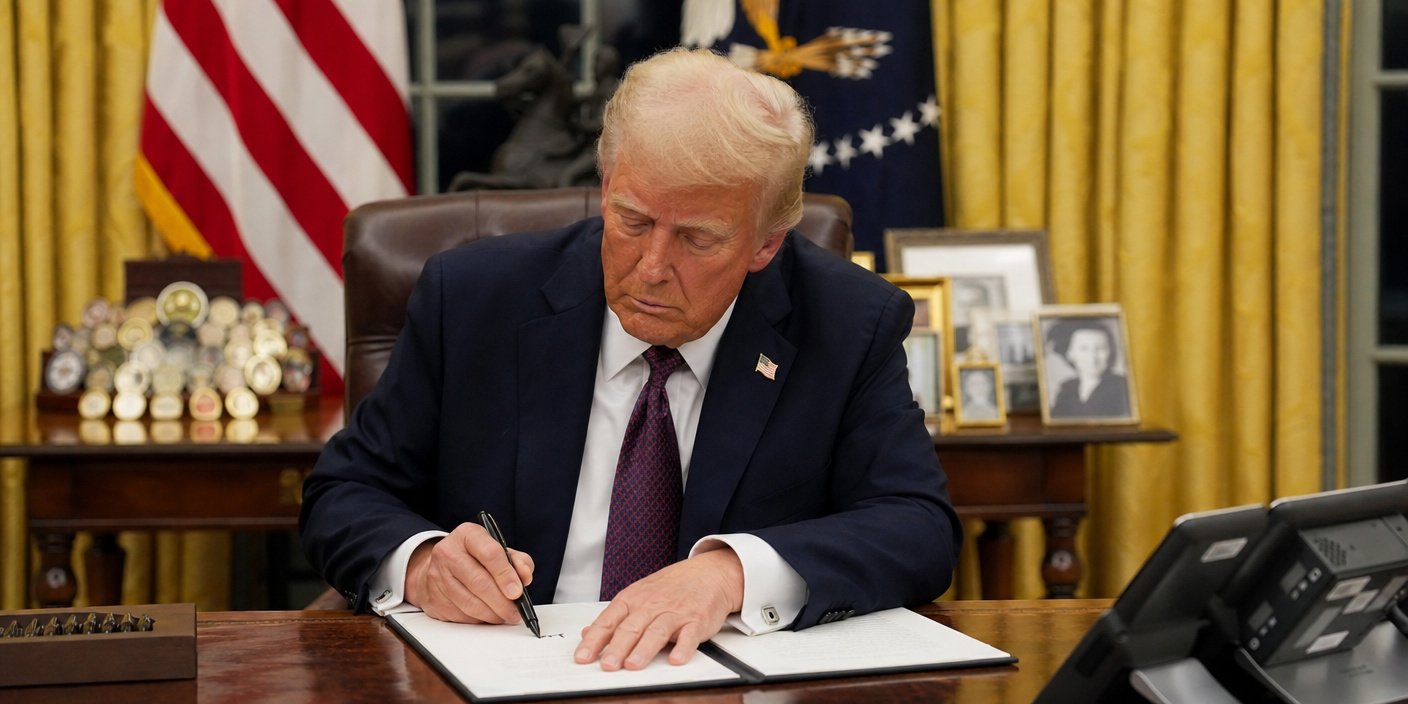
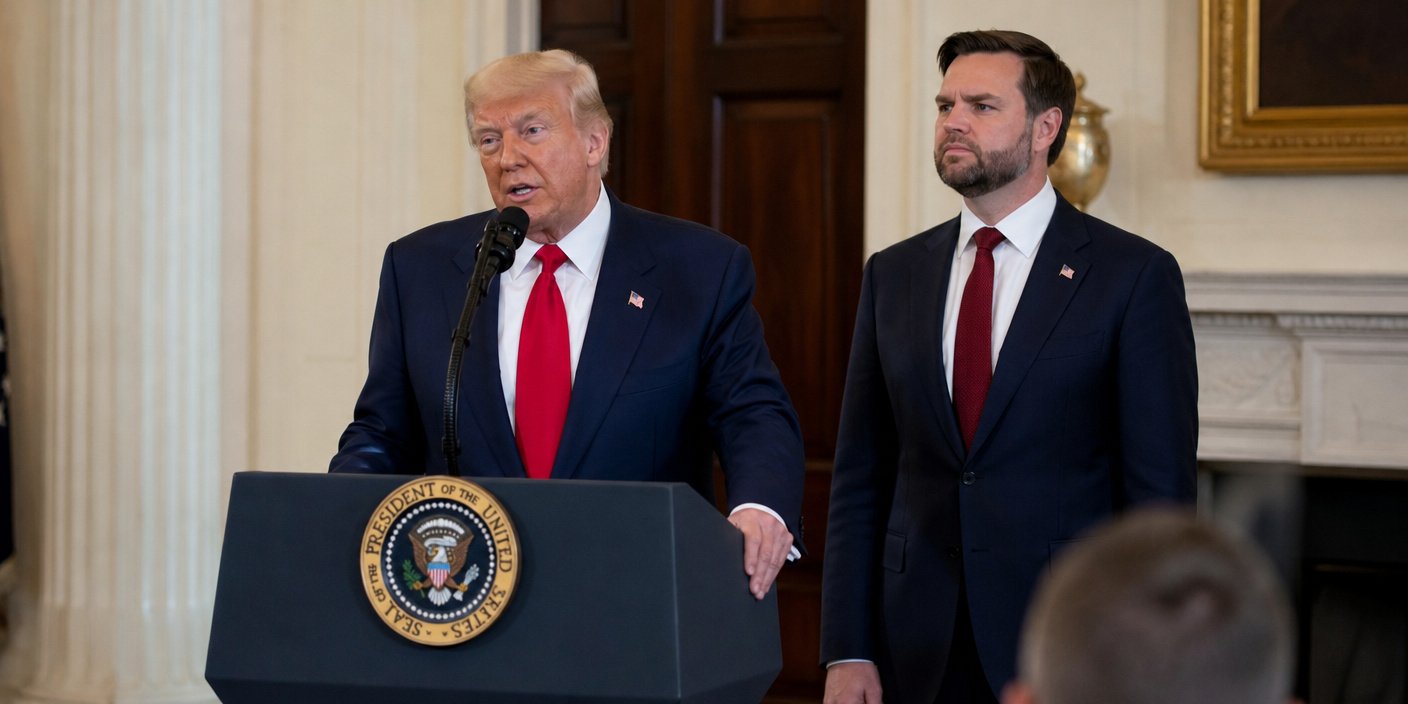
President Trump has effectively walked back his recent threats against the aerospace giant Bombardier, signaling a significant shift in his administration’s trade policy. The pivot, which prioritizes the stability of the manufacturer’s extensive operations in Wichita, Kansas, marks a departure from earlier rhetoric that had previously focused on imposing punitive trade measures against the Canadian-based firm. By pledging direct support for Bombardier’s local workforce, the administration is re-aligning its industrial agenda to emphasize domestic job security over previous protectionist trade disputes.
Key Highlights
- Policy Reversal: President Trump has pivoted from threatening tariffs to supporting Bombardier’s ongoing operations, acknowledging the importance of the Kansas-based workforce.
- Economic Stakes: The decision centers on the critical role of the Wichita, Kansas facility, which is a major hub for Learjet manufacturing and regional aerospace employment.
- Strategic Shift: This move indicates an evolving trade strategy that increasingly balances the administration’s ‘America First’ protectionist goals with the practical realities of global supply chains.
- Industry Impact: The decision provides a temporary reprieve for the aerospace supply chain, which had been bracing for uncertainty due to earlier tariff-based threats.
A Strategic Re-Alignment in Aerospace Trade
The Wichita Connection: Why Kansas Matters
The pivot toward supporting Bombardier is fundamentally rooted in the economic landscape of Wichita, Kansas. Often referred to as the ‘Air Capital of the World,’ Wichita serves as the critical nerve center for Bombardier’s Learjet production. The threat of punitive tariffs—originally proposed by the Department of Commerce—raised existential concerns about the viability of these facilities. Thousands of skilled manufacturing jobs, specialized engineering roles, and secondary supply-chain positions across the Midwest were directly tied to the stability of this specific operation.
Analysts suggest that the administration’s pivot was driven by a realization that aggressive trade enforcement in this sector could disproportionately harm domestic employees rather than foreign competitors. By securing these jobs, the administration is effectively insulating a key part of the U.S. manufacturing base from the volatility of international trade disputes. The focus on the Kansas workforce signals a pivot from broad-brush trade protectionism to a more nuanced, localized industrial policy that prioritizes domestic employment metrics as a benchmark for success.
Anatomy of a Trade Dispute
The background to this shift involves a complex, multi-year dispute centered on allegations that Bombardier received unfair government subsidies, which the U.S. government argued allowed the company to undercut domestic aerospace manufacturers. Initial administrative maneuvers involved threatened duties that could have crippled Bombardier’s U.S.-bound inventory. However, the dynamics of the aerospace industry are notoriously interdependent.



Major aerospace manufacturers like Bombardier and its competitors rely on deep, interconnected supply chains that span borders. When the administration applied pressure to Bombardier, the shockwaves were felt throughout the domestic aerospace sector, including suppliers and partners who rely on the steady flow of components manufactured in Canada and assembled in the United States. This interdependence likely served as a primary pressure point, forcing a re-evaluation of the administration’s approach. The shift represents a concession to economic reality, acknowledging that in the globalized world of modern aerospace manufacturing, a trade war is rarely contained within national borders.
The Evolution of ‘America First’ Industrial Policy
This decision marks a critical turning point in the broader ‘America First’ economic platform. Historically, the administration has utilized tariff threats as a primary negotiating tool to correct perceived trade imbalances. However, the Bombardier case highlights an emerging, second-phase approach: the ‘Job-Centric Pivot.’ In this model, the administration retains the rhetoric of protectionism but selectively applies policies to maximize domestic job retention.
By pledging support for Bombardier’s workers, the administration is demonstrating that it is willing to bypass ideological rigidity if a specific policy threatens localized economic health. This pragmatic adjustment is likely to become a template for handling future trade frictions in capital-intensive industries. The goal is no longer just about ‘winning’ a trade deficit argument on a national balance sheet; it is about protecting the local, tangible jobs that form the backbone of the political constituency. This shift is expected to be closely watched by lobbyists and foreign firms operating within the U.S., as it suggests that specific, targeted economic contributions may now carry more weight than abstract trade principles.
Implications for the Future of Aerospace
Looking ahead, the aerospace industry faces a period of recalibration. While the immediate threat to Bombardier has been removed, the broader regulatory environment remains complex. The decision provides a short-term boost for confidence, but the underlying questions about global manufacturing and government subsidies will persist. Competitors and industry stakeholders are now analyzing this pivot to understand what it means for the next round of trade negotiations.
Furthermore, this move may influence how foreign aerospace companies approach their future expansion into the United States. If the path to regulatory approval and trade stability is tied to job creation and domestic investment—as suggested by this pivot—foreign firms may double down on U.S.-based assembly and production facilities to secure their footing in the market. The long-term outcome could be a more fragmented, localized aerospace supply chain, as companies prioritize geographic diversification to satisfy varying national industrial policies. For now, however, the immediate focus remains on the stability of the Kansas workforce and the continued production of the iconic Learjet aircraft, a testament to the enduring significance of Midwestern manufacturing in the global economy.
FAQ: People Also Ask
Why was Bombardier originally targeted by the Trump administration?
Initially, the Department of Commerce investigated claims that Bombardier received unfair Canadian government subsidies, which U.S. officials argued allowed the company to dump jets into the American market at artificially low prices, unfairly hurting domestic manufacturers.
What does this pivot mean for the Wichita Learjet plant?
For the Wichita facility, this represents a significant reprieve. It reduces the immediate threat of trade-related instability, allowing for more consistent production schedules and protecting the specialized jobs of the engineers and assembly workers employed at the Kansas plant.
Is this a permanent change in trade policy?
It is a tactical adjustment. While it signals a pivot toward prioritizing domestic jobs over broad tariff applications in this specific case, it does not necessarily mean a total abandonment of the administration’s protectionist trade ideology. It highlights a preference for pragmatic, job-focused trade outcomes over ideological or broad-based policy enforcement.