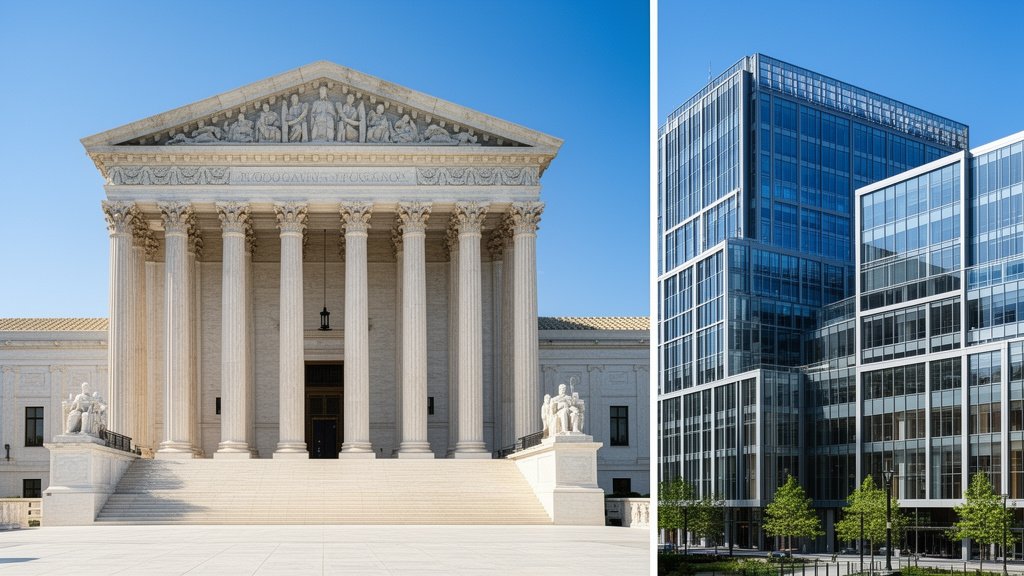
In a move that could reshape the boundaries of presidential power over trade, the Trump administration has formally asked the U.S. Supreme Court to review a federal appeals court decision that declared many of President Donald Trump’s sweeping tariffs unlawful. The administration argues that the ruling threatens America’s economic stability and its ability to conduct foreign policy, setting the stage for a high-stakes legal confrontation at the nation’s highest court.
The Core of the Dispute: Presidential Authority and Tariffs
The legal battle centers on the Trump administration’s use of the International Emergency Economic Powers Act (IEEPA) of 1977, a statute designed to allow presidents to impose sanctions during national emergencies. The administration invoked IEEPA to justify imposing a wide range of tariffs on imported goods, citing national emergencies related to trade deficits and other economic vulnerabilities. These tariffs, often referred to as “reciprocal tariffs” and some related to fentanyl interdiction, have been a cornerstone of President Trump’s economic agenda since he took office, intended to pressure trading partners and renegotiate international trade deals.




However, a coalition of small businesses and several Democratic-led states challenged these tariffs, contending that the president had exceeded his constitutional authority. They argued that IEEPA does not explicitly grant the president the power to impose broad tariffs and that such authority constitutionally resides with Congress. Plaintiffs like V.O.S. Selections, a family-owned American wine business, highlighted the severe economic harm these tariffs inflicted on their operations.
Lower Court Rulings Undermine Administration’s Position
Two federal courts have thus far sided with the challengers. Initially, the U.S. Court of International Trade ruled that the tariffs exceeded the authority granted to the president under IEEPA, finding that the statute did not authorize such extensive trade measures. This decision was later affirmed, in a significant 7-4 ruling, by the U.S. Court of Appeals for the Federal Circuit. The appeals court concluded that the “major questions” doctrine—which dictates that significant policy matters require unambiguous congressional authorization—was not met by the administration’s use of IEEPA for broad tariff imposition.
The Federal Circuit specifically stated that IEEPA does not mention tariffs among the regulatory powers it allows during a national emergency, and that Congress likely never intended the law to grant unlimited tariff authority. Despite these rulings, the appeals court stayed its decision until at least October 14, providing the administration time to seek Supreme Court review.
Administration’s Appeal and Arguments for Supreme Court Intervention
Following these setbacks, the Trump administration, through the Justice Department, petitioned the Supreme Court to hear the case, requesting an expedited review. Solicitor General D. John Sauer, in the appeal, argued that the lower court’s decision “casts a pall of uncertainty upon ongoing foreign negotiations” and jeopardizes “already negotiated framework deals and ongoing negotiations.” The administration contends that these tariffs are vital for promoting “peace and unprecedented economic prosperity” and that denying the president tariff authority would “expose our nation to trade retaliation without effective defenses.” Treasury Secretary Scott Bessent echoed these concerns, stating the ruling “gravely undermines the president’s ability to conduct real-world diplomacy and his ability to protect the national security and economy of the United States.”
High Stakes for Presidential Power and National Trade Policy
The case carries immense implications for the balance of power between the executive and legislative branches concerning trade policy. If the Supreme Court declines to hear the case or upholds the lower courts’ decisions, it could significantly curtail the president’s ability to unilaterally impose tariffs, reinforcing Congress’s constitutional role in setting tax and trade policy. Conversely, if the Court sides with the administration, it could affirm broad executive authority in times of perceived national economic emergency, potentially setting a precedent for future administrations.
Legal experts note that the Supreme Court’s conservative majority, which includes three justices appointed by President Trump, might slightly improve the administration’s chances. However, the legal arguments, particularly concerning the “major questions” doctrine and the interpretation of IEEPA, present complex challenges. The outcome of this legal battle will not only determine the fate of these specific tariffs, which have generated billions in revenue and influenced global markets, but also establish crucial guidelines for executive action on trade in the USA for years to come. This national news development underscores the ongoing tension between executive action and legislative authority in the United States economic landscape.