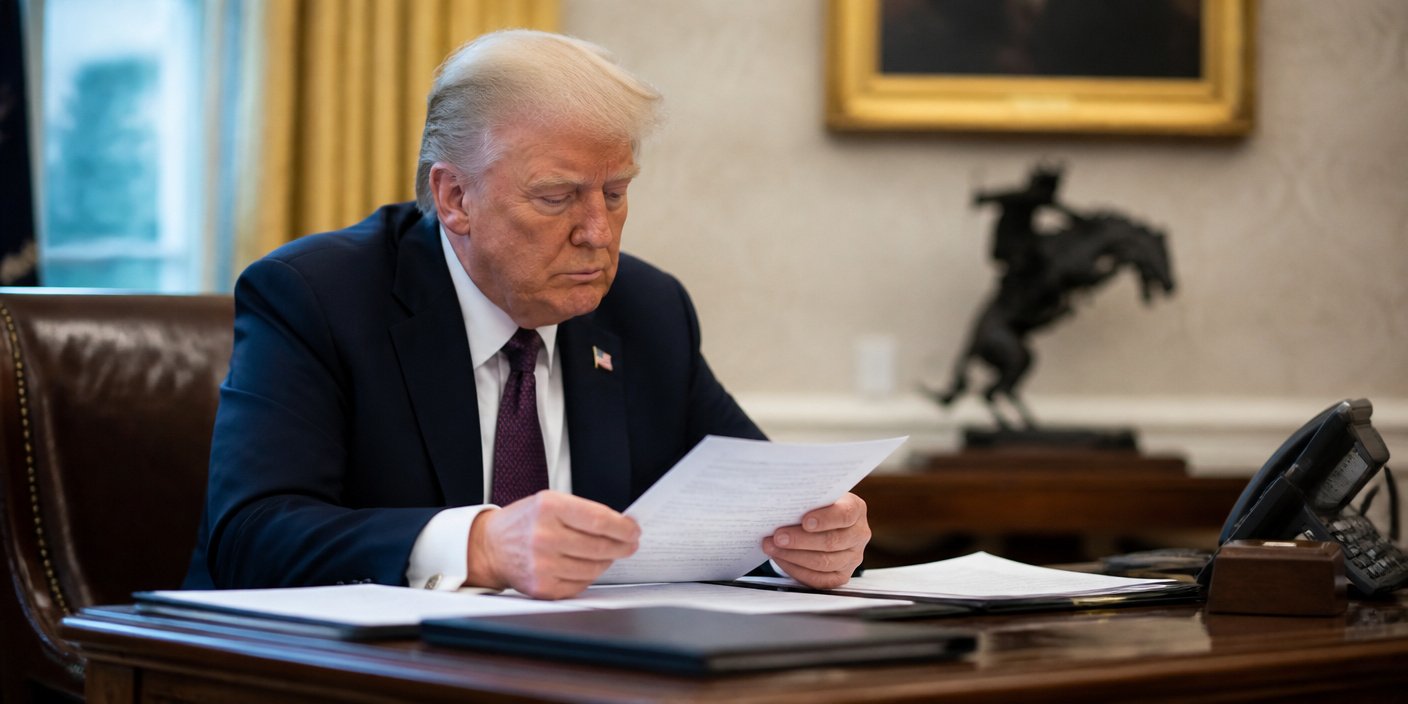
President Donald J. Trump has launched a strategic initiative targeting the roots of housing affordability by signing executive actions designed to streamline the production of factory-built homes and lower borrowing costs for American families. By modernizing manufacturing standards and leveraging the Department of Agriculture (USDA) and the Department of Veterans Affairs (VA), the administration aims to increase housing supply and reduce mortgage interest rates to make homeownership more accessible for the working and middle class.
Key Highlights
- Modernizing manufacturing codes for factory-built housing to lower construction expenses and increase production speed.
- Directives issued to the Department of Agriculture to lower interest rates on single-family home loans for rural residents.
- Policy shifts within the Department of Veterans Affairs aimed at reducing mortgage costs for veterans and their families.
- Streamlining federal regulatory barriers to accelerate the approval process for new home construction and development.
The Strategic Pivot Toward Affordable Homeownership
The American housing market has long grappled with the twin challenges of rising construction costs and high interest rates, creating a significant barrier to entry for prospective homeowners. President Trump’s recent executive order seeks to break this cycle by attacking the supply-side constraints that stifle development. By shifting the regulatory framework governing the construction industry, the administration is focusing on “factory-built” housing—often referred to as manufactured housing—as a primary vehicle for rapid, cost-effective residential development. Unlike traditional site-built homes, which are subject to localized labor shortages and weather-related delays, factory-built homes are constructed in controlled environments, offering a predictable, scalable solution that has, historically, been hindered by outdated federal oversight.
Modernizing the Factory-Built Sector
For decades, the regulatory standards for manufactured housing remained stagnant, lagging behind advancements in modern construction technology. The administration’s move to modernize these manufacturing methods is designed to allow developers to incorporate energy-efficient materials, improved structural designs, and sustainable building techniques that were previously prohibited or discouraged by antiquated HUD codes. By updating these standards, the executive order aims to bridge the gap between quality and affordability. This is not merely an aesthetic upgrade; it is a structural revolution in how residential real estate is manufactured. When builders can utilize advanced, high-tech factories to produce homes that are indistinguishable from site-built counterparts, the cost per square foot drops significantly. This creates a high-volume supply chain that can respond to local demand much faster than traditional construction firms.
Intervening in Lending: The USDA and VA Directives


While supply-side improvements address the cost of the home, the administration is simultaneously attacking the cost of capital. By directing the Department of Agriculture and the Department of Veterans Affairs to reduce interest rates on single-family home loans, the administration is essentially using government-backed credit mechanisms to lower the monthly payment threshold for qualified borrowers.
For the USDA, this focus is critical in rural areas, where the lack of conventional financing often leaves families with limited options. By compressing interest rates on USDA-guaranteed loans, the agency is incentivizing homeownership in underserved rural corridors. Similarly, the directive to the VA ensures that the men and women who have served in the armed forces are not disproportionately impacted by broader market rate fluctuations. By streamlining the administrative processes within the VA loan program and lowering the effective interest rate, the government is providing a tangible financial benefit that serves as a tool for wealth creation and long-term economic security for military families.
Economic Implications and Market Dynamics
This executive intervention represents a departure from traditional “demand-side” housing subsidies. Instead of simply providing cash assistance to buyers—which can often drive up prices by increasing demand without increasing supply—this policy focuses on lowering the fundamental cost of delivery. The economic logic is sound: when the cost of construction drops and the cost of debt drops, the total price of homeownership declines naturally. If these measures are implemented effectively, they could spark a surge in residential construction, particularly in the entry-level market, where competition is fiercest. Analysts suggest that by reducing the regulatory friction involved in bringing a home to market, the administration is also signaling to private equity and institutional investors that the housing sector is primed for a new wave of capital allocation.
Balancing Innovation and Regulation
As the administration pushes for these changes, the challenge lies in balancing speed with safety. Critics of rapid deregulation often point to past issues in the manufactured housing sector, yet the administration argues that modern engineering renders those concerns obsolete. The focus, therefore, is on creating a “smart regulation” framework—one that mandates strict safety and efficiency standards while stripping away the bureaucratic red tape that currently adds months and thousands of dollars to the permitting and approval process. This policy initiative positions the administration as a champion of “attainable” housing, distinguishing it from programs that rely on government-managed, subsidized public housing. The ultimate goal is a market-driven recovery where construction speed and interest rate efficiency work in tandem to restore the American Dream of homeownership to a broader segment of the population.
FAQ: People Also Ask
Q: How does modernizing factory-built housing actually lower costs?
A: By updating the federal building codes, manufacturers can use modern, cheaper, and more energy-efficient materials that were previously restricted. It also allows for standardized production lines that reduce labor costs, waste, and construction time, allowing homes to be built and sold at a lower price point.
Q: What does the USDA directive mean for rural homebuyers?
A: The directive instructs the USDA to find ways to reduce interest rates on their single-family loan programs. This means rural homebuyers will face lower monthly mortgage payments, making homeownership accessible to families who previously could not qualify due to high debt-to-income ratios.
Q: Does this executive order impact conventional mortgages?
A: The specific directives are aimed at USDA and VA loans—government-backed programs. While this does not directly mandate changes for private banks, it puts competitive pressure on the market. As government-backed loans become more attractive, private lenders may be forced to adjust their offerings to remain competitive.
Q: Is this a subsidy program?
A: No. It is a regulatory reform and administrative adjustment program. It does not provide direct grants or cash subsidies; rather, it changes the rules of construction and lending to lower the cost of the house itself and the cost of the money borrowed to buy it.