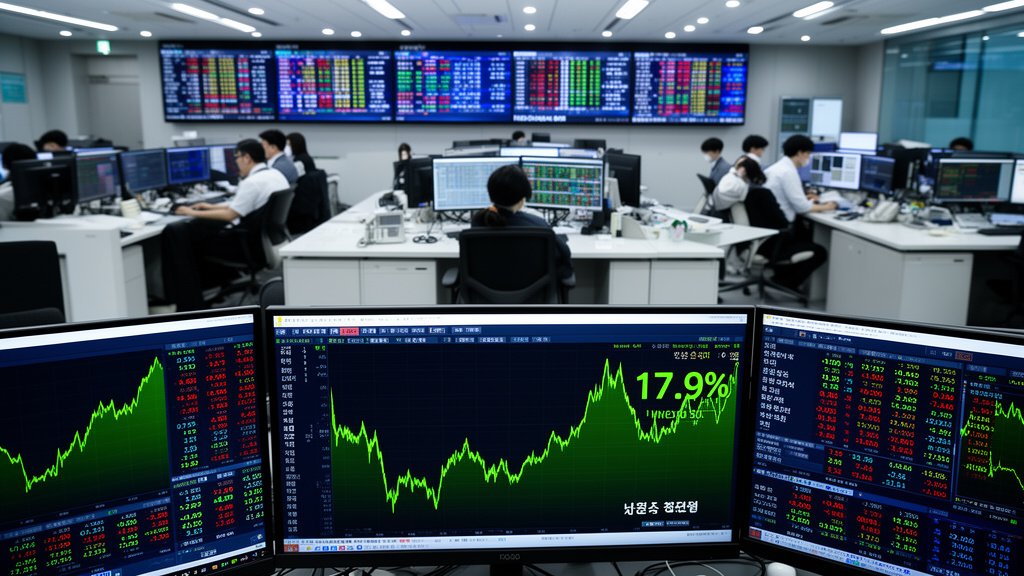
The Singapore AI Boom is significantly reshaping its economic landscape, prompting an upward revision of the nation’s economic growth forecast for 2025 to “around 4.0 percent,” a substantial increase from its earlier projection of 1.5 to 2.5 percent. This optimistic outlook is largely propelled by a stronger-than-anticipated performance in the third quarter of 2025, driven by a surge in demand for Artificial Intelligence (AI)-related goods and a stabilization in global trade, contributing to remarkable Singapore economic growth.
The Singapore AI Boom: A Stronger Than Expected Third Quarter
The nation’s economy demonstrated robust growth in the third quarter of 2025, expanding by 4.2 percent year-on-year, a testament to the impact of the burgeoning Singapore AI Boom. This performance exceeded initial estimates and continued the momentum from a revised 4.7 percent growth recorded in the second quarter. For the first three quarters of the year, Singapore’s Gross Domestic Product (GDP) averaged a healthy 4.3 percent year-on-year, underscoring the economy’s resilience. This upward revision marks the second for the 2025 forecast, reflecting evolving economic conditions and unexpected strengths driven by the AI driven economy.
AI: The Primary Engine Fueling the Singapore AI Boom




At the heart of Singapore’s elevated growth forecast is the burgeoning global demand for AI-related technologies and products. This Singapore AI Boom has provided critical support for the nation’s exports and key economic sectors. The electronics cluster, in particular, saw a significant 6.1 percent growth, fueled by high demand for AI semiconductors, servers, and associated components. This surge in demand for AI hardware is a major factor contributing to Singapore’s manufacturing and wholesale trade sectors’ outperformance, directly benefiting from the AI semiconductor demand.
Sectoral Contributions Bolster Growth Amidst the Singapore AI Boom
Beyond the electronics sector, several other key industries played a crucial role in the third quarter’s economic expansion, further amplifying the effects of the Singapore AI Boom. Manufacturing, wholesale trade, and financial services were identified as major drivers of growth. The biomedical manufacturing sector also posted strong gains, expanding by 8.9 percent, supported by higher-than-expected production levels of high-value pharmaceutical ingredients, contributing to biomedical manufacturing gains. Growth in wholesale trade was largely attributed to robust sales volumes in machinery and equipment, directly linked to the strong world demand for AI-related electronics.
Global Economic Tailwinds and Trade De-escalation Supporting the Singapore AI Boom
Singapore’s economic resilience is further bolstered by more favorable global economic conditions than initially anticipated, creating a fertile ground for the Singapore AI Boom. GDP growth in most of Singapore’s key trading partners exceeded expectations in the third quarter of 2025. The AI boom has not only supported the US economy but has also boosted exports of AI-related semiconductors from the region. Furthermore, a de-escalation in global trade tensions, including an extended US-China trade truce, has provided a more stable environment for international commerce, benefiting Singapore’s export-oriented economy and leading to positive signs of global trade stabilization and increased export growth Singapore.
Outlook for 2026 and Persistent Risks in the Post Singapore AI Boom Era
Looking ahead to 2026, the Ministry of Trade and Industry (MTI) forecasts a moderation in economic growth, projecting an expansion of 1.0 to 3.0 percent, as the initial surge of the Singapore AI Boom may stabilize. This projection for the Singapore 2025 forecast and beyond accounts for potential headwinds, including the lingering effects of trade tariffs and a projected slowdown in external demand as key trading partners experience moderating growth.
Despite the positive outlook, several risks remain. Global concerns persist regarding an AI-fueled equity rally potentially being overextended, which could lead to market corrections. The MTI continues to monitor the possibility of renewed trade escalations or geopolitical tensions, which could reignite economic uncertainty and impact business and household spending. Uncertainty surrounding potential US tariffs on sectors like semiconductors and pharmaceuticals also poses a risk to future export performance, even as the effects of the Singapore AI Boom continue to be felt across the manufacturing sector boost.
In conclusion, Singapore’s economy is experiencing a significant uplift in 2025, largely driven by the powerful demand for AI technologies. This surge in AI-related exports and robust performance across key sectors has led to a substantial upgrade in the growth forecast, highlighting the profound impact of the Singapore AI Boom. While this paints an optimistic picture for the immediate future, the nation’s economic trajectory will continue to be shaped by global trade dynamics and the evolving landscape of technological investment, making vigilance on geopolitical and market risks essential for sustained business success.