The political landscape of the American South underwent a seismic shift this week as the U.S. Supreme Court issued a landmark ruling in Louisiana v. Callais. In a 6-3 decision that has sent shockwaves through legal and electoral circles, the Court struck down Louisiana’s congressional map, ruling that it functioned as an unconstitutional racial gerrymander. The decision is not merely a localized redistricting dispute; it represents a significant narrowing of Section 2 of the Voting Rights Act (VRA), potentially dismantling the most powerful federal legal tool used to challenge racially discriminatory voting systems. By asserting that the Constitution restricts the state’s ability to prioritize race in redistricting—even when attempting to comply with the VRA—the Court has forced an immediate constitutional crisis in Louisiana, leading Governor Jeff Landry to suspend the state’s U.S. House primary elections, which were slated for May 16, 2026.
The Legal Reversal: A New Precedent
At the heart of the case was the question of whether Louisiana could prioritize race in drawing district lines to comply with the Voting Rights Act. For years, legal battles in Louisiana centered on the creation of a second majority-Black congressional district. In 2022, a federal judge ruled that the state’s previous map violated Section 2 of the VRA by failing to provide equitable representation for Black voters. The state subsequently enacted a remedial map, SB8, which included a second majority-Black district. However, a new group of plaintiffs, known as the Callais plaintiffs, challenged this map, arguing that it relied too heavily on race and thus violated the 14th Amendment’s Equal Protection Clause.
Writing for the majority, the Court held that the state’s use of race in creating the second majority-minority district was not justified by the Voting Rights Act. The Court argued that because the VRA did not mandate the specific racial configuration the state adopted, the map amounted to racial discrimination. This reasoning essentially raises the bar for plaintiffs attempting to use Section 2 of the VRA to challenge discriminatory maps. By declaring that the state’s intentional compliance with a federal court’s demand for a second majority-Black district constituted an “express acknowledgment that race played a role,” the Court has set a high, and potentially insurmountable, hurdle for future redistricting litigation.
The Immediate Fallout: Election Chaos in Louisiana
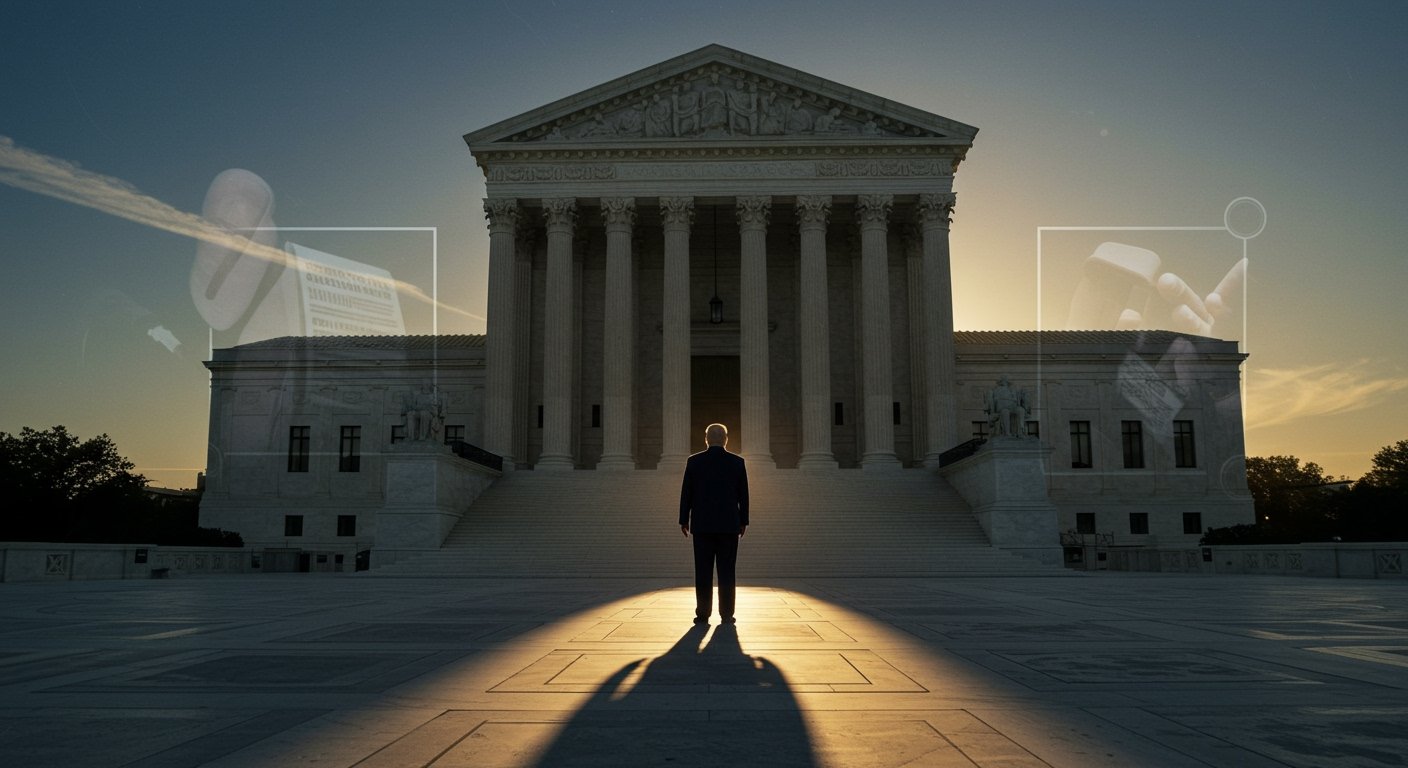
Within hours of the ruling, the impact shifted from the marble halls of the Supreme Court to the practical reality of Louisiana’s election administration. Governor Jeff Landry, citing the ruling as a validation of the state’s push for constitutional compliance, issued an executive order suspending the U.S. House primary elections. The suspension, which effectively halts the May 16th primary and the June 27th runoff, has created an unprecedented electoral emergency. Secretary of State officials are now scrambling to determine the next steps for a state legislature that must redraw its congressional map on an accelerated timeline, with the 2026 midterm cycle looming.


Critics argue that this move is more than just procedural—it is political. By suspending the primaries, the state legislature now has the opportunity to redraw lines that could favor the Republican majority, potentially reclaiming seats in a state that had only recently begun to reflect its demographic diversity. The ambiguity surrounding the new election dates leaves candidates and voters in limbo, creating a vacuum of representation that threatens to disenfranchise the very voters the VRA was designed to protect.
Broader National Implications: The End of the VRA as We Know It?
The implications of Louisiana v. Callais extend far beyond Baton Rouge. Legal experts and civil rights advocates view this as the latest, and perhaps most devastating, blow to the Voting Rights Act. Since the 2013 decision in Shelby County v. Holder, which gutted the VRA’s preclearance mechanism, Section 2 has served as the primary, albeit fragile, safeguard against discriminatory redistricting. This latest ruling further erodes that protection.
States across the South—and arguably nationwide—may now feel empowered to dismantle maps that were previously considered “VRA-compliant.” The decision signals to state legislatures that they can prioritize partisan goals over racial equity with relative impunity, provided they avoid explicit racial sorting. This effectively invites a new era of aggressive, partisan redistricting. As the 2026 midterms approach, the “redistricting war” has officially shifted from the courtrooms to the state capitols, with the balance of power in the U.S. House of Representatives potentially hanging in the balance of these mid-decade map redraws. The precedent set here suggests that the federal judiciary is increasingly skeptical of race-conscious remedial measures, leaving the future of representation for minority voters increasingly dependent on the political goodwill of state legislatures rather than protected federal rights.
FAQ: People Also Ask
What does the Supreme Court ruling mean for the Voting Rights Act?
The ruling significantly narrows the scope of Section 2 of the Voting Rights Act. It makes it much harder for plaintiffs to successfully challenge congressional maps, as the Court held that states cannot use race as a primary factor in redistricting to comply with the VRA without triggering strict scrutiny.
Why were Louisiana’s primary elections suspended?
Governor Jeff Landry suspended the U.S. House primary elections via executive order, citing the Supreme Court’s decision. The ruling invalidated the current map, meaning the elections could not proceed under the unconstitutional district lines. The state needs time to draw a new, compliant map.
Will this affect the 2026 midterm elections?
Yes. The ruling is expected to trigger a wave of redistricting efforts in several southern states. If states successfully redraw maps to favor one party, it could shift the balance of power in the U.S. House of Representatives, potentially adding more GOP-leaning districts before the November elections.
What happens to the Black-majority districts in Louisiana?
The previous map, which created a second majority-Black district, has been struck down. The state legislature is now tasked with drawing a new map. It is widely expected that the new lines will likely reduce or eliminate the second majority-Black district to satisfy the Court’s ruling, which could lead to further litigation.
Is there any way to challenge this new map once it is drawn?
While challenges are still possible, this ruling makes them significantly harder. Plaintiffs will face a higher legal burden to prove that any new map is discriminatory, given the Court’s restrictive interpretation of when and how race can be considered in the redistricting process.