The Sandwich Toss Trial of Sean Charles Dunn, who is accused of throwing a sandwich at a federal agent, commenced on November 4, 2025, in Washington, D.C. This Sandwich Toss Trial has become a focal point, symbolizing local dissent against the surge of Federal Law Enforcement deployments in the nation’s capital.
The Incident and Charges in the Sandwich Toss Trial
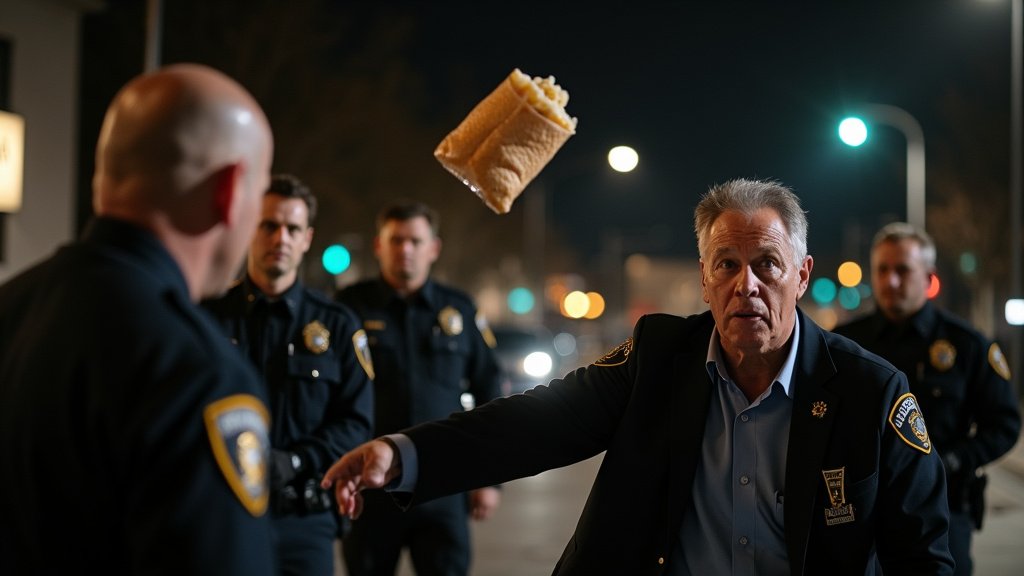
The events leading to the Sandwich Toss Trial unfolded on the night of August 10, 2025. A video that quickly gained viral status captured Dunn, then 37, approaching a group of U.S. Customs and Border Protection (CBP) agents. Witnesses and police documents indicate Dunn shouted insults, calling the agents “fascists” and “racists,” and chanting “shame.” He then allegedly threw a wrapped sandwich at one of the officers, striking him in the chest. Dunn attempted to flee but was apprehended by authorities. After his arrest, he reportedly admitted, “I did it. I threw a sandwich”. He was initially charged with a felony count of assaulting, resisting, or impeding certain officers and employees of the United States. However, a grand jury declined to indict him on the felony charge, and prosecutors later pursued a Misdemeanor Charge.
Background of the Defendant, Sean Charles Dunn
Sean Charles Dunn was not just any civilian; he was a former DOJ Employee, working as an international affairs specialist in the Criminal Division’s Office of International Affairs. Following his arrest, Attorney General Pam Bondi announced his termination from the DOJ, calling him “an example of the Deep State”. Dunn’s defense team has argued that his prosecution is politically motivated and constitutes Political Prosecution, pointing to the administration’s stance on other cases, including those stemming from the January 6th Capitol attack. His lawyers have asserted that Dunn was impermissibly targeted for his political speech and highlighted the White House’s posting of a video of his home raid.
The Broader Context: Federal Surge and Local Dissent
Dunn’s arrest and subsequent trial occurred against a backdrop of significant Federal Law Enforcement activity in Washington, D.C. In the weeks leading up to the incident, President Donald Trump had announced a surge of federal agents and National Guard troops into the city, citing a need to combat crime. This deployment, however, was met with resistance and skepticism from many D.C. residents and local officials, who argued that crime rates were not as severe as portrayed. The presence of unidentified federal personnel and their tactics during protests in 2020 had already raised concerns about Federal Overreach and its impact on community trust. The perceived federal takeover of local policing and the aggressive posture of federal agents led to a symbolic embrace of Dunn’s act of defiance, with murals of the sandwich toss appearing in the city. This situation fuels the narrative surrounding the Sandwich Toss Trial.
Legal Arguments and Trial Proceedings of the Sandwich Toss Trial
Prosecutors contend that Dunn’s political expressions do not grant him immunity from prosecution, emphasizing that he was recorded throwing a sandwich at a federal officer at close range. The defense, conversely, argues that the charges are a result of selective prosecution, fueled by political differences. U.S. District Judge Carl Nichols, appointed by President Trump, is presiding over the trial. He anticipates the proceedings will be brief, describing the case as “the simplest case in the world”. The trial, which began with opening statements on Tuesday, November 4, 2025, is expected to last no more than two days. The agent struck by the sandwich is slated to be the government’s first witness. This news is a significant development in American justice news, highlighting the ongoing debate about federal authority and individual rights, and central to the Sandwich Toss Trial.
Implications and Outlook for the Sandwich Toss Trial
The Sandwich Toss Trial of Sean Charles Dunn is more than just a misdemeanor case; it reflects deeper societal tensions regarding federal authority, law enforcement, and political protest in the American landscape. The outcome could have implications for how similar incidents are handled, particularly in the context of heightened federal presence and Local Dissent. The jury’s decision will be closely watched as it navigates the line between upholding the law and acknowledging the broader political and social climate that has shaped this unique case. The American justice system faces the challenge of balancing accountability with the protection of free speech and protest, all while considering the specifics of the Sandwich Toss Trial.