In a pivotal moment for international security, President Donald Trump publicly offered Iran a ‘last chance’ for a diplomatic resolution, a move that marked a stark departure from the escalating military tensions that brought the two nations to the brink of conflict. This declaration followed the administration’s decision to halt a planned retaliatory strike—which officials described as a massive military response—after Iranian forces downed a U.S. RQ-4 Global Hawk surveillance drone over the Strait of Hormuz in June 2019. By opting for a strategy that emphasized economic leverage and diplomatic pressure over immediate kinetic action, the administration sought to navigate the delicate balance of asserting sovereignty while avoiding an unintended regional war.
Key Highlights
- Strategic Pivot: President Trump explicitly prioritized a diplomatic pathway, labeling it a ‘last chance’ for Iran, following the eleventh-hour cancellation of a planned military retaliation for the downing of a U.S. drone.
- Geopolitical Chokepoint: The central theater of this tension was the Strait of Hormuz, a critical maritime passage through which approximately 20% of the world’s petroleum consumption flows, making any disruption an immediate global economic threat.
- The ‘Decapitation’ Context: Administrative rhetoric regarding the potential for ‘decapitation’ strikes underscored the extreme gravity of the situation, shifting the focus from limited engagement to the potential for total military confrontation.
- Economic Leverage: The policy framework relied heavily on the ‘maximum pressure’ campaign, utilizing existing and proposed economic sanctions to force Tehran back to the negotiating table rather than relying solely on tactical military deployments.
The Strategic Calculus: Navigating the Strait of Hormuz Crisis
The 2019 crisis remains a definitive case study in modern geopolitical brinkmanship. When Iranian forces engaged and destroyed a U.S. RQ-4 Global Hawk drone, the international community braced for a potential kinetic exchange. The administration’s subsequent decision to hold off on a massive strike was framed not as an act of weakness, but as a calculated pause, a ‘last chance’ for the Iranian leadership to reconsider their trajectory regarding both nuclear proliferation and regional aggression.
The Anatomy of the Escalation
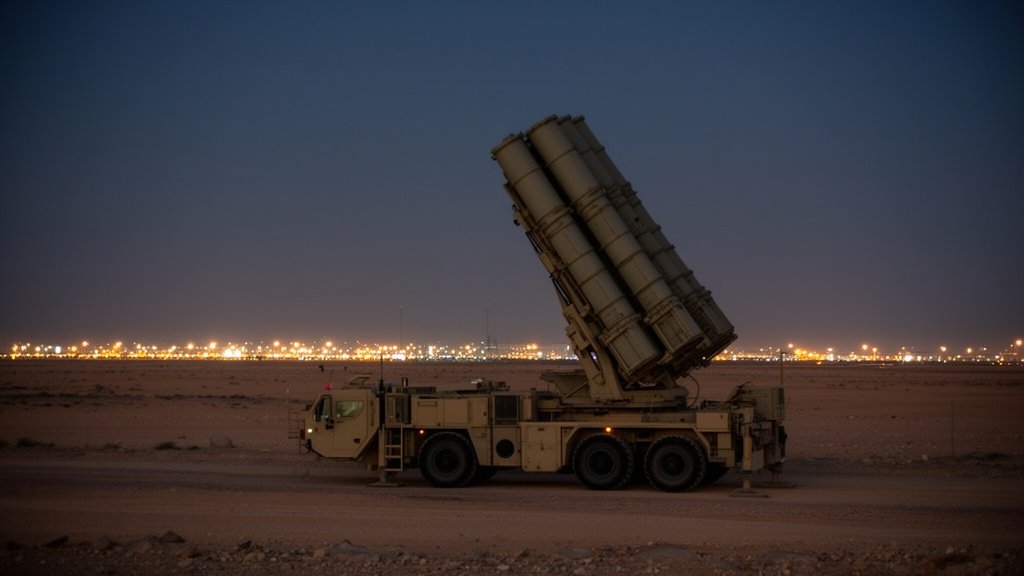
To understand the gravity of the ‘last chance’ ultimatum, one must examine the volatility of the Strait of Hormuz. In June 2019, the region was experiencing a heightened state of alert. Iran’s downing of the U.S. surveillance drone—valued at over $130 million—was categorized by the U.S. military as an unprovoked attack in international airspace. The administration’s initial military planning, which reached a near-execution phase, was reportedly aimed at specific Iranian radar and missile batteries. The decision to stand down transformed the narrative from one of immediate retaliation to one of ‘diplomatic resolution,’ shifting the burden of de-escalation squarely onto Tehran.
The ‘Last Chance’ Doctrine


Calling the offer a ‘last chance’ was a strategic communicative tool designed to achieve three primary objectives. First, it communicated the administration’s resolve to U.S. domestic audiences and international allies, signaling that while restraint was exercised, the threshold for military action remained dangerously low. Second, it created a psychological pressure point for the Iranian regime, forcing them to assess whether the potential cost of further provocation—the mentioned ‘decapitation’ of their military capabilities—outweighed their regional goals. Third, it provided a face-saving off-ramp for the Iranian leadership, allowing for a return to status quo negotiations without the immediate loss of face that would accompany a direct military defeat.
Economic Pressure as the Primary Tool
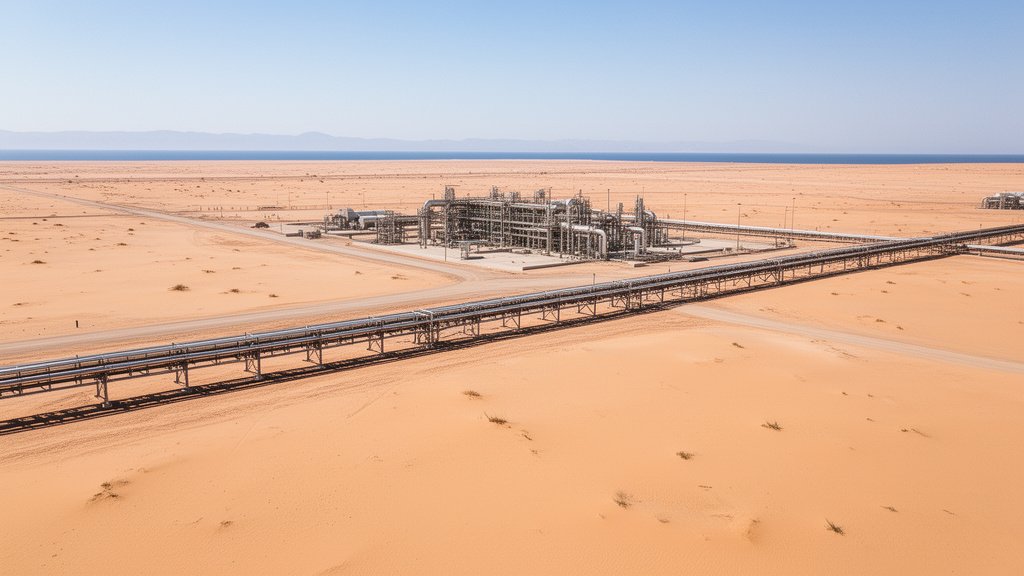
Following the pause in military action, the administration intensified its ‘maximum pressure’ campaign. This economic strategy was designed to isolate Iran from global financial markets and curtail its ability to fund regional proxies. By limiting Iran’s ability to export oil through the Strait of Hormuz, the U.S. aimed to create an internal crisis within Iran, theoretically forcing a choice between economic survival and foreign military adventurism. This approach effectively turned the Strait of Hormuz from a potential site of kinetic war into a site of economic warfare, where the cost of entry for further conflict became prohibitively high for the Iranian state.
Regional Stability and Future Implications
The ‘last chance’ ultimatum highlights the inherent instability of the Middle East security architecture. When a single incident involving a drone can bring two major powers to the brink of full-scale conflict, the margin for error is razor-thin. Analysts at the time pointed out that this incident demonstrated the necessity of robust communication channels, even among adversaries. The episode serves as a reminder that diplomatic resolution is often the byproduct of mutually assured destruction, where the potential for ‘decapitation’ strikes effectively serves as a deterrent rather than an inevitability.
Looking back at this incident, the policy highlights a recurring theme in modern American foreign policy: the attempt to achieve strategic goals without the political and human cost of large-scale, boots-on-the-ground wars. By substituting military strikes with targeted, high-stakes ultimatums and sustained economic isolation, the administration redefined the parameters of acceptable behavior in the region. Whether this approach provides long-term stability or simply delays an inevitable confrontation remains a subject of intense debate among security scholars and policy experts. However, the 2019 incident underscores that in the theater of international relations, the most effective weapon is often the credible threat of force, wielded with the precision of a scalpel rather than the blunt impact of a hammer.
FAQ: People Also Ask
Q: What exactly did ‘decapitation’ refer to in this context?
A: In military terminology, a ‘decapitation’ strike refers to a targeted attack designed to eliminate the command-and-control structure of an adversary—specifically, the leadership and primary communication nodes—thereby neutralizing the state’s ability to coordinate a response or conduct further operations.
Q: Why was the Strait of Hormuz so critical to the 2019 U.S.-Iran tension?
A: The Strait of Hormuz is the world’s most important oil transit chokepoint. Located between Oman and Iran, it connects the Persian Gulf to the Gulf of Oman and the Arabian Sea. Approximately 20-30% of total global petroleum liquids consumption passes through this narrow waterway daily, making it a vital artery for the global economy. Any blockage or conflict there has immediate, worldwide economic consequences.
Q: Was the ‘last chance’ diplomacy effective?
A: The effectiveness of the diplomatic approach is debated. While it prevented an immediate, large-scale war, it did not immediately resolve the underlying tensions regarding Iran’s nuclear program or its regional proxy activities. It functioned more as a ‘stop-gap’ measure that prevented a sudden escalation into open warfare while maintaining a state of high-intensity economic competition.
Q: What happened to the RQ-4 Global Hawk surveillance drone?
A: The RQ-4 Global Hawk, a high-altitude, long-endurance unmanned aircraft system, was destroyed by an Iranian surface-to-air missile. The loss of the aircraft, which is a sophisticated intelligence-gathering asset, was the primary trigger for the administration’s consideration of a massive military response.