Beijing has markedly intensified its rhetoric concerning Taiwan, employing a more assertive and strategic linguistic approach that experts suggest is integral to its overall China Taiwan Strategy for unification. This escalation in messaging, coupled with sustained military posturing, signals a significant shift in China’s approach to the island it claims as its own territory. The recent deployment of state and social media to disseminate images of Taiwan’s landmarks captioned with slogans like “across the strait, under one sky,” and official statements from the Chinese embassy in the U.S. asserting Taiwan as an “inalienable part of China’s territory,” underscore this intensified diplomatic and informational offensive, a key aspect of the China Taiwan Strategy. Foreign ministry spokesman Guo Jiakun’s pronouncements that those who do not oppose “Taiwan independence” are aiding separatist activities further highlight the hardening stance and its impact on Cross-strait relations. [cite: Initial Context, 18, 20]
This strategic sharpening of language is not merely a reactive measure but appears to be a deliberate component of Beijing’s overarching China Taiwan Strategy, aiming to shape perceptions both domestically and internationally, while simultaneously pressuring Taipei. The implications of this linguistic shift are profound, potentially signaling a more aggressive posture and an accelerated timeline for Beijing’s objectives regarding Taiwan, central to its Taiwan unification strategy.
Historical Context and the ‘Retrocession Day’ Narrative in the China Taiwan Strategy
A key element in China’s evolving strategy is the recasting of historical narratives, most notably through the establishment of “Commemoration Day of Taiwan’s Restoration” (also known as Taiwan Retrocession Day) as a national holiday in mainland China. This day, October 25th, marks the end of Japanese rule over Taiwan and its transfer to the Republic of China (ROC) in 1945. For Beijing, this event is framed as the legal and historical affirmation of Taiwan’s return to China, reinforcing its China sovereignty claims. The People’s Republic of China (PRC) designated this day as a memorial day in 2025, with General Secretary Xi Jinping reportedly personally overseeing the decision. This move is seen by some as an attempt to revise history and create uncertainty about Taiwan’s political status to advance pro-unification narratives within the China Taiwan Strategy.
However, Taiwan’s perspective on “Retrocession Day” is complex and contested. While it was a public holiday in Taiwan from 1946 to 2000, its significance has been debated, particularly since Taiwan’s democratization. The Democratic Progressive Party (DPP) in Taiwan has historically downplayed the event, and some interpretations suggest that Japanese forces surrendered to the Allies, not directly to the ROC, questioning the notion of “retrocession.” Taiwan’s Mainland Affairs Council has criticized the PRC’s designation of the holiday, calling it an attempt to “belittle our country and fabricate the claim that Taiwan belongs to the PRC.” Taiwan has also barred its officials and students from attending PRC-sponsored commemoration events. The PRC’s efforts to appropriate this historical date are a clear indication of its intent to solidify its narrative of Taiwan being an inseparable part of China, a core tenet of its China Taiwan Strategy.
Military Posturing and Strategic Signaling within the China Taiwan Strategy


The sharpened rhetoric is closely synchronized with an increased tempo and scale of Chinese military exercises around Taiwan. These drills, often conducted without prior notice, involve the People’s Liberation Army’s (PLA) navy, air force, army, and rocket forces, simulating blockades, air interceptions, and precision strikes on maritime and ground targets. Notably, these exercises have become increasingly sophisticated, showcasing advancements in military technology and joint combat capabilities, all part of the China Taiwan Strategy.
For instance, in May 2024, following the inauguration of Taiwan’s President William Lai Ching-te, China conducted large-scale drills code-named Joint Sword-2024A, involving numerous aircraft and naval vessels, with some aircraft crossing the median line of the Taiwan Strait. More recently, in April 2025, China launched another series of large-scale drills around Taiwan, involving an aircraft carrier battle group, as a “severe warning and forceful containment against Taiwan independence.” These exercises represent significant Military pressure Taiwan and are described by some as “dress rehearsals” for potential invasion scenarios. Admiral Samuel Paparo, head of U.S. Indo-Pacific Command, has characterized these maneuvers as strategic preparations. Taiwan’s Ministry of National Defense actively tracks these incursions, which are seen by Taipei as blatant military provocations that threaten regional peace and security, exacerbating Taiwan Strait tension.
International and American Reactions to China Taiwan Strategy
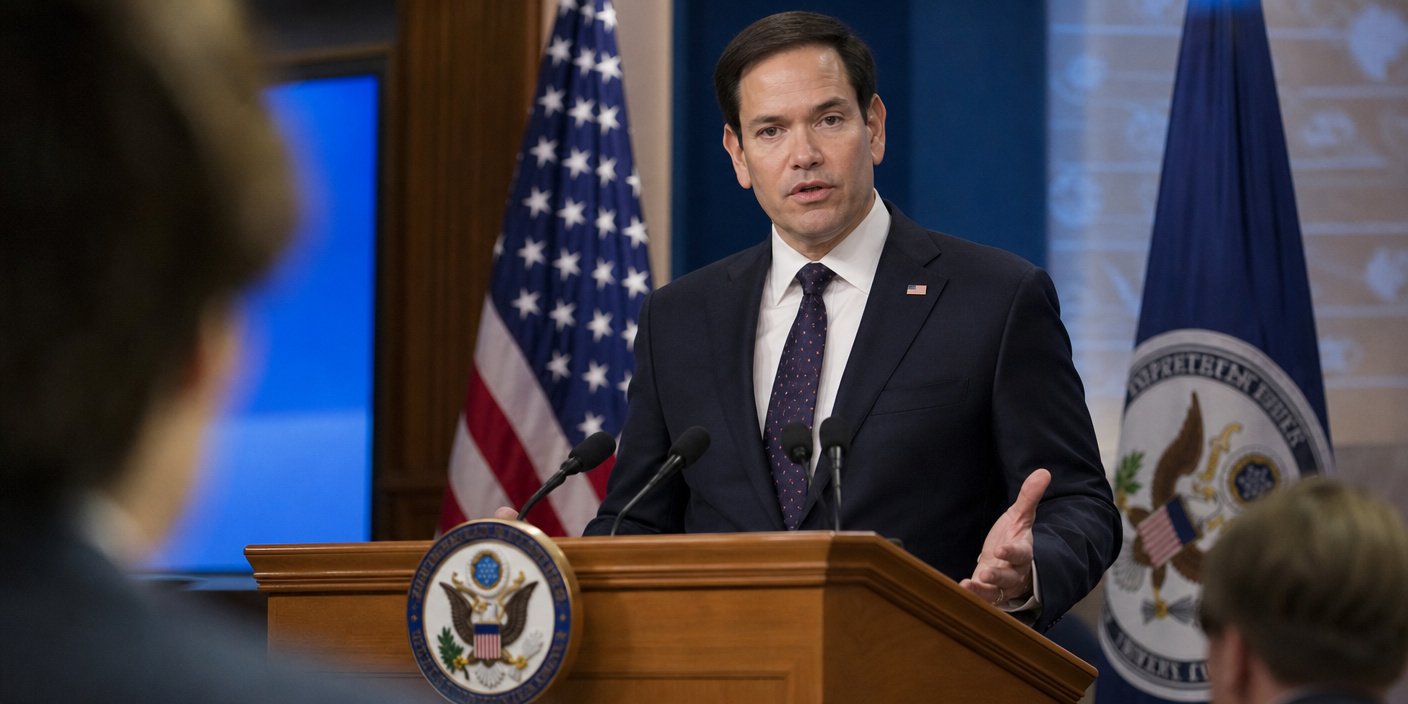
The intensifying rhetoric and military activities surrounding Taiwan have drawn significant attention and concern from the international community, particularly the United States. Beijing has expressed strong displeasure with any perceived shifts in American policy or language regarding Taiwan. In early 2025, China reacted sharply when the U.S. State Department removed a line from its fact sheet stating, “We do not support Taiwan independence.” Chinese foreign ministry spokesperson Guo Jiakun stated that this change “sends seriously wrong signals to ‘Taiwan independence’ separatist forces and will only damage peace and stability in the Taiwan Strait.” China urged the U.S. to “correct its mistakes and prudently handle the Taiwan issue.” The U.S. State Department, however, described the update as routine, aimed at informing the public about its unofficial relationship with Taiwan.
The U.S. officially adheres to the One China policy, acknowledging Beijing’s position that Taiwan is part of China but does not endorse it. Despite this, the U.S. remains Taiwan’s main security backer and is legally bound to treat threats to the island as a matter of “grave concern.” The U.S. has also helped fund Taiwan’s defense, though it does not recognize it as an independent country. Former President Donald Trump has claimed that Chinese President Xi Jinping assured him that China would not take military action against Taiwan while Trump was in office, a claim China has not directly endorsed. Chinese Ambassador to the U.S. Xie Feng has identified Taiwan as one of Beijing’s four “red lines,” alongside democracy and human rights, China’s political system, and development rights. The Chinese embassy in the U.S. has consistently reiterated Beijing’s stance, with Minister Counselor Liu Pengyu stating that “No one should underestimate China’s determination, resolve and capability to safeguard her sovereignty and territorial integrity,” a clear declaration within the China Taiwan Strategy.
Taiwan’s Response and Strategy Amidst China Taiwan Strategy
Taiwan, officially the Republic of China, functions as a self-governing democracy with its own military and foreign relations, and its government rejects Beijing’s sovereignty claims, asserting that only the Taiwanese people can decide their future. In response to China’s escalating rhetoric and military activities, Taiwan’s government has been strengthening its defenses and national security measures. President Lai Ching-te has declared China a “foreign hostile force” and has implemented measures to counter growing threats and alleged spying operations. These measures include proposals to restore a military court system and increased scrutiny of cross-strait ties, forming part of Taiwan’s Taiwan defense strategy.
Taiwan’s Defense Ministry has stated that history has shown aggression and expansion ultimately lead to failure, criticizing China’s actions as undermining regional stability and making it the biggest “troublemaker” in the international community. The ministry emphasized that Taiwan is strengthening its forces to safeguard sovereignty and ensure freedom and democracy. In terms of military preparedness, Taiwan is focusing on coastal defense and counter-landing operations, improving reserve mobilization, and extending mandatory military service. President Lai aims to increase defense spending and is developing advanced air defense systems. Taiwan also employs an asymmetric strategy, developing unmanned systems to deter Chinese forces, a crucial element of its Taiwan defense strategy.
The ‘Longer-Term’ Strategy and Future Outlook for China Taiwan Strategy
The Chinese Communist Party (CCP) views the reunification of Taiwan as a historical mission linked to the “national rejuvenation” of China, with stated goals often aligned with major centennial anniversaries, such as 2049, the 100th anniversary of the PRC’s founding. This implies a long-term, strategic approach that combines diplomatic, economic, and military pressures as part of the China Taiwan Strategy. Beijing has articulated a “one country, two systems” framework as a potential model for reunification, though this is met with skepticism and resistance in Taiwan.
Recent analyses suggest Beijing is moving from mere rhetoric to a concrete roadmap for reunification, integrating historical narratives, economic incentives, and military readiness. The Chinese government continues to emphasize its sovereignty claims, with spokespeople asserting that the Taiwan question is an internal affair that must be resolved by the Chinese people, a cornerstone of its Taiwan unification strategy.
The international community, particularly the United States, plays a critical role in the evolving situation. The U.S. commitment to Taiwan’s defense, while maintaining a policy of strategic ambiguity, creates a complex dynamic. China’s recent shift in language and its intensified military activities represent a strategic evolution, aimed at creating an irreversible narrative and setting the stage for eventual unification, embodying Xi Jinping Taiwan policy. This multifaceted strategy seeks to leverage historical claims, demonstrate military power, and exploit diplomatic fissures to achieve its long-term objective, making Taiwan a central and persistent geopolitical flashpoint. The story of China’s approach to Taiwan is one of gradual, strategic escalation, marked by an increasing assertiveness in both its words and its actions, defining the current China Taiwan Strategy.