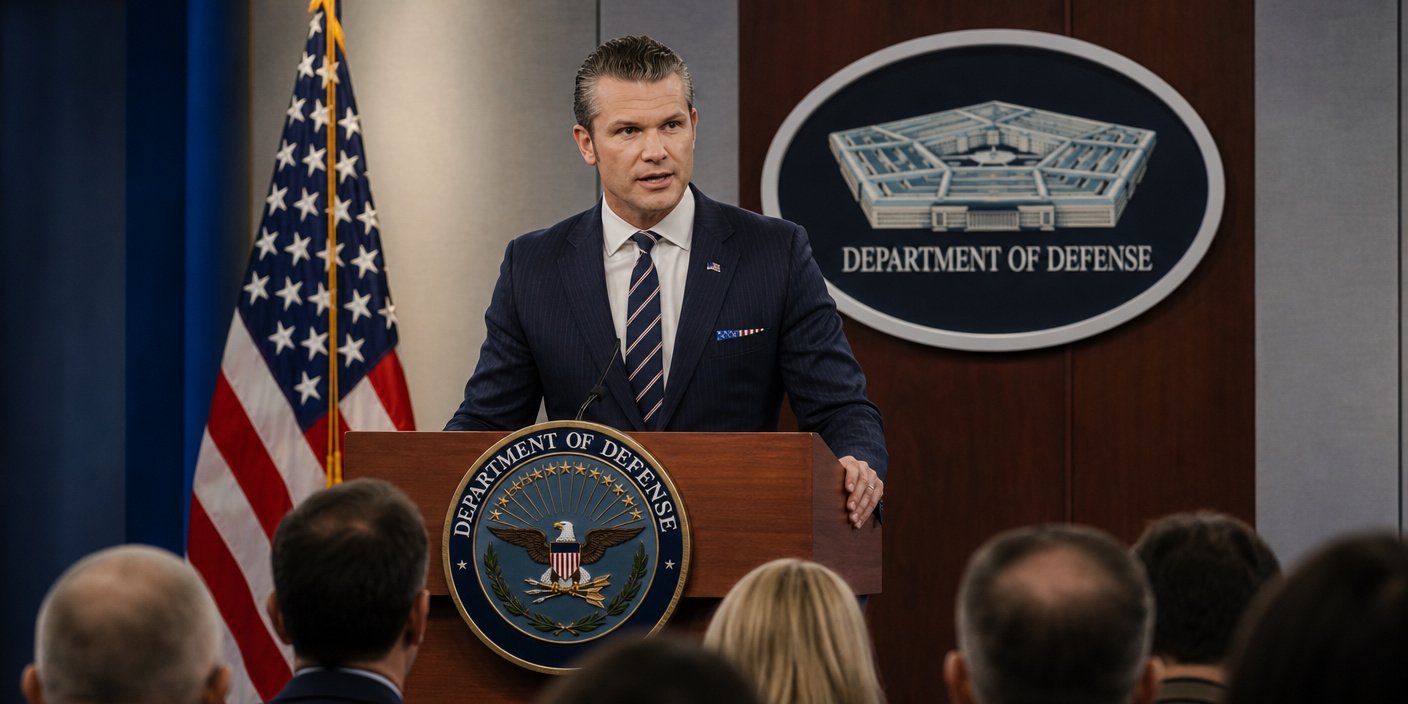
In a dramatic shift for the 119th Congress, Florida Representative Sheila Cherfilus-McCormick officially resigned her seat on Tuesday, April 21, 2026, moments before the House Ethics Committee was set to convene for a hearing on her potential expulsion. The resignation marks the sudden conclusion to a months-long investigation into allegations that the Democrat misappropriated over $5 million in federal disaster relief funds, funneling the money into her private company and subsequently using it to bolster her 2021 special election campaign. By stepping down, the Florida lawmaker effectively deprived the Ethics Committee of jurisdiction over her case, putting an immediate halt to what was expected to be a recommendation for her removal from Congress. Her departure arrives amidst a broader wave of upheaval in Washington, following the recent resignations of other lawmakers facing their own scandals, leaving the lower chamber to grapple with an increasingly volatile political environment.
The Final Moments of a Contentious Tenure
The resignation letter, which was read on the House floor shortly after its submission, signaled a defiance that had characterized much of the congresswoman’s defense throughout the investigation. In her statement, Cherfilus-McCormick blasted the Ethics Committee for refusing to grant her new legal counsel adequate time to prepare a defense. She framed the proceedings as a “witch hunt,” asserting that she was being denied due process. “Rather than play these political games, I choose to step away so that I can devote my time to fighting for my neighbors in Florida’s 20th district,” she wrote. Her decision to exit the political stage was met with immediate, polarized reactions. Supporters and allies have echoed her concerns regarding the speed and nature of the Ethics Committee’s investigation, while critics—most notably Republican Rep. Greg Steube, who had previously filed a resolution to force her expulsion—hailed the move as a long-overdue victory for institutional integrity.
The Anatomy of the Ethics Violations
The downfall of Cherfilus-McCormick is rooted in a massive, multi-layered federal investigation. In January, the House Ethics Committee released a comprehensive 59-page report detailing what it described as a pattern of systematic misconduct. The committee’s inquiry was not merely focused on abstract campaign finance reporting errors but on specific, documented instances of personal enrichment. The investigation concluded that there was substantial evidence indicating the misuse of Federal Emergency Management Agency (FEMA) funds—money originally earmarked for COVID-19 relief—for high-end personal expenditures.
During a rare public “trial” held last month, the committee’s adjudicatory subcommittee systematically reviewed 27 allegations against the congresswoman. They determined that 25 of these charges had been proven. The list of expenditures is stark: investigators documented the use of diverted funds for the purchase of luxury goods from Tiffany & Co., high-end designer clothing, the financing of a Tesla, and expenditures at luxury hotels and cruise lines. These revelations severely damaged her standing within her party and provided the bipartisan support needed for the ethics panel to move toward a punitive recommendation. The committee counsel, in a pre-hearing memorandum, noted that the violations were “very serious standing on their own,” emphasizing that the misuse of federal funds during a national crisis struck at the heart of public trust.
The Legal and Political Fallout

While the resignation effectively halts the legislative expulsion process, it does not absolve the former congresswoman of her legal jeopardy. Cherfilus-McCormick remains under federal indictment following a November 2025 grand jury decision. The Department of Justice (DOJ) has charged her with multiple counts related to theft and the laundering of federal disaster relief funds. With her federal trial currently pushed back to February 2027, the political resignation has merely shifted the venue of her struggle from the House floor to the federal courtroom.
For the Democratic Party, the loss of this seat is a significant, if expected, blow in a tight congressional landscape. The resignation triggers an immediate, albeit complex, special election process to fill the vacancy in Florida’s 20th District. This adds to the existing pressure on the House, as the chamber’s partisan margins fluctuate following the recent departures of Representatives Eric Swalwell and Tony Gonzales. The rapid succession of these resignations has led to questions about the efficacy of current congressional oversight mechanisms. With Speaker Mike Johnson previously stating that the findings against Cherfilus-McCormick were “alarming” and that expulsion was the “consensus of this body,” the resignation served as a preemptive strike to avoid the historic stain of a formal removal vote. Historically, only six House members have been expelled, making the prospect of a seventh removal within such a short window a matter of significant concern for leadership on both sides of the aisle.
The Secondary Angles: Beyond the Headline
1. The Evolution of House Ethics Enforcement: This case underscores a shift toward a more aggressive, public-facing stance by the House Ethics Committee. The decision to hold a televised, seven-hour public trial was a deviation from the historically quiet, behind-closed-doors approach of ethics panels. This transparency, while lauded by ethics watchdogs, also heightened the political pressure on the accused, effectively making resignation the only viable path to save face.
2. The FEMA Accountability Gap: The involvement of FEMA funds brings a secondary angle regarding government accountability during emergency funding rollouts. The fact that millions could be diverted from pandemic relief programs into a political campaign raises systemic questions about oversight of disaster-related expenditures. Policymakers are already calling for more robust auditing requirements for federal funds distributed to corporate entities associated with public officials.
3. The Rise of the “Preemptive Resignation”: We are witnessing a trend where lawmakers under investigation for extreme ethical breaches are opting to resign just before a final floor vote. This allows them to avoid the permanent historical label of “expelled,” which can complicate future professional or legal endeavors. This pattern suggests that in the current political climate, resignation is being treated as a strategic tool rather than an admission of guilt, further complicating the public’s ability to discern accountability.
FAQ: People Also Ask
Q: Why did Sheila Cherfilus-McCormick resign specifically on Tuesday?
A: She resigned just moments before a scheduled House Ethics Committee hearing. The committee was set to finalize its recommendations for her punishment, which almost certainly would have included a formal push for expulsion. By resigning, she technically removed the committee’s jurisdiction to issue sanctions, though it did not stop the underlying federal criminal case.
Q: What were the main charges against her?
A: She was indicted for allegedly stealing $5 million in FEMA disaster relief funds. The House Ethics Committee found her guilty of 25 separate ethics violations, which included using these funds to pay for luxury goods (such as jewelry and a Tesla) and to improperly finance her 2021 congressional campaign.
Q: What happens to her seat in Florida’s 20th District?
A: Her resignation triggers a special election process to fill the vacancy. The Governor of Florida will be responsible for setting the dates for the primary and general elections to determine her successor, which will likely become a focal point of intense political maneuvering in the coming months.
Q: Is she still facing criminal charges?
A: Yes. While her resignation ends the congressional ethics investigation, she remains under a federal indictment by the Department of Justice. She has pleaded not guilty to the charges, and her federal trial is scheduled to begin in early 2027.