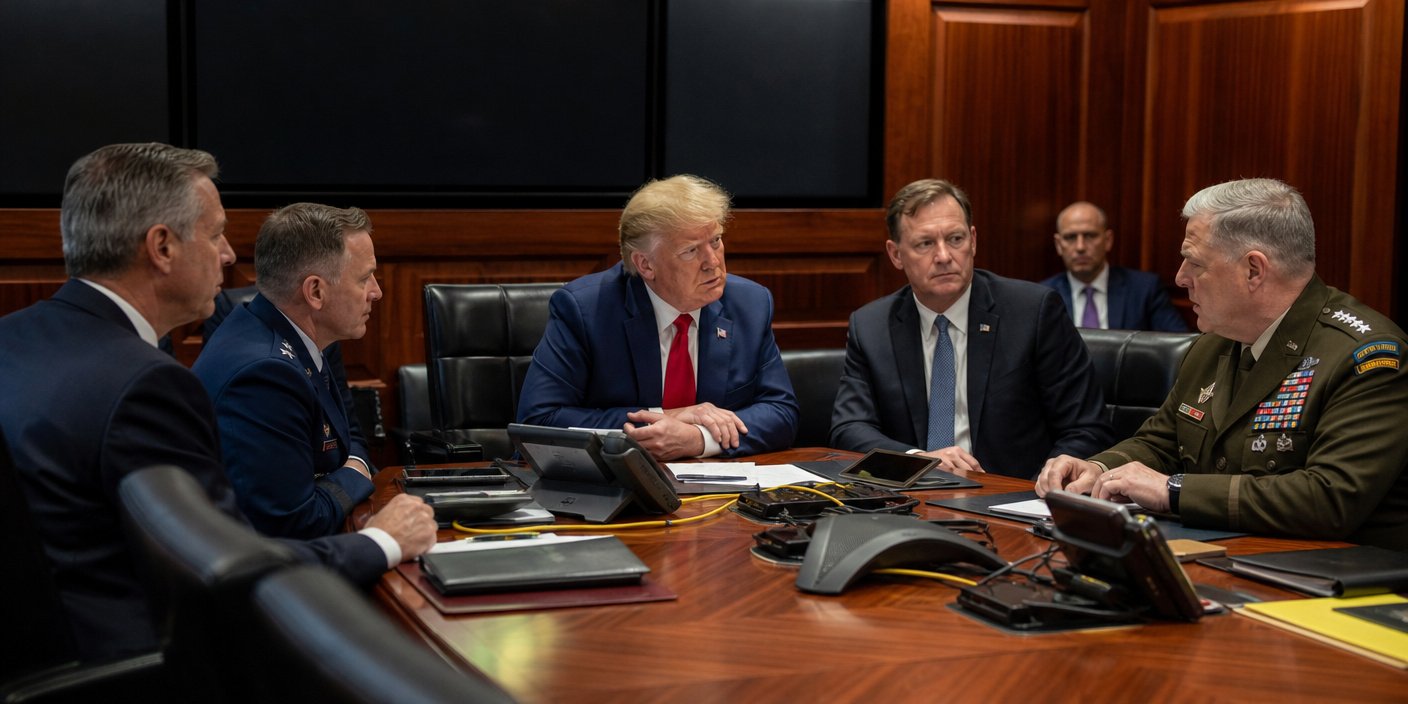
Former President Donald Trump stated that Iran would not receive sanctions relief in exchange for giving up its highly enriched uranium, signaling a hardline stance on nuclear negotiations.
Key Highlights:
- Trump affirmed that Iran would not benefit from sanctions easing if it relinquishes its enriched uranium.
- The statement suggests a continuation of a firm U.S. policy towards Iran’s nuclear program.
- This position aligns with previous U.S. efforts to curb Iran’s nuclear capabilities.
U.S. Stance on Iran’s Nuclear Ambitions Under Trump
A Firm Rejection of Sanctions for Nuclear Concessions
Former President Donald Trump has reiterated a strong stance against providing sanctions relief to Iran in return for concessions on its nuclear program, specifically regarding highly enriched uranium. In comments to PBS News, Trump emphasized that Iran would not be rewarded with eased economic sanctions if it were to abandon its pursuit of highly enriched uranium. This declaration underscores a commitment to a policy that prioritizes preventing Iran from acquiring nuclear weapons capabilities, rather than engaging in negotiated settlements that might offer economic incentives.

The Trump administration previously adopted a policy of “maximum pressure” on Iran, withdrawing from the Joint Comprehensive Plan of Action (JCPOA) and reimposing stringent sanctions. The stated goal was to force Iran to negotiate a “new deal” that would more comprehensively address its ballistic missile program and its regional activities, in addition to its nuclear program. Trump’s current remarks suggest that this fundamental position has not changed, and any future discussions regarding Iran’s nuclear activities would likely face a high bar for any reciprocal concessions.
The Significance of Highly Enriched Uranium
Highly enriched uranium (HEU) is a critical component in the production of nuclear weapons. The process of enriching uranium involves increasing the concentration of the fissile isotope Uranium-235. While low-enriched uranium (LEU) is used for nuclear power generation, HEU, typically enriched to 20% or more, and weapons-grade uranium, enriched to around 90%, can be used to construct a nuclear explosive device. International efforts, including those under the JCPOA, have focused on limiting Iran’s enrichment levels and its stockpile of enriched uranium to prevent it from reaching the threshold for weapons development. Trump’s firm stance highlights the U.S. administration’s continued focus on this specific aspect of Iran’s nuclear program as a primary concern.
Historical Context and Future Implications
The U.S. approach to Iran’s nuclear program has been a complex and contentious issue for decades. The JCPOA, negotiated under the Obama administration, aimed to provide Iran with sanctions relief in exchange for verifiable limits on its nuclear program. However, the Trump administration viewed the deal as insufficient, arguing it did not adequately address Iran’s other destabilizing activities. Trump’s decision to withdraw from the JCPOA and reimpose sanctions led to a period of heightened tensions between the U.S. and Iran. Current statements from Trump suggest a potential return to this assertive policy, which could have significant implications for regional stability and international diplomacy. Any future negotiations would likely need to address not only uranium enrichment but also Iran’s broader actions, presenting a considerable challenge for diplomatic resolution. The economic impact of sanctions on Iran has been severe, affecting its oil exports, financial institutions, and overall economy. The potential for sanctions relief remains a key point of leverage in discussions, but the conditions set by the U.S. appear to be stringent.
FAQ: People Also Ask
What is highly enriched uranium?
Highly enriched uranium (HEU) is uranium that has had its concentration of the fissile isotope Uranium-235 increased significantly, typically to 20% or more. Weapons-grade uranium, a subset of HEU, is enriched to around 90% and is suitable for use in nuclear weapons.
What was the Joint Comprehensive Plan of Action (JCPOA)?
The JCPOA was a nuclear deal agreed upon in 2015 between Iran and the P5+1 countries (China, France, Russia, the United Kingdom, the United States, plus Germany and the European Union). It placed limits on Iran’s nuclear program in exchange for sanctions relief.
Why did the U.S. withdraw from the JCPOA under Trump?
Former President Trump withdrew the U.S. from the JCPOA in 2018, arguing that the deal was flawed, did not go far enough in preventing Iran from developing nuclear weapons, and failed to address Iran’s ballistic missile program and regional activities.
What is the U.S. policy of “maximum pressure” on Iran?
The “maximum pressure” policy, implemented by the Trump administration, involved reimposing and escalating sanctions on Iran across various sectors to compel the Iranian government to negotiate a new, broader deal that would curb its nuclear ambitions, ballistic missile program, and regional influence.
What are the potential consequences of renewed sanctions or lack of sanctions relief for Iran?
For Iran, continued or intensified sanctions can lead to severe economic hardship, currency devaluation, inflation, and reduced access to international markets and financial systems. This can impact the general population and potentially lead to internal political pressures. For international relations, a lack of resolution on the nuclear issue can prolong regional tensions and increase the risk of conflict.