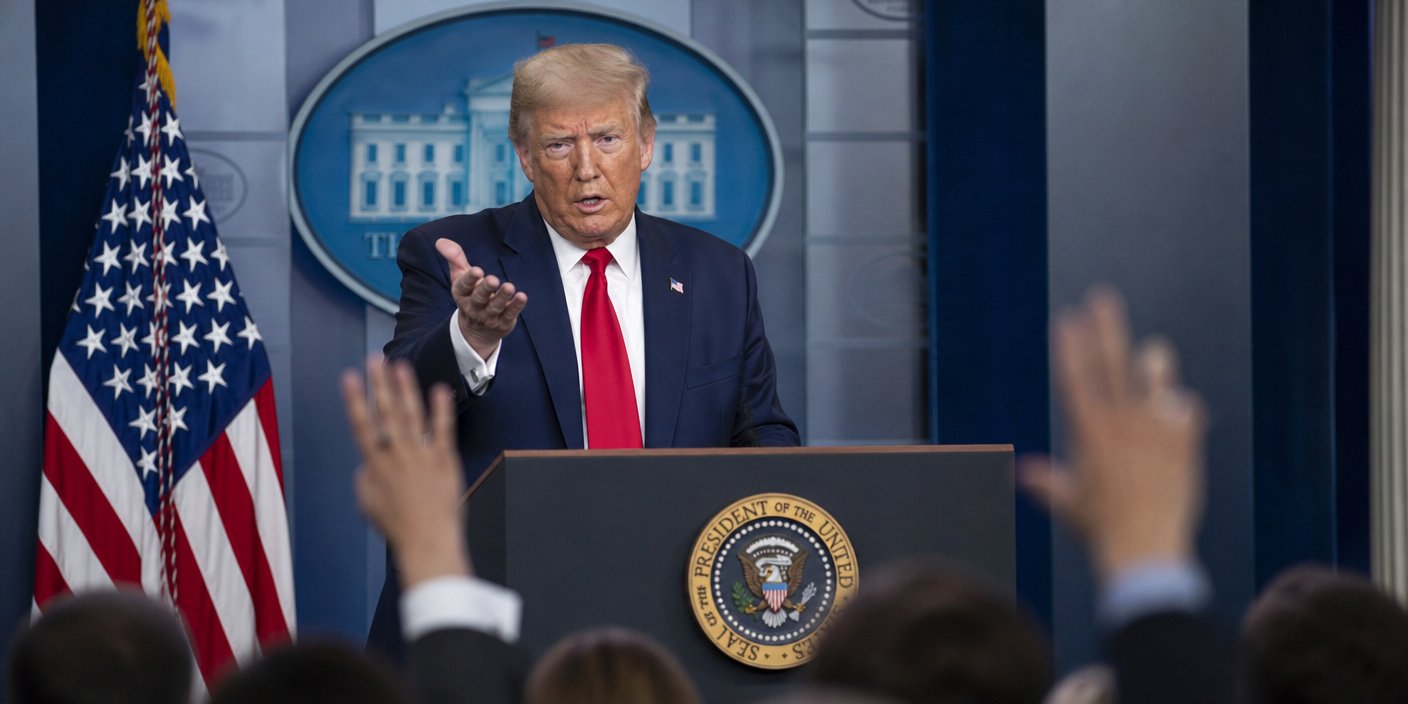
President Donald Trump has abruptly fired the two remaining federal election officials responsible for ensuring the accuracy and security of votes nationwide, just months before the critical November midterm elections. The dismissals leave the bipartisan Election Assistance Commission (EAC), a body established by Congress to serve as a national resource for election administration, without any commissioners. These crucial roles are now vacant, raising immediate concerns about oversight and the administration of upcoming elections.
Key Highlights:
- Two federal election commissioners were fired by President Trump.
- The dismissals occurred ahead of the November midterm elections.
- The Election Assistance Commission (EAC) is now left without commissioners.
- Democrats have denounced the move as “irresponsible and dangerous.”
- Critics suggest the firings are part of a pattern of election interference.
Firing of EAC Commissioners Raises Alarm Bells
The White House officially communicated the firings via email from an unnamed official, a move that has been met with swift and severe condemnation from opposition lawmakers and state-level election administrators. The EAC, an independent federal commission, plays a vital role in helping states improve election administration, focusing on issues of voter registration, voting, and election management. Its commissioners, appointed by the President and confirmed by the Senate, provide bipartisan leadership and expertise. With no commissioners in place, the commission’s ability to provide guidance, research, and support to states is severely hampered, particularly during a sensitive pre-election period.
Political Fallout and Democratic Condemnation
Democrats were quick to label the firings as a politically motivated and dangerous act. Senate Minority Leader Chuck Schumer called the decision “irresponsible and dangerous,” echoing sentiments expressed by other party leaders and election watchdog groups. They argue that removing the very officials tasked with safeguarding the electoral process, especially at such a critical juncture, undermines public trust and potentially opens the door to irregularities. The timing of the dismissals, so close to a major election, has fueled accusations that the administration may be seeking to create an environment of uncertainty or to weaken election oversight mechanisms for partisan gain.
Unanswered Questions and Security Concerns


Beyond the political rhetoric, the practical implications of the EAC’s current state are significant. State election officials, who often rely on the EAC for best practices, technical assistance, and unbiased information, are now left without a key federal resource. The lack of leadership at the commission means that critical initiatives related to voting machine security, voter data integrity, and election technology standards may stall. Senator Ron Wyden, a vocal critic of the administration’s election policies, demanded an immediate explanation from the White House, emphasizing the need for transparency and accountability in election administration. The specific reasons for the dismissals have not been publicly disclosed by the White House, further exacerbating concerns among those who view the move as a deliberate attempt to disrupt or influence the electoral landscape.
Historical Context of Election Assistance Commission
The Election Assistance Commission was established in 2002 through the Help America Vote Act, a bipartisan response to the controversies surrounding the 2000 presidential election. Its mandate was to provide a centralized federal resource to assist states in improving election administration and modernizing election systems. The commission is designed to be non-partisan, with an even number of commissioners from the two major political parties, ensuring a balanced approach to election policy. The current vacuum of leadership at the EAC represents a significant departure from its intended operational stability and bipartisan mission, occurring at a time when election security and integrity are already under intense public scrutiny.
Implications for Election Security and Trust
The firings not only leave a void in federal election oversight but also risk eroding public confidence in the electoral process. In an era already marked by deep political divisions and widespread misinformation about election integrity, such actions by the executive branch can be perceived as indicative of deeper systemic issues. Election security experts have consistently warned that politicizing election administration or creating uncertainty around voting processes can have a chilling effect on voter turnout and public faith. The absence of commissioners means that the EAC cannot fulfill its statutory duties, including the development of voluntary voting system guidelines and the administration of grants to states for election improvements. This leaves a critical gap in the nation’s election infrastructure.
FAQ: People Also Ask
What is the Election Assistance Commission (EAC)?
The Election Assistance Commission (EAC) is an independent federal commission created by the Help America Vote Act of 2002. Its mission is to serve as a national resource for election administration, assisting states in improving their election systems, promoting uniformity and accuracy in the fielding of election technology, and enhancing the accessibility of voting for all voters, including individuals with disabilities and members of the U.S. Armed Forces serving away from home.
Why is the EAC important, especially before midterms?
The EAC is important because it provides critical resources, research, and best practices to state and local election officials. This includes guidance on voting system standards, voter registration modernization, and election security. With its commissioners gone, the EAC’s ability to offer this vital support and oversight is significantly diminished, especially during the crucial ramp-up period for midterm elections when states are finalizing preparations and addressing potential challenges.
Who are the fired election commissioners?
The two commissioners who were fired were independent federal election officials. While the source data does not provide their names, it specifies that they were the “two remaining federal election officials responsible for ensuring accurate and secure votes.” They were part of the bipartisan structure of the EAC.
What is the reaction from Democrats and election officials?
Democrats and many election officials have strongly criticized the firings, deeming them “irresponsible and dangerous.” They express concern that these dismissals undermine election integrity and trust, especially with the midterms approaching. Some critics suggest these actions are part of a broader effort by the administration to interfere with or politicize election processes.
What are the potential consequences of the EAC being without commissioners?
The primary consequence is the diminished capacity of the EAC to perform its functions. This includes its ability to provide guidance, conduct research, develop voluntary voting system guidelines, and administer grants. The lack of leadership could lead to delays in critical election administration projects, reduced support for states, and a potential weakening of national election oversight, all of which are particularly concerning in the lead-up to significant elections.