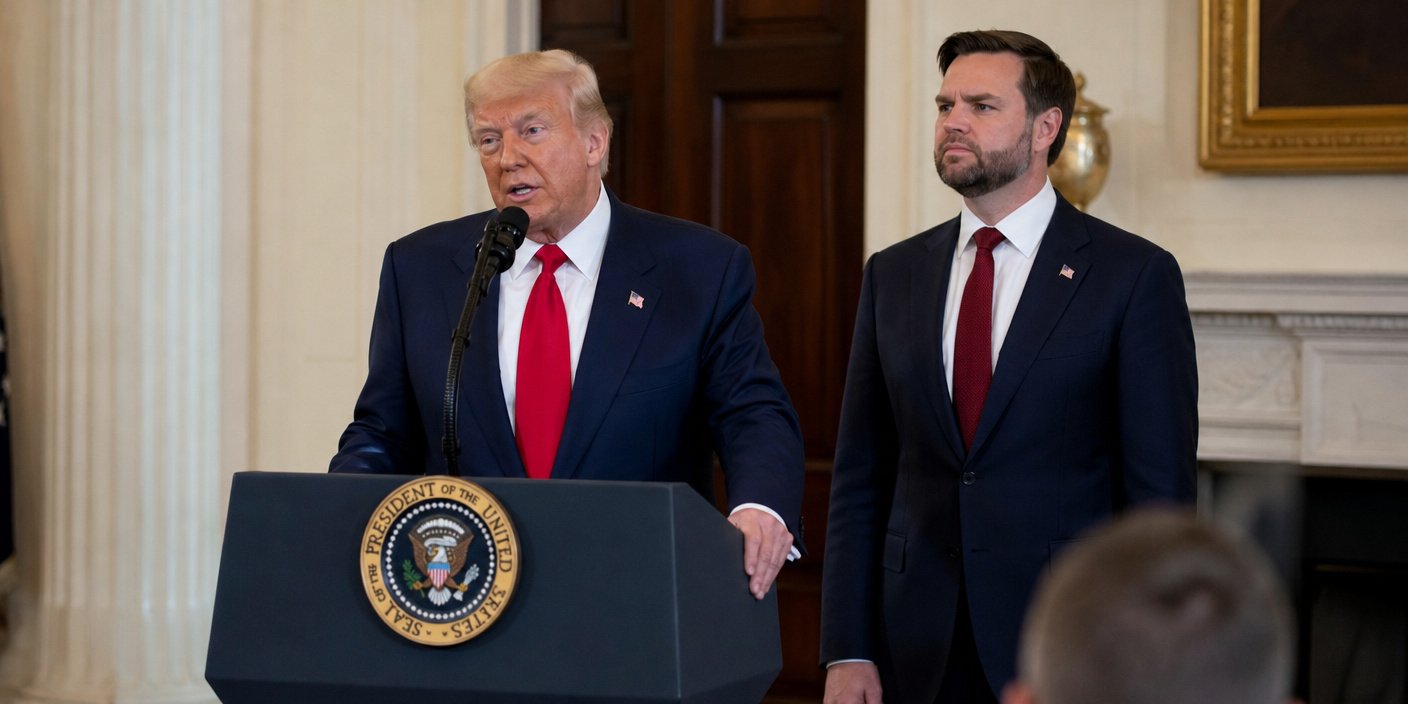
The American entertainment industry stands at a critical juncture as former President Donald Trump introduces the ‘Motion Picture, Television, and Entertainment Revitalization Act.’ This bold legislative initiative seeks to fundamentally alter the economic landscape of domestic media production by offering significant tax incentives, aimed at reversing decades of production flight to international locations. By incentivizing production companies to anchor their operations within US borders, the proposal targets a resurgence in domestic manufacturing of content, promising to fortify the local economies that rely on the ripple effects of high-budget film and television shoots.
Key Highlights
- Legislative Proposal: The ‘Motion Picture, Television, and Entertainment Revitalization Act’ provides targeted tax relief for studios producing content domestically.
- Economic Strategy: The act aims to reduce ‘runaway production,’ a phenomenon where US film budgets are spent in foreign nations to chase lower costs.
- Industry Impact: The proposal seeks to leverage federal incentives to compete with international subsidies found in Canada, the UK, and other global production hubs.
- Economic Multiplier: Proponents argue the legislation will stimulate local businesses, including hospitality, construction, and specialized technical services.
The Strategic Shift: Reshoring American Media
The central pillar of the ‘Motion Picture, Television, and Entertainment Revitalization Act’ is the concept of economic nationalism applied to the creative economy. For years, the ‘runaway production’ crisis has been a point of contention within the American film industry. As production costs have skyrocketed, studios have increasingly looked abroad, lured by generous tax credits offered by foreign governments—particularly in jurisdictions like Vancouver, Toronto, and various locations across Europe. This exodus has not only impacted the jobs of actors and directors but has also drained the domestic economy of high-paying roles for gaffers, set builders, costume designers, and digital artists.
Trump’s proposed act serves as a direct counter-offensive to these international market distortions. By implementing a federal tax incentive, the proposal aims to neutralize the cost-benefit analysis that currently favors overseas filming. This move is designed to make the United States a ‘first-choice’ destination for major studio tentpoles, streaming series, and independent productions alike. The economic logic is clear: when a massive budget is spent on a local set, the dollars circulate through the community, supporting local hardware stores, catering companies, equipment rental houses, and labor unions. This ‘multiplier effect’ is what the proposed legislation aims to capture.
The Mechanics of the Proposed Act
While the specific legislative language continues to evolve, the core functionality of the proposal revolves around a competitive federal credit structure. Unlike existing state-level incentives—which vary wildly in quality and reliability, creating a patchwork of competitiveness across the US—a federal standard would provide a predictable baseline. This predictability is vital for long-term production planning. Studios often plan projects years in advance; having a guaranteed federal incentive allows for better budgeting and investment in local infrastructure, such as soundstages and post-production facilities.



Furthermore, the legislation seeks to address the competitive disadvantage faced by many American states. While states like Georgia, New Mexico, and Louisiana have been successful in attracting production through aggressive state credits, they are often fighting a losing battle against countries that offer national-level subsidies. The ‘Revitalization Act’ envisions the United States acting as a unified economic bloc, capable of competing with the centralized incentives of international competitors.
Global Competition and the Runaway Production Crisis
For decades, the term ‘runaway production’ has haunted US-based industry professionals. It describes the migration of production activity from its natural geographic setting (e.g., a story set in Chicago being filmed in Toronto) purely for tax purposes. This trend has had profound consequences for the US labor market. When productions leave, they take with them the daily wages of hundreds of crew members, the rental fees for local equipment, and the support services that keep the industry afloat.
By aiming to incentivize domestic production, the proposal suggests a broader strategy to re-industrialize the creative sector. This is not merely about movies; it is about the entire ecosystem of digital and technical labor. As the entertainment industry shifts toward more high-tech production methods—including Virtual Production, LED volumes, and complex CGI—there is a unique opportunity for the US to lead. A federal tax incentive could act as a catalyst, encouraging studios to invest in American-based technology facilities, keeping the intellectual property and the high-tech infrastructure on US soil.
Navigating the Political and Industry Landscape
Implementing such an act presents unique challenges. The film industry is historically complex, often balancing the interests of massive multinational conglomerates against the needs of local labor unions and independent filmmakers. Supporters of the legislation emphasize that it is not about picking winners and losers, but rather about creating a level playing field. Critics, however, might raise concerns about fiscal impact and the potential for government intervention in private media markets.
Nevertheless, the bipartisan potential of this act is significant. Both labor unions, such as IATSE and the Teamsters, and business groups in states heavily dependent on the film economy, share an interest in keeping production at home. The ‘Motion Picture, Television, and Entertainment Revitalization Act’ essentially seeks to harmonize these interests, presenting film production as a critical pillar of the domestic manufacturing and services economy, rather than just an artistic export. As the proposal gains traction, it is likely to spark a broader conversation about how the United States can assert its dominance in the global ‘content war’—the race to produce the best, most expensive, and most influential media in an era of global streaming platforms.
FAQ: People Also Ask
1. How does this act differ from current state-level film incentives?
Most existing film incentives are managed at the state level, creating a fragmented landscape where states compete against one another. This proposal would introduce a federal-level incentive, creating a consistent national baseline that makes the US more competitive as a whole against international jurisdictions.
2. Will this bill benefit smaller productions or only massive studio blockbusters?
While the primary goal is to lure large-scale productions back to the US, the structural nature of such tax incentives usually includes provisions for smaller independent films to help them manage their production costs, potentially democratizing the ability to film within the US.
3. Is this legislation primarily about jobs or cultural output?
It is primarily economic. The proposal views film and television production as a vital component of the domestic economy, focusing on job creation for skilled labor, infrastructure investment, and support for ancillary businesses like catering, hardware, and hospitality.
4. What are the major international competitors that this act aims to counter?
Primary competitors include Canada (specifically provinces like Ontario and British Columbia), the United Kingdom, and countries in Eastern Europe that offer significant national tax rebates, which have historically pulled massive budget productions away from the US.