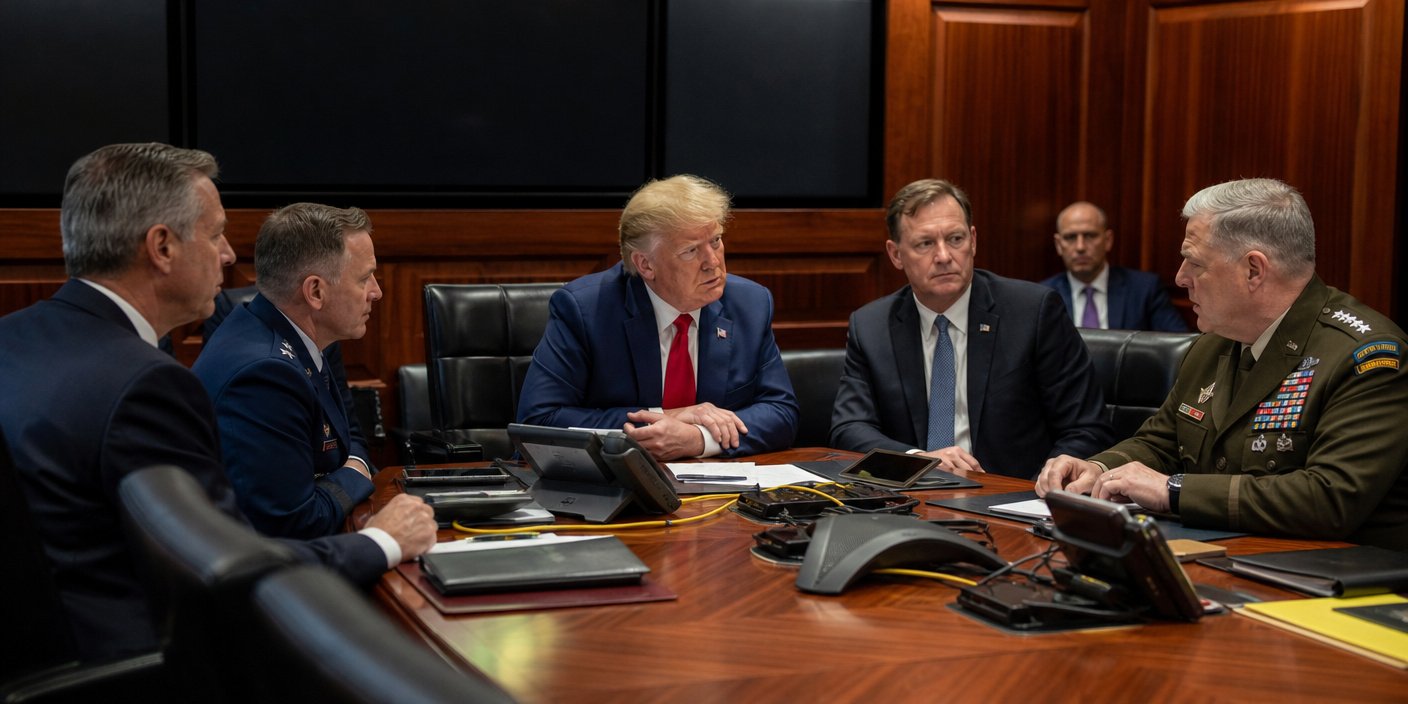
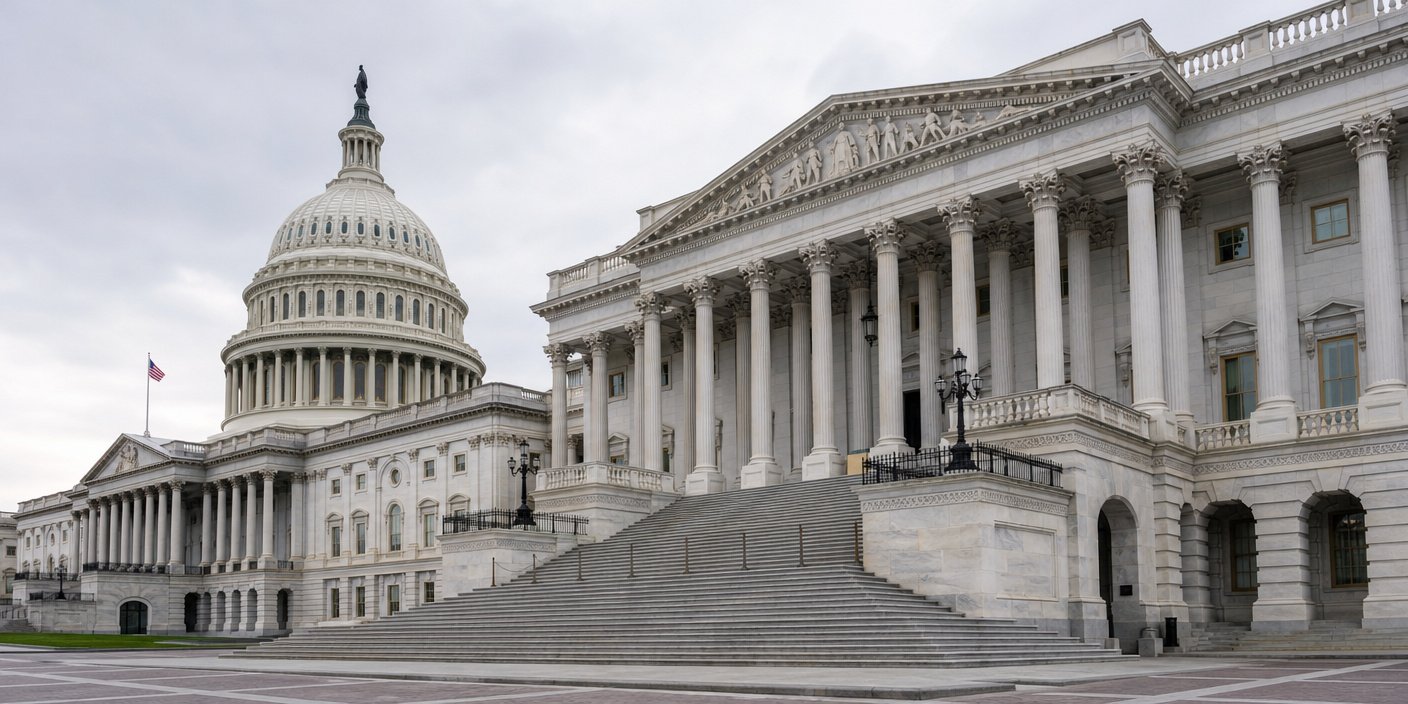
President Trump convened his Cabinet on Tuesday as diplomatic efforts to broker an end to the Iran conflict remained in a state of flux, with key stakeholders signaling a readiness for de-escalation while persistent uncertainties cloud the path forward.
Key Highlights:
- Cabinet-level discussions convened to assess the latest developments in Iran peace talks.
- International partners express cautious optimism but highlight ongoing challenges.
- Unspecified ‘external factors’ are reportedly influencing the negotiation timeline.
- Administration officials emphasize a commitment to achieving a stable resolution.
Navigating the Complexities of Iran Peace Negotiations
The delicate dance of international diplomacy surrounding the Iran conflict has entered a critical phase, marked by simultaneous signals of potential breakthrough and entrenched obstacles. President Trump’s convocation of his Cabinet underscores the high-stakes nature of these ongoing discussions, aimed at achieving a lasting peace in a region long plagued by instability. While the specifics of the administration’s strategy remain closely guarded, the meeting signals a unified governmental approach to the evolving situation. Sources close to the negotiations indicate that while progress has been made on certain fronts, the path to a comprehensive agreement is far from straightforward. The involvement of multiple international actors, each with their own distinct interests, adds layers of complexity to the process.
Shifting Alliances and Diplomatic Maneuvers

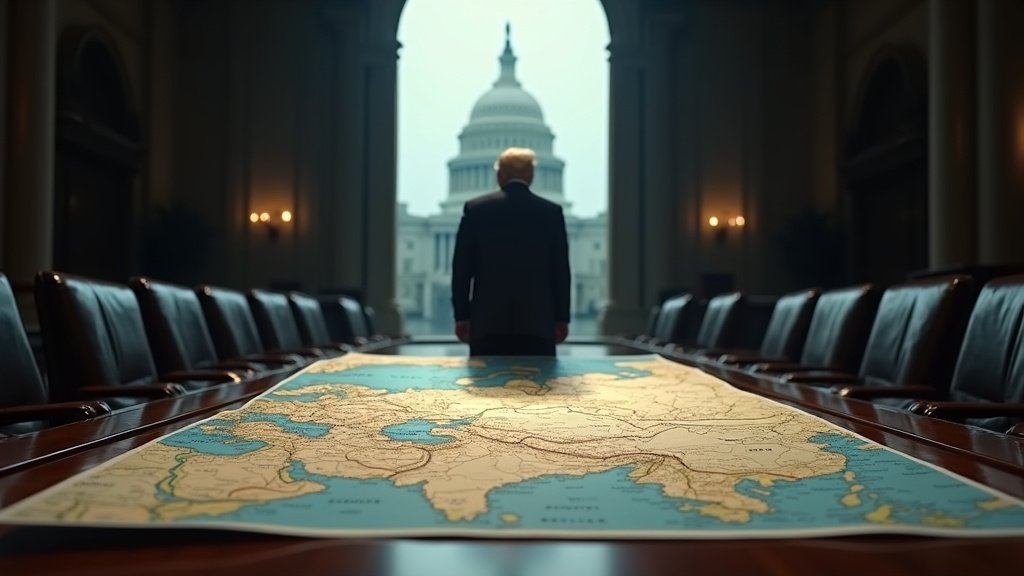


The past few weeks have seen a flurry of diplomatic activity, with envoys shuttling between capitals and back-channel communications reportedly intensifying. The administration appears to be leveraging this period of engagement to gauge the sincerity of all parties involved and to identify potential compromises. However, the inherent unpredictability of geopolitical landscapes means that any perceived momentum can be swiftly altered by unforeseen events or shifts in political will. The focus remains on establishing a framework that ensures regional security and fosters economic stability, but the exact contours of such an agreement are still being fiercely debated.
The Role of External Factors
Administration officials have alluded to ‘external factors’ that are influencing the pace and direction of the talks. These could range from regional power dynamics to global economic pressures, all of which can significantly impact the negotiating positions of the involved parties. Understanding and mitigating the influence of these external variables is likely a key agenda item for the Cabinet’s deliberations. The administration’s objective is to create an environment conducive to a peaceful resolution, free from undue external interference.
Commitment to a Stable Resolution
Despite the challenges, the White House has reiterated its commitment to pursuing a diplomatic solution. The underlying goal is not merely to halt hostilities but to establish a sustainable peace that benefits all parties and contributes to global security. This involves a multi-pronged approach that balances assertive diplomacy with a willingness to engage constructively with international partners. The administration’s posture suggests a determined effort to see these complex negotiations through to a successful conclusion, albeit with a realistic assessment of the difficulties ahead.
FAQ: People Also Ask
What is the current status of the Iran peace talks?
The talks are in a dynamic and evolving state, with periods of intense diplomatic activity interspersed with moments of uncertainty. While progress has been reported on certain aspects, a final agreement remains contingent on overcoming several complex challenges and external factors.
Who are the main parties involved in the negotiations?
The primary parties typically include the government of Iran and a coalition of international actors, often involving major world powers. The specific composition of negotiating bodies can shift depending on the phase and nature of the discussions.
What are the key objectives of the peace talks?
The overarching objectives generally revolve around de-escalating tensions, ensuring regional security, promoting economic stability, and establishing a framework for peaceful coexistence. Specific goals can vary based on the direct parties involved and the historical context of the conflict.
How are external factors influencing the negotiations?
External factors, such as regional power plays, global economic conditions, and the involvement of non-state actors, can significantly impact the negotiating leverage and willingness of parties to compromise. These elements add layers of complexity to the diplomatic process.
What is the US administration’s role in the talks?
The US administration plays a significant role, often acting as a mediator or a key participant, depending on the specific diplomatic framework. Their objective is to facilitate a stable resolution that aligns with US foreign policy and security interests in the region.