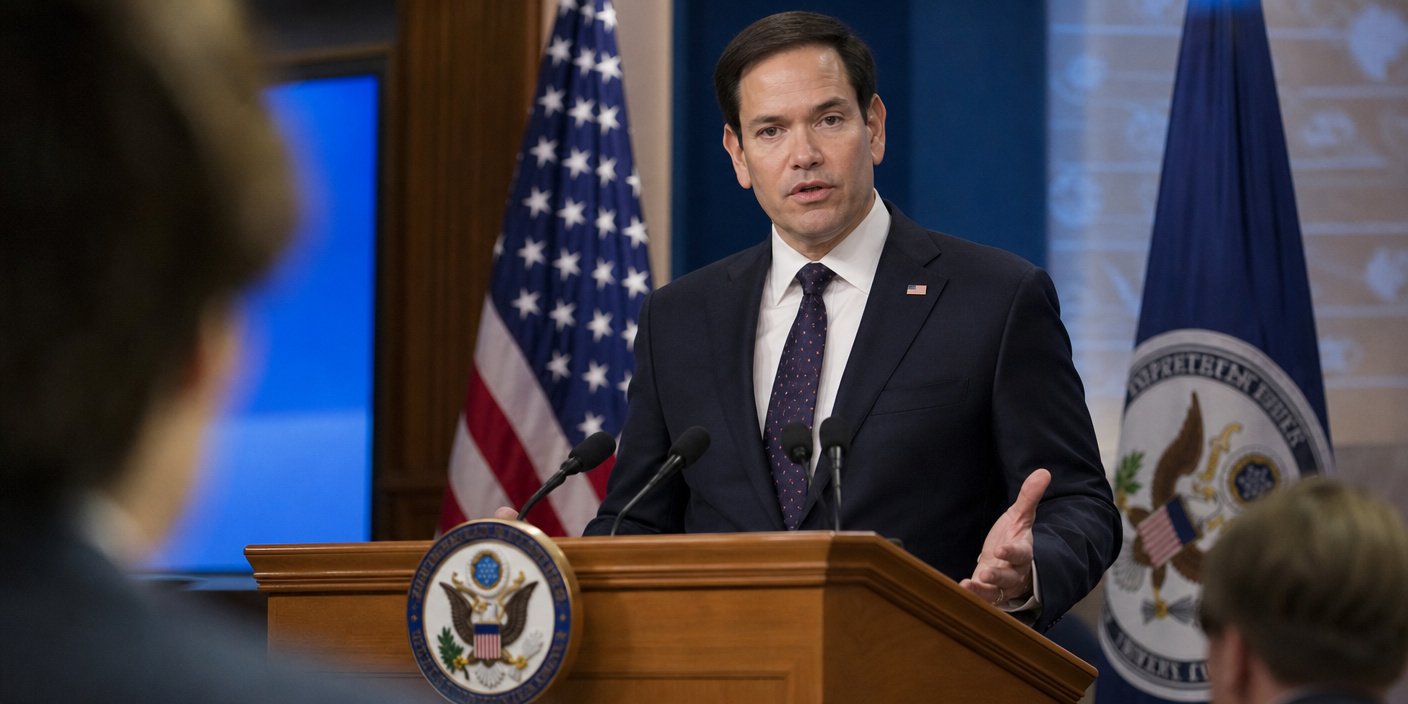
The Trump administration‘s approach to US Human Rights has undergone a significant transformation, notably marked by a conspicuous silence on International Human Rights Day, December 10, 2025. This departure from tradition, where the day traditionally celebrated global human rights champions and reaffirmed the nation’s commitment to democratic values, has sparked concerns about the future of US Human Rights engagement. The quiet observance signals a pivotal moment in how the United States perceives and promotes US Human Rights.

This shift reflects a broader pivot in US Human Rights policy, with the administration now emphasizing individual, “unalienable” rights, a framework deeply rooted in the Declaration of Independence. This represents a substantial change from previous administrations that often focused on group-based rights and identity-specific issues. The new model centers on rights described as “endowed by a creator,” signaling a fundamental evolution in American foreign policy and its interpretation of US Human Rights.
A Reimagined US Human Rights Framework
The administration’s strategy emphasizes rights that “pre-exist governments,” a perspective intended to be distinct from earlier, potentially “politicized” approaches. A senior State Department official stated that new reports would be “nonpartisan, factually based, and hard hitting.” However, critics interpret this as a retrenchment, fearing it may subordinate freedoms to other interests and geopolitical objectives, a move that has alarmed many human rights advocates.
Revising US Human Rights Reports and Global Human Rights
Under this revised model, US embassies and consulates have received new directives for preparing annual Human Rights Reports, which are part of the comprehensive State Department reports. These yearly reports have undergone substantial alterations, described by some as “dramatically scaled back and weakened.” Entire sections have been excised, including coverage of gender-based violence, LGBTQI+ rights, environmental justice, and diversity. Furthermore, reports concerning close US partners, such as El Salvador and Hungary, now feature fewer criticisms regarding human rights issues, a selective approach that has drawn considerable criticism regarding the integrity of US Human Rights reporting.
Critics Raise Alarm Over the New US Human Rights Policy
This significant foreign policy shift has generated apprehension among many observers regarding the future of US Human Rights. Advocates express concern over a perceived retreat from global leadership. One congressional aide lamented the “optics” of the silence, suggesting it communicates that human rights are “no longer a priority.” Organizations like Human Rights First have labeled the changes an “abandonment of core values.” The ACLU and Amnesty International highlight worries about the rise of authoritarianism, warning that this approach emboldens global autocrats and undermines established international principles of US Human Rights. Critics argue the administration is weaponizing human rights as a “cudgel” against certain nations.
Implications for US Human Rights and American Culture
The renewed emphasis on “unalienable” rights, drawing from the Declaration of Independence, highlights the importance of individual liberty. Critics contend, however, that this focus diverts attention from crucial group protections and the broader concept of US Human Rights. The administration maintains its commitment to denouncing abuses like “transnational oppression and imprisonment of journalists.” Deputy Spokesperson Tommy Pigott stated, “We are saying enough is enough” regarding specific violations. Nevertheless, the silence on International Human Rights Day itself is revealing, suggesting a de-emphasis on traditional human rights advocacy and a potential weakening of the commitment to US Human Rights. This redefinition of the national discourse on fundamental freedoms carries implications for American society and its cultural understanding of individual rights.
The administration’s evolving doctrine on US Human Rights represents a profound departure from decades of US foreign policy tradition. The primary focus is now on individual, creator-endowed rights, aligning with a strategic shift that prioritizes national interests and geopolitical objectives. The absence of pronouncements on International Human Rights Day underscores this new era, leaving a perceived void on the global stage for championing human rights. This development prompts critical reflection on core American values and the nation’s global standing in relation to the human rights framework and its impact on global human rights.