In a display of the intense security measures required to protect a sitting U.S. president in volatile geopolitical climates, it has been revealed that during the 2018 NATO summit in Brussels, a covert operation was executed to safeguard President Donald Trump. Facing credible concerns regarding potential threats, the Secret Service orchestrated a complex logistical shell game, shifting the President to a smaller, secondary aircraft for his return journey while a larger, decoy plane—carrying key cabinet members and staff—maintained a highly visible flight path to create the illusion of his continued presence on the main vessel. This maneuver, often referred to in security circles as a ‘ghost flight’ or decoy operation, highlights the extreme, multi-layered protocols employed by the United States Secret Service (USSS) and the White House Military Office to neutralize risk in real-time.
Key Highlights
- Strategic Deception: The U.S. Secret Service deployed a decoy aircraft during the 2018 NATO summit to mask the actual transit path of President Trump.
- Threat Intelligence: The operation was necessitated by specific intelligence reports suggesting elevated security threats, reportedly involving Iranian interests, targeting the presidential delegation.
- Logistical Complexity: The operation involved a ‘shell game’ where top cabinet officials occupied the decoy plane to ensure the deception remained convincing to potential bad actors monitoring air traffic.
- Standard Protocol: While rare in public discussion, these ‘ghost’ maneuvers are part of a broader, established playbook used by intelligence agencies to protect heads of state when threat levels spike.
The Anatomy of a Presidential Decoy Operation
The revelation of the 2018 decoy operation offers a rare window into the ‘Air Force One’ ecosystem—a logistical marvel that operates far beyond the single, iconic blue-and-white Boeing 747 most recognize. When the President of the United States travels, especially to high-profile international gatherings like the NATO summit in Brussels, the security apparatus is absolute. The goal is not just to provide transport, but to manage a constant, shifting variables of threat vectors.
Intelligence-Driven Logistics
Security decisions at this level are rarely proactive in a vacuum; they are reactive to specific, granular intelligence. In the case of the 2018 NATO summit, the volatile relationship between the Trump administration and Iranian officials created a unique security environment. Intelligence agencies utilize a process of continuous threat assessment, where signal intelligence (SIGINT) and human intelligence (HUMINT) are funneled to the Presidential Protection Division (PPD). When that intelligence crosses a specific threshold of probability, the PPD triggers a pre-planned contingency. The decision to split the President from the main convoy is not taken lightly; it requires coordination across multiple aviation assets, air traffic control centers, and military communications networks to ensure the decoy appears indistinguishable from the President’s actual flight path.
The Role of Air Force One Variants
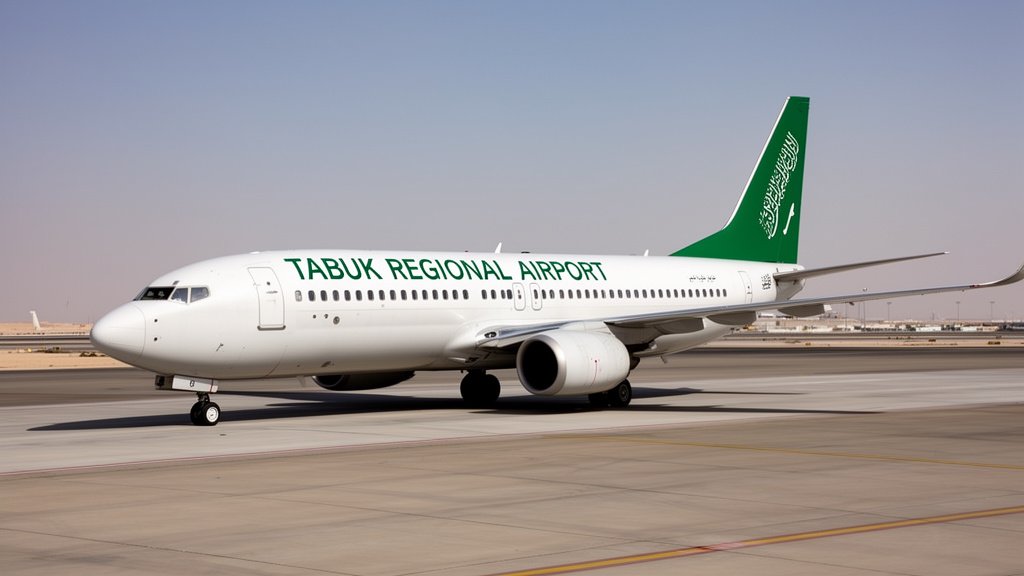
While the public equates the President’s safety with the VC-25A (the military version of the Boeing 747-200B), the Presidential Airlift Group actually manages a fleet of smaller, more agile aircraft. These planes, often used for smaller airports or quicker shuttle movements, proved essential in the 2018 operation. By transferring the President to a smaller, less conspicuous aircraft, the Secret Service was able to blend his transit into more standard civilian or military air traffic, effectively lowering his profile while the decoy jet—likely a larger, more distinct aircraft—flew a more predictable, high-visibility route. This contrast serves to draw attention and potential tracking efforts away from the true, high-value asset.
The Geopolitical Chessboard

To understand why such measures were necessary, one must view the 2018 Brussels summit through the lens of the intense geopolitical strain of the era. President Trump’s ‘America First’ foreign policy, particularly the 2018 withdrawal from the Joint Comprehensive Plan of Action (JCPOA)—commonly known as the Iran Nuclear Deal—had brought tensions with Tehran to a fever pitch. The summit, attended by dozens of world leaders, provided an environment that was both high-profile and, from a security standpoint, highly vulnerable.
Assessing the Threat Landscape
Security for the President of the United States is governed by the principle of ‘constant state of flux.’ When a threat is detected, the objective is to maximize uncertainty for the adversary. If an adversary knows exactly when and how the President is moving, they can plan. If they are forced to track multiple, conflicting signals, their planning window collapses. This is the core psychological warfare element of the decoy operation. By placing cabinet officials on the primary aircraft, the Secret Service ensured that the aircraft still radiated the appropriate ‘VIP’ electronic signature and communications profile, keeping the decoy plausible long enough to allow the President’s true plane to reach its destination safely.
The Burden of Protection
Such operations come with significant costs, not just in financial terms but in personnel strain. Managing two sets of protocols simultaneously during a period of peak international pressure requires extreme focus from the USSS and the White House staff involved. These officials—often senior cabinet members—become unwitting participants in the security web. Their presence on the decoy plane is a testament to the fact that, in the interest of presidential safety, the security of the entire executive branch leadership is synchronized.
Historical Precedents and Future Implications
While the 2018 report might seem like the stuff of thriller novels, the use of decoy assets is a well-documented element of high-level statecraft. From the armored motorcades of the Cold War to the encrypted, non-descript private jets used by world leaders during times of conflict, the concept of the ‘body double’ or ‘decoy asset’ is a staple of survival. As threats become increasingly digitized—with drone technology and advanced cyber-tracking making the skies more transparent—the need for these analog deceptions actually increases. In an era where flight paths can be tracked by anyone with a smartphone and a satellite feed, the decoy operation remains one of the few ways to effectively hide a target of such immense global significance.
FAQ: People Also Ask
Q: How common are decoy planes for the President?
A: While exact frequency is classified for security reasons, the use of decoy aircraft and alternate transit paths is an established contingency protocol for the U.S. Secret Service during periods of heightened threat intelligence.
Q: Does the President actually fly on ‘Air Force One’ all the time?
A: Not always. The Presidential Airlift Group maintains a fleet of aircraft. Depending on the size of the airport, the mission requirements, and the security environment, the President may be moved to smaller, more agile aircraft that can operate out of shorter runways.
Q: Why was the 2018 NATO summit considered a high-threat event?
A: The 2018 summit occurred during a period of significant international friction, specifically regarding U.S. policy toward Iran. Intelligence agencies were monitoring reports of potential state-sponsored threats, which necessitated the highest levels of security precaution for the visiting delegation.
Q: Do decoy planes put cabinet officials at risk?
A: Cabinet officials are high-value targets in their own right, but they operate under their own specific security protocols. The decision to utilize them in a decoy capacity is made only after a thorough risk-benefit analysis, ensuring that the benefit to the President’s safety justifies the calculated risk of the decoy flight path.