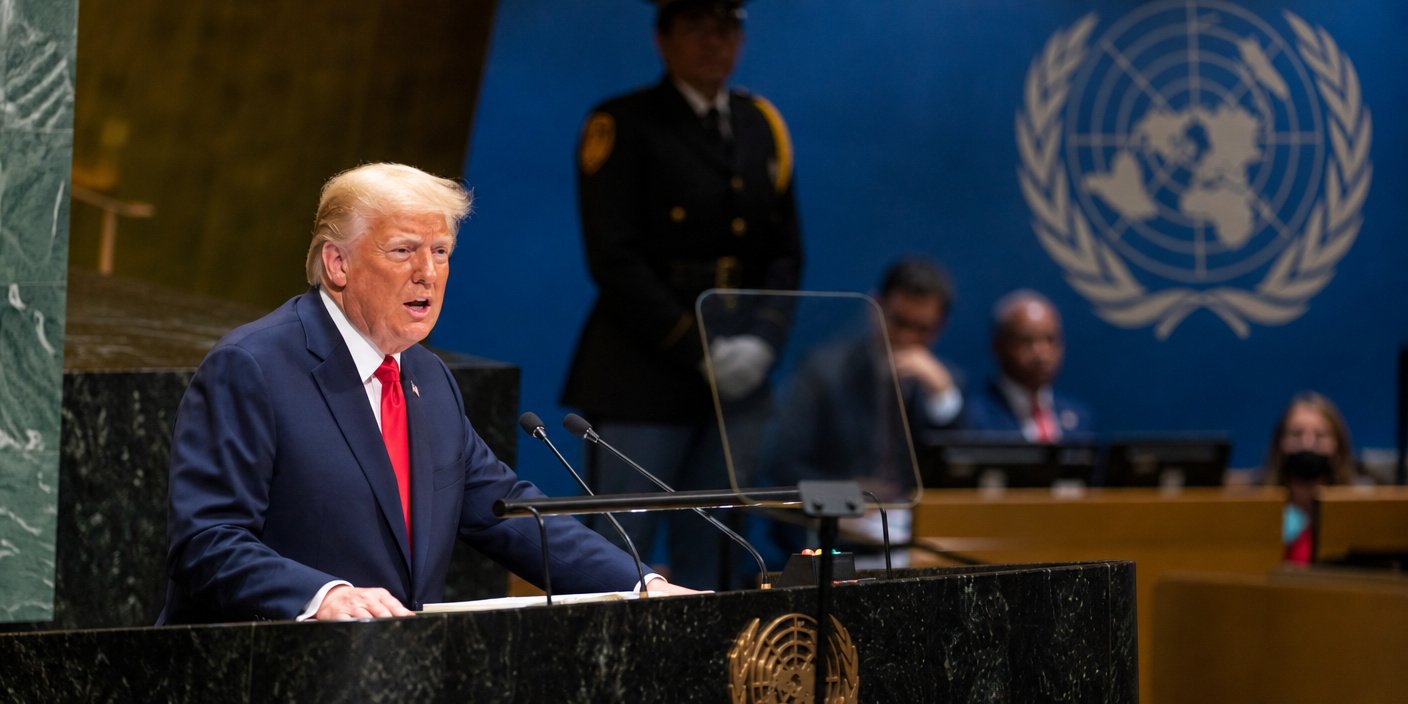
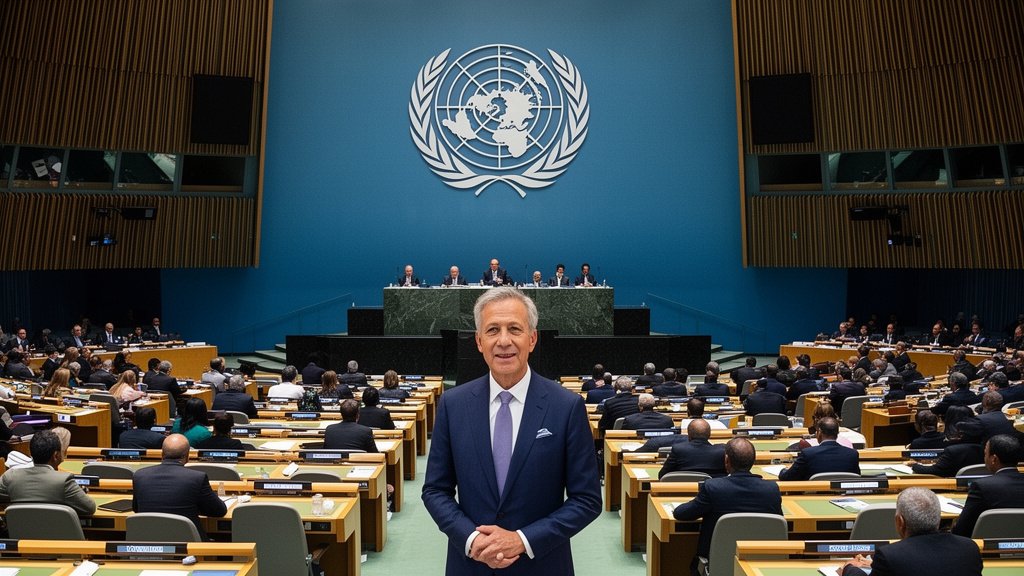
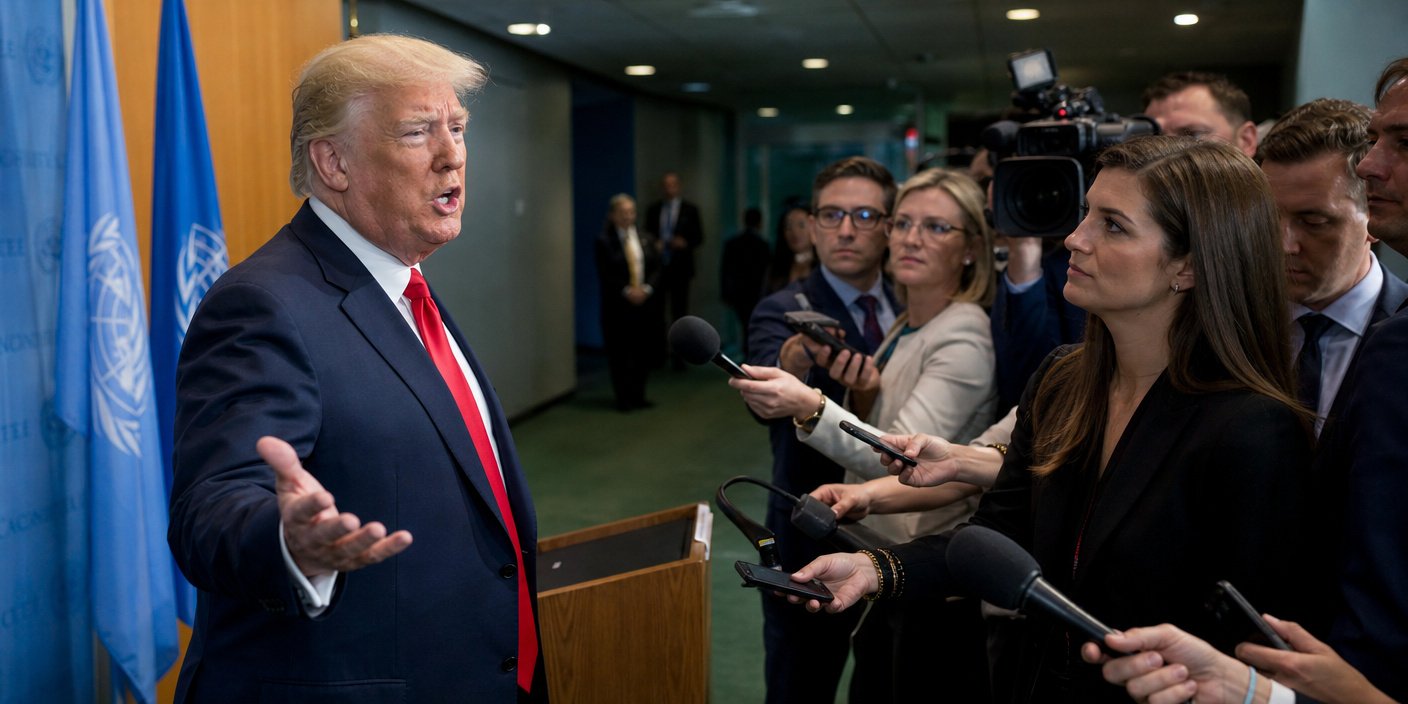
President Trump’s address to the United Nations General Assembly (UNGA) has once again placed the administration’s Iran policy under the global microscope. As the White House navigates the turbulent waters of Middle Eastern geopolitics, the speech underscores a dual-track strategy: a continued commitment to the ‘maximum pressure’ campaign, aimed at crippling the Iranian regime’s financial capacity, while simultaneously attempting to manage the delicate diplomatic reality of preventing an all-out regional conflict. This high-stakes maneuvering at the UN comes at a time when the administration is balancing the isolation of Tehran with the concerns of international allies and regional stakeholders who fear the consequences of a direct military confrontation.
Key Highlights
- The ‘Maximum Pressure’ Doctrine: The administration continues to enforce strict sanctions, aimed at restricting Iran’s oil exports and access to the global financial system (SWIFT).
- JCPOA Fragmentation: The ongoing diplomatic fallout from the U.S. withdrawal from the Joint Comprehensive Plan of Action (JCPOA) remains the central tension in the relationship.
- Regional Security Architecture: The administration is leveraging the UNGA to bolster coalitions against Iranian proxy activity in the region, particularly involving the IRGC.
- Diplomatic Tightrope: A strategic balancing act between European E3 (France, Germany, UK) desire for de-escalation and the U.S. demand for broader compliance.
The Geopolitics of Maximum Pressure
The central tenet of the Trump administration’s foreign policy regarding Iran has been the ‘maximum pressure’ campaign. This strategy relies on the systematic application of economic, political, and financial leverage to alter the behavior of the Iranian government. By re-imposing sanctions that were previously lifted under the 2015 JCPOA, the U.S. has effectively cut off a significant portion of Iran’s oil revenue, which historically formed the backbone of its national budget.
From the floor of the UNGA, the administration’s rhetoric focuses on the systemic impact of these measures. Economically, the objective is twofold: to force Tehran back to the negotiating table on terms that address not only nuclear enrichment but also ballistic missile proliferation and regional proxy warfare. However, this has created a ‘high-stakes’ environment where the Iranian leadership feels cornered. The administration argues that the prior nuclear deal merely provided the regime with the financial liquidity to project power through regional surrogates, a claim they cite as the primary justification for the current hardline approach.
The Diplomatic Tightrope and European Relations
One of the most complex facets of the current diplomatic situation is the rift between the U.S. and its European partners. The E3 nations—France, Germany, and the United Kingdom—have consistently maintained that the JCPOA, despite its flaws, is the most viable mechanism to contain Iran’s nuclear ambitions. This has created a persistent friction point in multilateral diplomacy.
During the UNGA proceedings, the administration has utilized private diplomatic sessions to urge these European powers to align more closely with U.S. sanctions policy. The contention is that the ‘European INSTEX’ mechanism, designed to facilitate trade with Iran, undermines the efficacy of U.S. pressure. The administration views this as a vital strategic bottleneck: if the U.S. can successfully convince or coerce European partners into a unified front, the economic strangulation of the Iranian regime becomes exponentially more effective. This alignment is not just about nuclear policy; it is about establishing a unified Western front against what the administration terms ‘malign activity’ across the Middle East.
Escalation and Regional Proxy Dynamics
The administration’s rhetoric at the UNGA also frequently addresses the threat of regional escalation. This involves the complex network of proxy groups supported by the Islamic Revolutionary Guard Corps (IRGC), ranging from militias in Iraq and Syria to the Houthi movement in Yemen. The administration frames its Iran policy as a broader effort to restore regional stability.
There is a deep-seated fear that miscalculation—whether by an Iranian-linked proxy or a U.S. regional ally—could trigger a rapid, uncontrollable cascade of hostilities. The administration has utilized its UNGA platform to highlight incidents such as the targeting of oil tankers and the downing of unmanned aerial vehicles, using these events as evidence that Iran constitutes an existential threat to the global energy supply and maritime security. By bringing these issues to the UN stage, the U.S. attempts to build an international consensus that moves beyond the narrow confines of the nuclear debate, broadening the scope to include Iran’s non-nuclear provocations.
Historical Context: From JCPOA to Confrontation
To understand the current tension, one must look at the structural shift in U.S. policy since 2018. The decision to withdraw from the JCPOA was predicated on the belief that the agreement was fundamentally flawed because it failed to address the duration of nuclear restrictions (the ‘sunset clauses’) and ignored Iran’s non-nuclear aggression. The administration argues that the previous policy of ‘appeasement’ only encouraged the regime to expand its influence. As the administration continues this course, the UNGA serves as a venue to justify this historic pivot to the international community, framing the current tension not as a crisis of U.S. creation, but as a necessary confrontation with an expansionist power that must be curtailed to ensure long-term regional stability.
FAQ: People Also Ask
1. Why is the ‘Maximum Pressure’ campaign considered controversial?
Critics argue that the policy has failed to bring Iran to the negotiating table and has instead pushed the regime toward increased nuclear enrichment and more aggressive proxy actions, while placing a heavy economic burden on the Iranian civilian population.
2. What is the role of the E3 in the Iran nuclear negotiations?
France, Germany, and the United Kingdom (the E3) act as mediators who remain committed to the 2015 JCPOA framework, seeking to preserve the deal while balancing their deep security alliance with the United States.
3. How does the Iran situation impact global energy prices?
Heightened tensions often lead to volatility in oil markets. Because a significant percentage of the world’s oil supply passes through the Strait of Hormuz—a strategic choke point near Iran—any credible threat of blockade or conflict causes immediate price spikes in global energy markets.
4. What is the administration’s end goal for Iran?
The official stated goal is a new, comprehensive agreement that permanently restricts Iran’s nuclear program, ends its ballistic missile development, and halts its support for proxy groups across the Middle East.