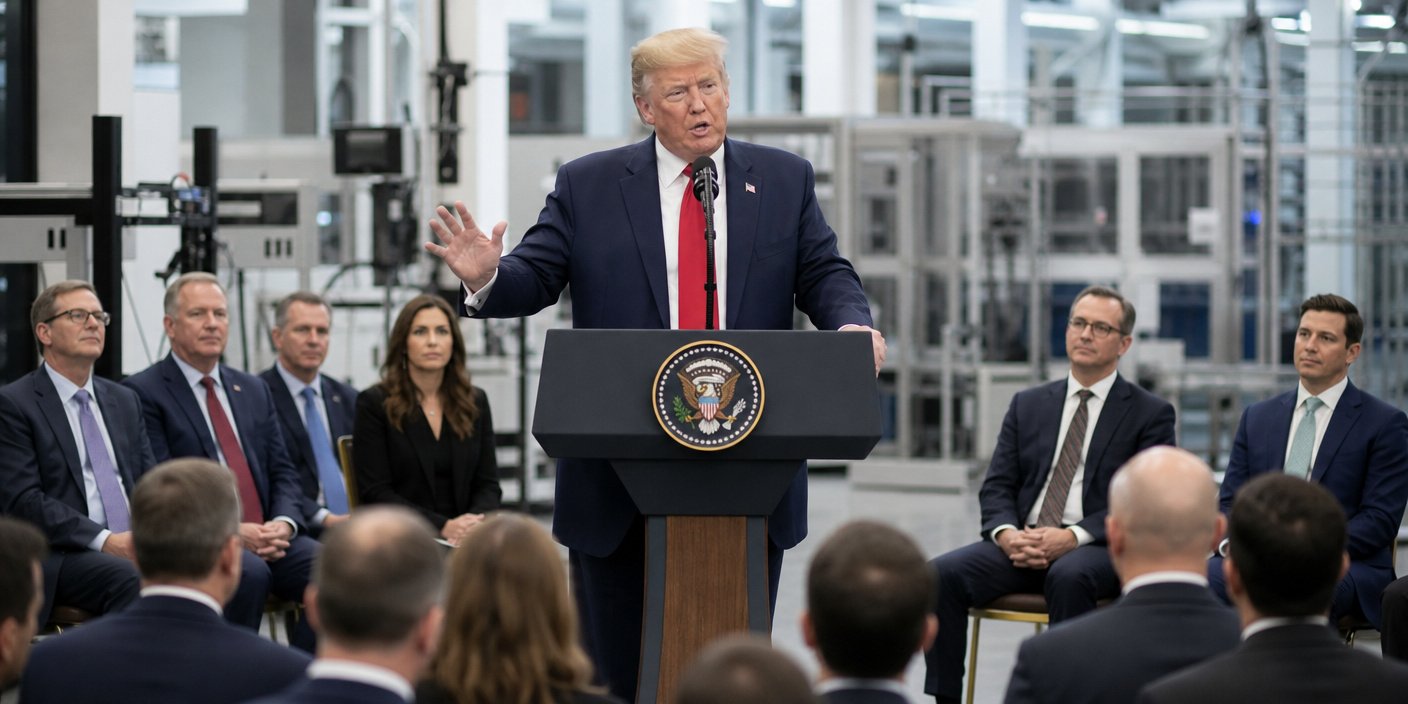
WASHINGTON D.C. – President Donald J. Trump announced on Thursday, May 16, 2025, that his administration is on the cusp of finalizing the specific tariff rates applicable to the majority of nations worldwide, a process he expects to conclude “within weeks.” The statement comes as U.S. businesses and consumers grapple with the implications of broad import duties implemented just over a month prior.
Context of Recent Tariffs
The President’s remarks follow the significant tariff action initiated by the administration on April 2, which imposed high duties on goods imported from almost every country globally. This sweeping measure marked a substantial escalation in the U.S.’s trade policy, significantly altering the landscape for importers and consumers alike.
Historically, tariffs have been used by governments as a tool to protect domestic industries by making foreign goods more expensive. However, widespread application across numerous product categories and nearly all trading partners represents a departure from more targeted approaches seen in the past.
Corporate Concerns and Consumer Impact
The responsibility for paying these newly imposed tariffs falls directly upon U.S. companies that import goods. Major retailers, including household names such as Walmart and Target, are among the entities directly impacted by these increased costs at the point of entry into the United States.


These businesses are widely expected to pass a significant portion of these elevated expenses onto the end-users: American consumers. This transmission of costs typically occurs through higher retail prices for a vast array of products, from electronics and apparel to home goods and everyday necessities.
The potential for rising prices has already drawn public warnings from key players in the retail sector. Walmart, the nation’s largest retailer, issued a cautionary statement on May 15, explicitly warning customers and stakeholders that it anticipated beginning to raise prices on certain items later in May as a direct consequence of the U.S. tariffs.
Economic Projections Paint Stark Picture
The economic ramifications of these tariffs are being closely monitored by financial analysts. In a research brief published on May 14, analysts at Goldman Sachs provided a stark assessment of the potential impact on the nation’s overall import costs.
According to the Goldman Sachs report, they anticipate the U.S.’s effective tariff rate – the average duty paid on all imports – to increase by approximately 13 percentage points this year. This projected surge would elevate the effective tariff rate to its highest level since the 1930s, a period marked by significant trade protectionism and global economic downturn.
The reference to the 1930s highlights the potential scale of the current trade policy shift and raises concerns among economists about the broader implications for inflation, consumer spending, and international trade relations.
Looking Ahead
The President’s statement that the final rates will be set “within weeks” suggests that while the broad application of tariffs from April 2 remains in place, specific country-by-country or product-category rates may be refined or formalized. However, the overall expectation, supported by analyses like that from Goldman Sachs, is that the elevated cost burden on imports will persist.
As the administration moves towards finalizing these rates, businesses face continued uncertainty regarding their supply chains, pricing strategies, and profitability. Simultaneously, American consumers are bracing for the reality of higher prices on goods they purchase daily, a direct consequence of the trade policies enacted by the U.S. government.
The coming weeks will be critical for understanding the granular details of the finalized tariff schedule and its ultimate impact on the U.S. economy and global trade flows.