President Donald Trump struck a somber, uncharacteristically conciliatory tone late Saturday evening, issuing a direct call for national healing and bipartisanship following a security breach at the annual White House Correspondents’ Association dinner. The incident, which saw an armed individual attempt to rush the security perimeter of the hotel venue, marked what the president described as the third attempt on his life in less than two years. Speaking to reporters in a hastily assembled press conference at the White House, Trump urged Americans to move beyond the caustic political divisions that have defined the current era, though his rhetoric was quickly juxtaposed against his history of shifting from calls for peace to combative political engagement.
Key Highlights
- Security Breach: Authorities apprehended 31-year-old Cole Tomas Allen after he attempted to breach the security perimeter at the White House Correspondents’ Association dinner venue armed with weapons.
- Rare Call for Unity: In a press conference following the incident, President Trump pivoted away from his standard combative rhetoric to emphasize the need for “bipartisan healing” and national reconciliation.
- Third Attempted Attack: The president noted this event marks the third time in less than two years that he has perceived a direct threat against his life, framing the presidency as a “dangerous profession.”
- Historical Echoes: Analysts are already questioning the longevity of this unity pivot, citing previous instances where calls for national cohesion were quickly followed by a return to polarizing political attacks.
- Broader Security Concerns: The incident has reignited nationwide debates regarding the current state of political polarization and the growing challenges of protecting high-profile officials in an increasingly volatile domestic climate.
The Paradox of Unity: Navigating a Fractured Political Landscape
The events of late April 2026 serve as a stark reminder of the tenuous nature of modern American political life. When the news broke that an armed individual, identified as Cole Tomas Allen of Torrance, California, had targeted the White House Correspondents’ Association dinner, the immediate concern was for the safety of the President and the guests. However, the subsequent reaction from the White House, specifically the President’s press conference, highlighted a recurring phenomenon in American political communication: the sudden, dramatic shift from partisan conflict to a rhetoric of unity, followed by the inevitable gravitation back toward the status quo.
The Security Incident at the WHCD
The incident itself was a calculated disruption. According to law enforcement reports and initial briefings from the Secret Service, the suspect attempted to breach the perimeter at the Washington hotel where the dinner was being held. The swiftness of the Secret Service response prevented a catastrophic tragedy, but the psychological impact on the attendees—a mix of media figures, political elites, and administrators—was palpable. For the President, the incident was not merely a security failure; it was a testament to the risks inherent in his position. He framed the situation through the lens of historical comparison, invoking the names of impactful political figures who, he argued, have historically been targets of violence because of their significance. By drawing a line between the magnitude of one’s impact and the likelihood of being targeted, the President sought to elevate the narrative of the event, transforming a security failure into a validation of his own political efficacy.
The Rhetoric of Reconciliation vs. Political Reality
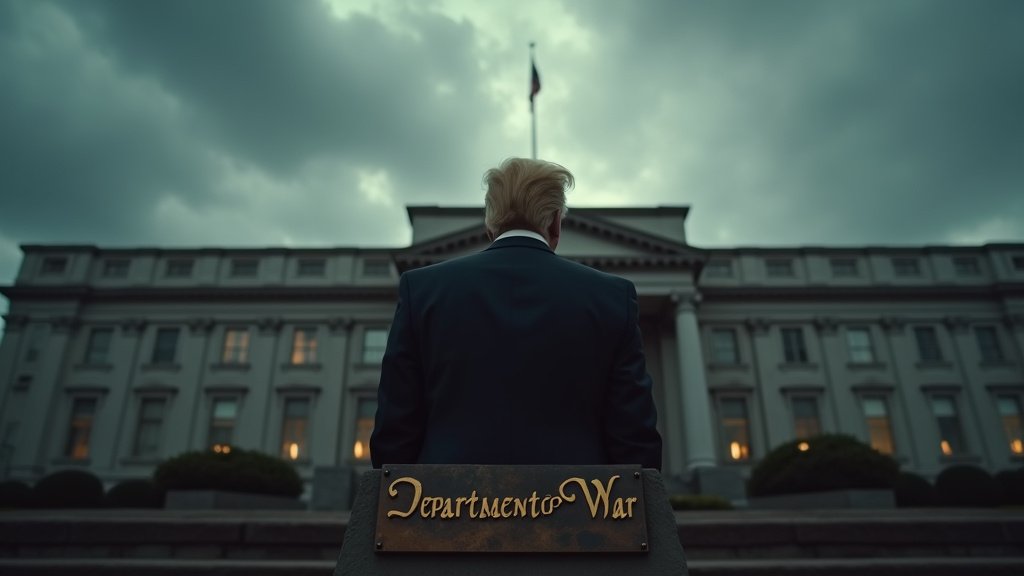

President Trump’s immediate response was one of somber reflection. He spoke of the need for Americans to “resolve our differences” and noted that, for a brief window at the dinner, he witnessed something rare in Washington: genuine, cross-aisle camaraderie. “I will say, you had Republicans, Democrats, independents, conservatives, liberals and progressives,” the President remarked. “Those words are interchangeable, perhaps, but maybe they’re not. But yet everybody in that room… there was a tremendous amount of love and coming together.”
This sentiment, however, exists in a complex ecosystem. Critics and political analysts alike have noted the familiar cadence of these remarks. In past instances of violence or national crises, presidential rhetoric has often attempted to serve as a calming force. Yet, the durability of such rhetoric is consistently tested by the exigencies of an election-cycle environment. The challenge for any administration in this position is balancing the need to appear above the fray during a time of crisis while maintaining the political base that has been galvanized by a more pugnacious approach.
Analyzing the Security Architecture of 2026
The logistical response to the breach has also become a secondary but critical point of analysis. As political violence becomes a more frequent concern, the resources dedicated to protective details have expanded. However, the incident at the hotel raises fundamental questions about the limits of physical security in a free society. When the perimeter of a major public event becomes a target, it forces a re-evaluation of how public and private sectors coordinate to ensure safety. The Secret Service’s ability to stop the suspect at “first contact” has been lauded as a success of the “layered security posture,” but it has also spurred calls for increased scrutiny of how individuals with specific, ideologically driven grievances are tracked and identified long before they reach such perimeters.
The Historical Context of Unity Pledges
History shows us that calls for unity after tragedy are almost as traditional as the presidency itself. From the post-9/11 period to the aftermath of various domestic disturbances throughout the mid-2020s, American leaders have frequently reached for the mantle of national healer. The efficacy of these moments, however, is rarely measured in the long term. Instead, they are measured by the speed with which the political machine returns to its standard functioning. The 2026 political climate is uniquely polarized, making any authentic pivot to unity significantly more difficult to sustain. The existence of digital echo chambers, the intensity of online discourse, and the high stakes of upcoming legislative and executive battles create a centrifugal force that pulls political figures away from the center and back toward their ideological corners. The President’s own pivot back to promoting his controversial “White House ballroom” project shortly after the event illustrates this tension; even in the immediate wake of a traumatic incident, the administrative and political agenda continued to press forward.
FAQ: People Also Ask
Q: Was anyone injured during the White House Correspondents’ dinner incident?
A: No injuries were reported among the attendees or guests. The suspect, Cole Tomas Allen, was apprehended by the Secret Service at the security perimeter before he could gain access to the main event.
Q: How does this incident compare to previous security threats against President Trump?
A: The President characterized this as the third attempt on his life in less than two years. This follows previous high-profile security incidents, including the July 2024 shooting at a rally in Butler, Pennsylvania, and the September 2024 encounter at his golf club in West Palm Beach.
Q: What is the current political stance on the call for unity?
A: While the President’s call for unity has been acknowledged, observers are divided on its sincerity and longevity. Many political strategists note that the current environment of high polarization makes bipartisan cooperation historically difficult to maintain, regardless of the rhetoric used in the immediate aftermath of a crisis.
Q: Why does the President equate assassination attempts with the “impact” of his presidency?
A: President Trump has frequently utilized a narrative that suggests only the most successful or “impactful” leaders are targeted by bad actors. He has compared his situation to that of Abraham Lincoln, arguing that the desire to target him stems from his effectiveness in achieving his political goals.