In a significant legal development that underscores the growing tension between federal and state authority, a U.S. federal judge has temporarily halted the Trump administration’s efforts to deploy National Guard troops to Oregon. The sweeping order, issued late Sunday, October 6, 2025, by U.S. District Judge Karin Immergut, extends to troops from any state, including those previously dispatched from California.
Judge Immergut Extends Block, Citing Concerns Over State Sovereignty
The latest ruling represents a second major setback for the Trump administration in its attempts to utilize federalized National Guard members to address ongoing protests, particularly in Portland. Judge Immergut, a Trump appointee herself, expressed deep reservations about the administration’s strategy, questioning how federal actions could be perceived as circumventing her previous court orders. She granted the temporary restraining order following a joint request from the attorneys general of Oregon and California, who argued that the federal government was overstepping its constitutional bounds and infringing upon states’ rights.
The judge’s reasoning centers on statutory interpretation and the Tenth Amendment, which reserves powers not delegated to the federal government to the states. Immergut stated that the administration had not demonstrated sufficient evidence that the scale or nature of the protests in Portland necessitated the use of federalized National Guard forces. She specifically noted that the protests, characterized by the administration as significant unrest, were in fact relatively small and localized, and did not pose a clear danger of rebellion or an inability for existing law enforcement to manage the situation.
“This country has a longstanding and foundational tradition of resistance to government overreach, especially in the form of military intrusion into civil affairs,” Immergut wrote in a previous order, emphasizing that the USA is “a nation of Constitutional law, not martial law.” She found that the federalization orders risked “blurring the line between civil and military federal power—to the detriment of this nation.”
Escalation and Legal Counter-Moves
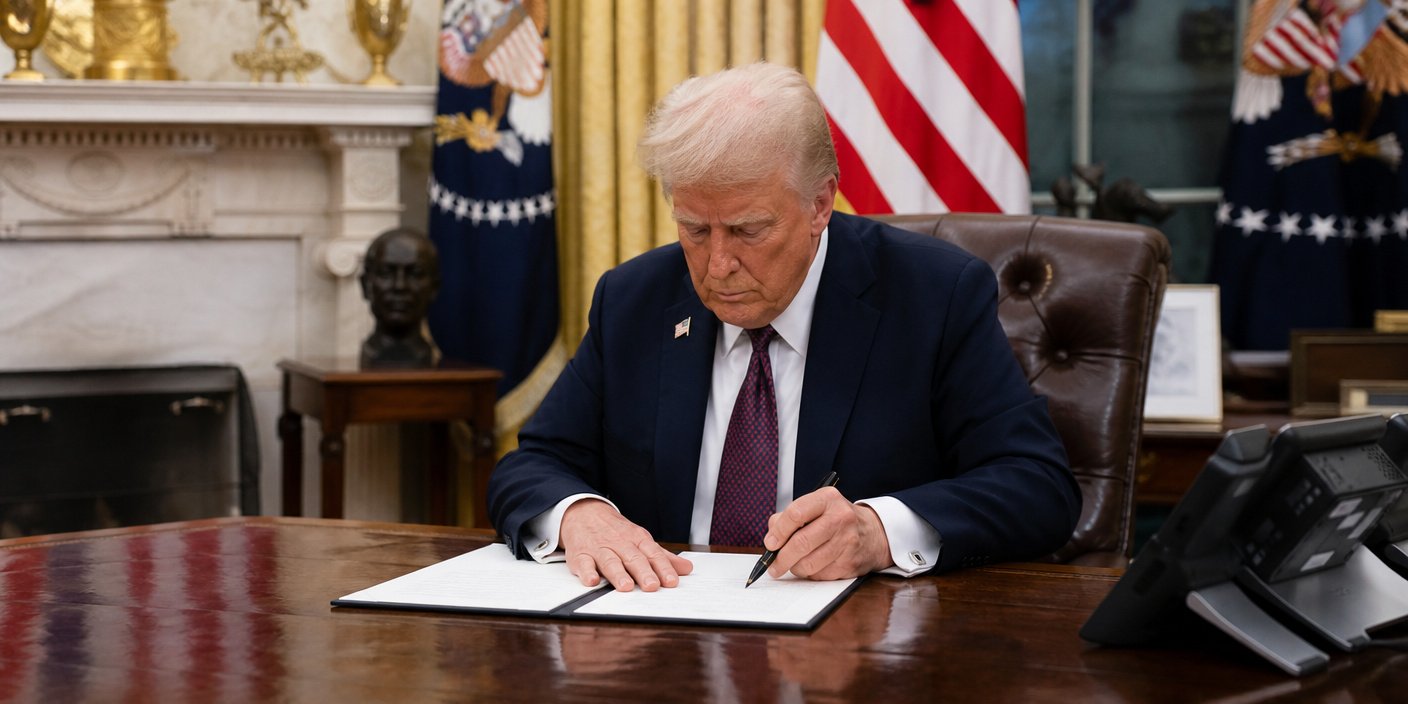

The dramatic legal battle unfolded over a weekend that saw the Trump administration actively attempting to deploy National Guard units. On Saturday, October 5, 2025, Judge Immergut had already blocked the federalization of Oregon’s own National Guard troops, planned to protect a U.S. Immigration and Customs Enforcement (ICE) facility in Portland. Despite this initial injunction, President Trump ordered federalized National Guard members from California to be sent to Oregon.
At least 101 California National Guard members arrived in Oregon late Saturday night, with approximately 100 more expected by Sunday evening, according to Oregon’s Adjutant General, Brigadier General Alan Gronewold. This move prompted California Attorney General Rob Bonta and Oregon Attorney General Dan Rayfield to file a joint motion seeking to block the deployment, arguing it was an unlawful redeployment that circumvented the court’s earlier decision. California Governor Gavin Newsom denounced the action as a “breathtaking abuse of the law and power,” vowing to fight the deployment in court.
Further complicating the situation, a Department of Defense memo indicated that up to 400 members of the Texas National Guard were being summoned for deployment to both Portland and Chicago. Judge Immergut expressed concern that these subsequent actions appeared to be a direct attempt to bypass her existing orders. The temporary restraining order issued Sunday will remain in effect until October 19, 2025, with further arguments scheduled.
President’s Narrative vs. Local Reality
President Trump has consistently characterized Portland as “war-ravaged” and blamed “Antifa” and “domestic terrorists” for perceived lawlessness, justifying the deployment of federal forces and National Guard troops. State and city officials, however, have repeatedly pushed back against this narrative, asserting that the protests, while sometimes involving clashes with federal agents, had largely dwindled and did not represent an insurrection or a threat to national security.
Oregon Governor Tina Kotek, alongside Portland Mayor Keith Wilson, lauded the judge’s ruling, asserting that “there is no need for military intervention in Oregon.” They argue that the federal government’s actions are politically motivated and risk inflaming community tensions. Local law enforcement officials had also testified that demonstrations outside the ICE facility were typically small, often involving only a few dozen individuals nightly.
National Guard Deployments in Chicago and Broader Implications
This legal battle in Oregon occurs against a backdrop of increased federal intervention in other U.S. cities. On Saturday, October 5, 2025, President Trump authorized the deployment of 300 Illinois National Guard troops to Chicago, citing “ongoing violent riots and lawlessness.” This move also drew sharp criticism from Illinois Governor JB Pritzker, who called the deployment “outrageous and un-American” and accused the administration of demanding state governors send troops against their will.
The repeated blocking of the Trump administration’s deployment plans by Judge Immergut raises significant questions about the boundaries of presidential authority in domestic matters and the balance of power between federal and state governments. The legal challenges highlight a fundamental disagreement over the interpretation of laws governing the use of military forces within the USA for civil enforcement and protest management. As the legal fight continues, the news of these deployments and judicial interventions underscores a period of intense national debate over civil liberties, law enforcement, and the role of the military in American society.
The immediate consequence is a temporary pause on federalized National Guard movements into Oregon. However, the underlying constitutional questions and the administration’s commitment to deploying federalized forces in cities experiencing protests ensure that this news story is far from over.