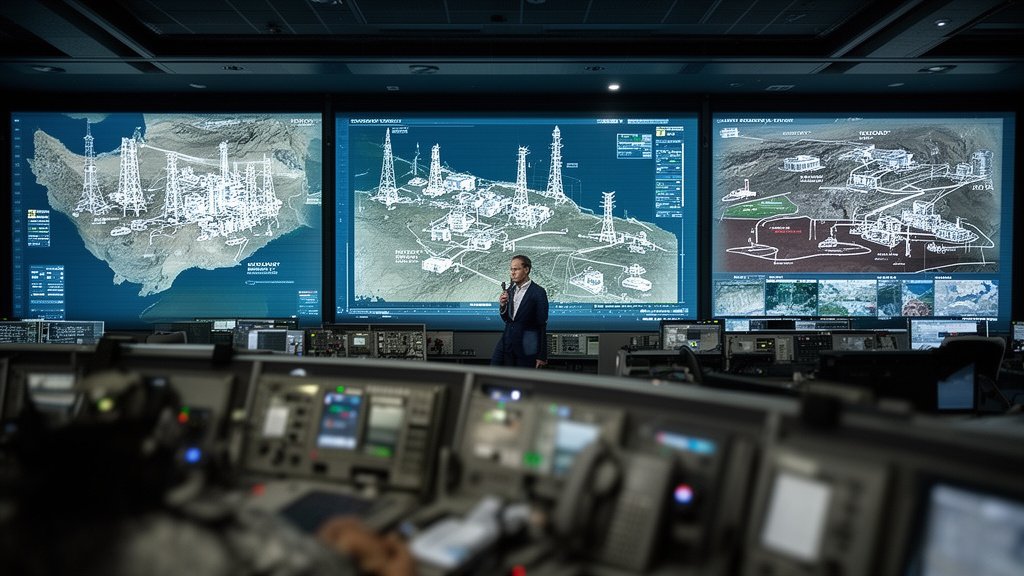
In a dual-pronged challenge to both the Kremlin’s battlefield logistics and the shifting dynamics of Western diplomacy, Ukraine has executed one of its most extensive drone campaigns of the year. This large-scale operation, targeting a critical Russian oil terminal, comes at a pivotal juncture in the conflict—a moment already marked by heightening tension following the Trump administration’s recent decision to waive significant economic sanctions against Russia. President Volodymyr Zelensky has labeled this diplomatic shift as a dangerous catalyst, arguing that the reduction of pressure has emboldened Moscow to accelerate its offensive capabilities.
Key Highlights
- Massive Aerial Campaign: Ukraine successfully deployed a swarm of long-range drones, striking a high-value Russian oil terminal, causing significant operational disruption and structural damage.
- Sanction Controversy: The Trump administration’s recent waiver of key sanctions on Russian entities has drawn sharp condemnation from Kyiv, which views the move as a betrayal of ongoing diplomatic efforts.
- Strategic Attrition: The strike on the oil terminal serves as a tactical blow to the Russian war machine’s financial backbone, aiming to degrade the export capacity that funds Moscow’s front-line aggression.
- Political Escalation: President Zelensky publicly asserted that the sanctions relief acts as a “green light” for increased Russian attacks, creating a volatile rift between Washington and Kyiv.
- Regional Energy Impact: Analysts warn that continued targeting of Russian energy infrastructure, coupled with the new sanctions landscape, could lead to increased volatility in global energy markets.
The Geopolitics of Energy and Abandonment
The drone attack on the oil terminal is not merely a military maneuver; it is a calculated response to a changing geopolitical landscape. For months, Ukrainian forces have pursued a strategy of economic attrition, recognizing that the Russian “war chest” is heavily reliant on oil and gas revenues. By systematically targeting refineries and terminals, Kyiv aims to force the Kremlin to choose between domestic energy security and the sustainment of the war effort. However, the timing of this latest strike is inextricably linked to the growing frustration within Kyiv regarding the Trump administration’s foreign policy pivot.
The Impact of Sanction Waivers
The decision by the Trump administration to waive specific sanctions on Russia has sent shockwaves through the geopolitical community. These sanctions were originally designed to paralyze the financial institutions that facilitate Russia’s defense spending and covert military operations. By lifting or waiving these requirements, Washington has, in the eyes of the Ukrainian government, inadvertently provided a financial lifeline to the aggressor. Zelensky’s administration has pointed to the increased tempo of Russian missile and drone attacks as direct evidence that the Kremlin feels less constrained by Western economic pressure. This creates a dangerous feedback loop: as the West eases its financial stranglehold, Ukraine feels forced to escalate its kinetic operations to compensate for the lost strategic advantage.
Assessing the Drone Offensive



Military analysts have noted a marked evolution in Ukrainian drone technology and tactics. This recent attack involved a sophisticated multi-wave approach, utilizing low-altitude flight paths to evade Russian air defense systems—many of which are stretched thin by the sheer geographical expanse they are tasked to cover. The oil terminal, a hub for the export of refined petroleum products, was identified as a “tier-one” target. By disrupting the storage and logistics capabilities at this site, Ukraine is attempting to create a ripple effect that will hit Russian government coffers in the coming fiscal quarter. The precise nature of the damage suggests that Kyiv is using high-intelligence, satellite-linked drones capable of loitering and identifying weak points in hardened facilities.
Economic and Global Market Implications
Beyond the immediate tactical success of the drone strike, there is a looming concern regarding global energy prices. Russia remains a top-tier energy exporter, and while the war has forced a realignment of trade routes toward the East, the global market remains sensitive to disruptions in Russian supply chains. The intersection of this drone offensive and the recent easing of US sanctions presents a chaotic variable for energy markets. Traders are currently pricing in a “war premium,” expecting that as Ukraine continues to push into Russian territory with aerial assets, the risk to export infrastructure will persist. If the Trump administration continues to waive sanctions while the conflict intensifies, we may see a bizarre scenario where Russian oil continues to flow while physical infrastructure on the ground burns.
Future Outlook: The Asymmetric War
Looking ahead, the conflict is moving into an era defined by asymmetrical warfare. Ukraine, lacking the massive artillery stockpiles of the Soviet era, has leaned heavily into drones and cyber warfare to maintain parity. The political friction with the Trump administration adds a layer of uncertainty that Moscow is undoubtedly seeking to exploit. If the communication lines between Washington and Kyiv continue to fray, the “defiance” demonstrated by this drone attack might become the new normal—a way for Ukraine to assert its own strategic agency regardless of the policy shifts in the Oval Office. As the conflict grinds on, the intersection of technological warfare and fragile international alliances will determine the pace of the coming year.
FAQ: People Also Ask
Q: Why did Ukraine choose to target an oil terminal specifically?
A: Oil terminals and refineries are critical revenue centers for the Russian government. By attacking these, Ukraine strikes directly at the financial capacity of the Russian state to fund its war efforts, aiming for both material damage and long-term economic disruption.
Q: How does the Trump administration’s sanction waiver affect the conflict?
A: Kyiv argues that lifting sanctions provides Moscow with necessary capital and diplomatic breathing room. This relief is perceived as a reward for aggression, which Ukraine claims has directly encouraged Russia to escalate its own attacks, leading to a breakdown in diplomatic trust.
Q: What technology was used in the drone attack?
A: Reports indicate the use of long-range, multi-wave drone swarms. These systems utilize advanced navigation to evade traditional radar coverage, allowing them to penetrate deep into Russian territory to reach hardened infrastructure like oil terminals.
Q: Is this a change in Ukraine’s strategy?
A: While Ukraine has targeted Russian energy infrastructure throughout the conflict, the scale of this recent operation indicates a shift toward more high-value, sustained targeting. This is viewed as a necessary pivot to offset the recent geopolitical setbacks stemming from changes in US policy.