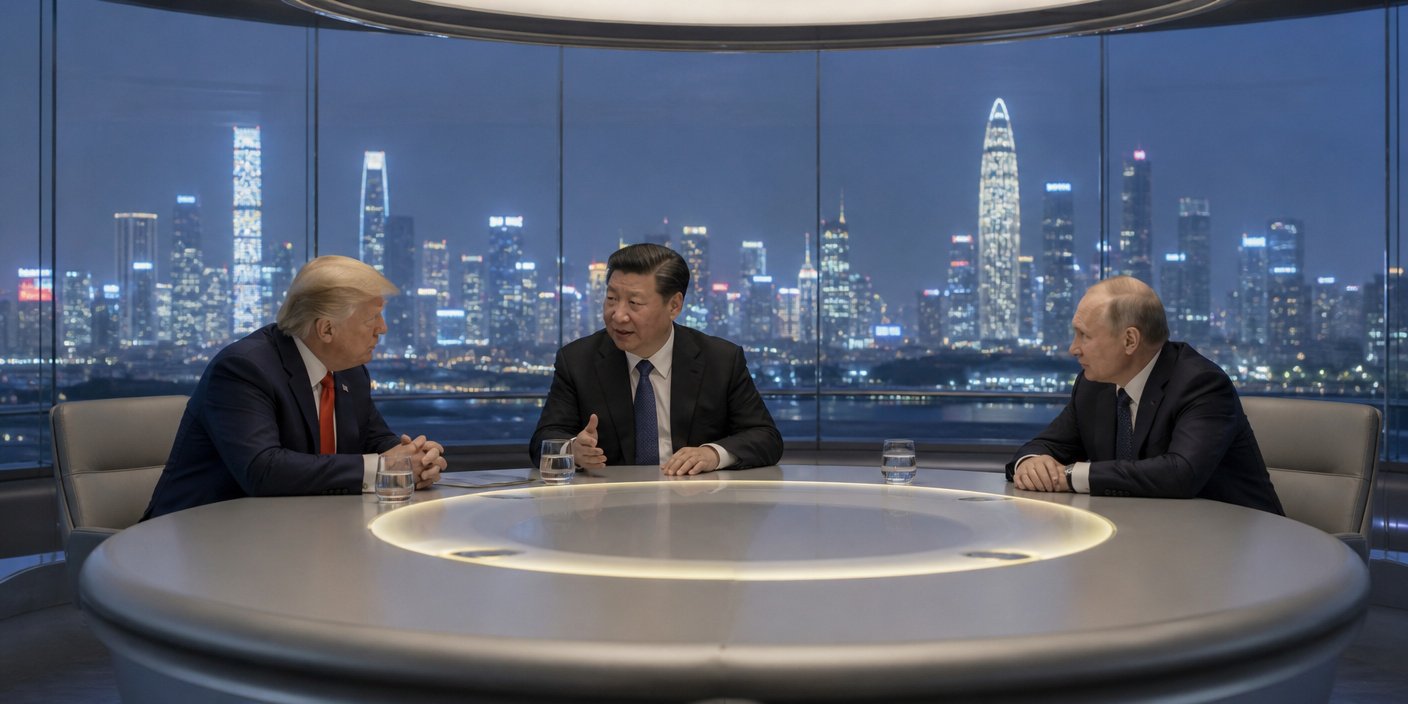
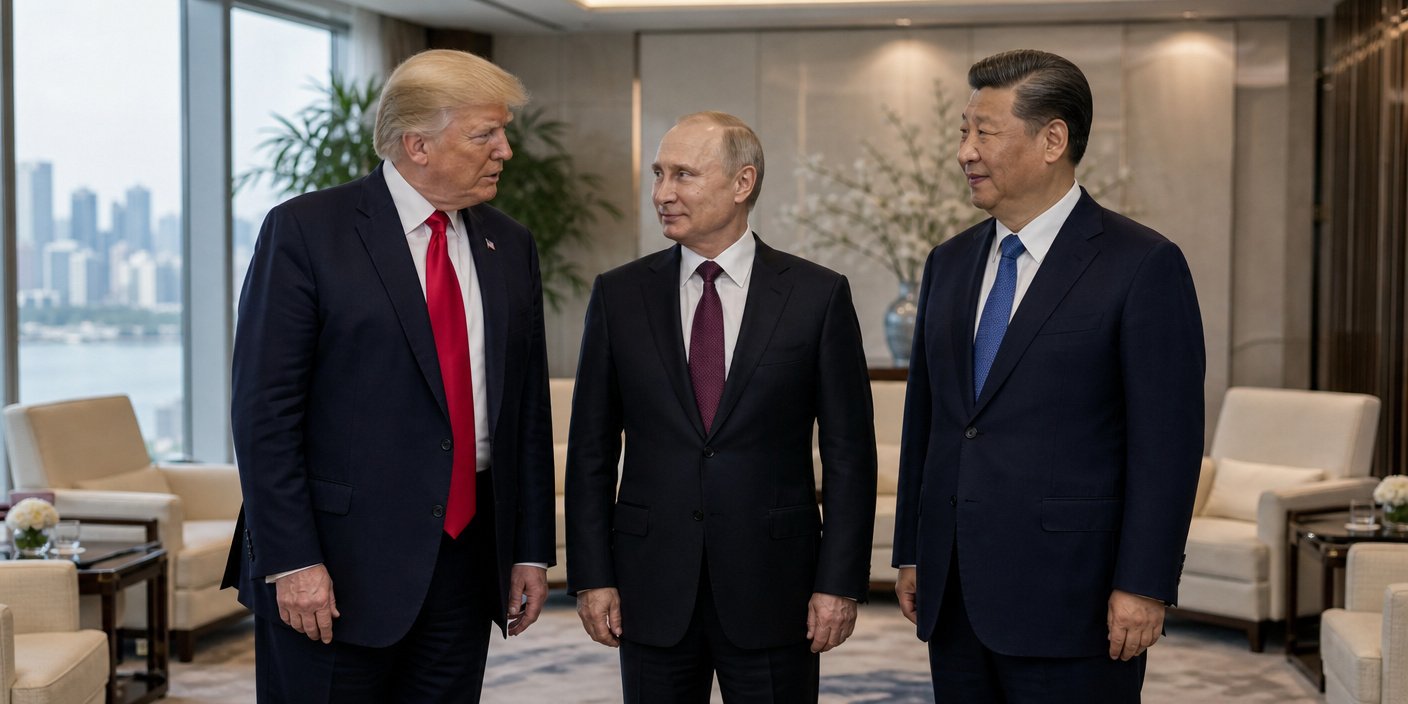
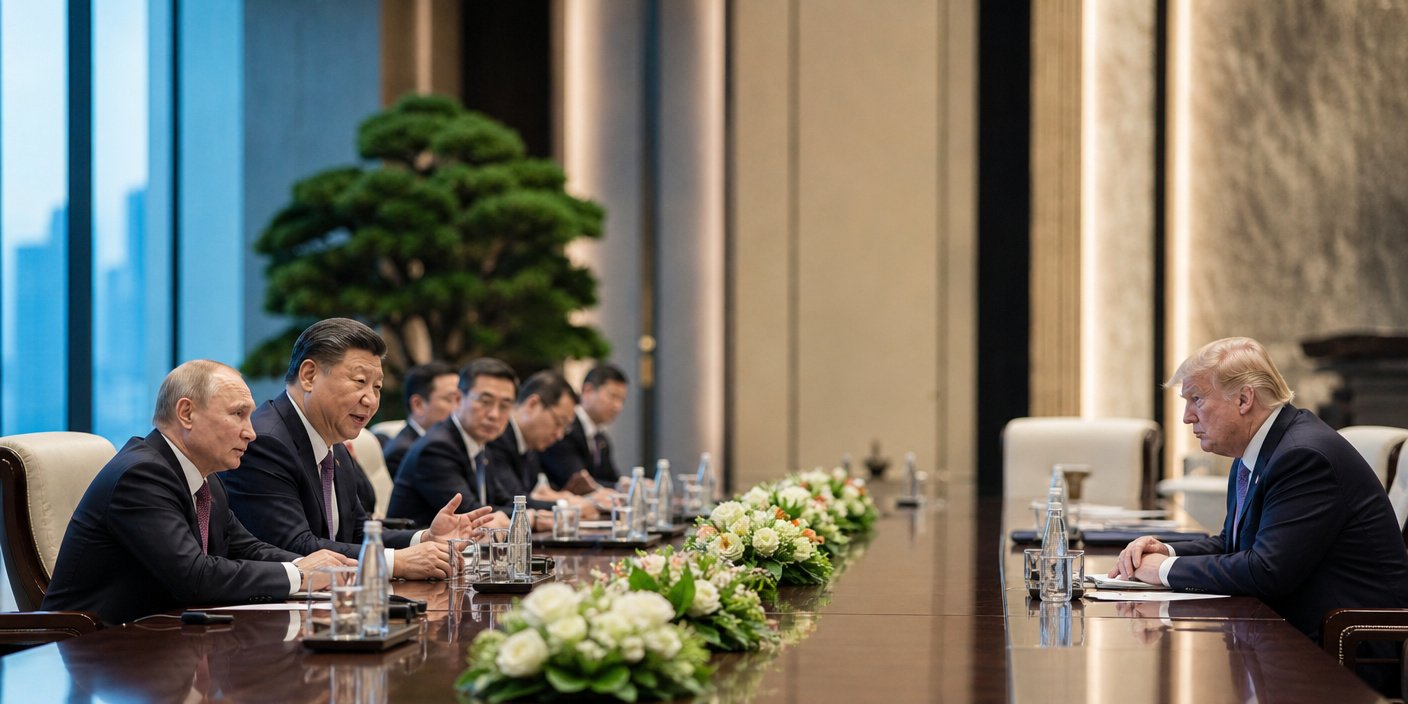
The world watched in rare, breathless anticipation as President Donald Trump, President Xi Jinping, and President Vladimir Putin gathered for a surprise trilateral summit in the heart of Shenzhen, China. This unprecedented meeting represents a pivotal realignment in global diplomacy, occurring at a moment when traditional international alliances are experiencing severe strain. While the backdrop of the meeting emphasized the technological prowess and economic dynamism of Shenzhen, the substance of the talks revealed the profound, and potentially deepening, fissures between the three global powers regarding the future of strategic stability and global security architecture.
Key Highlights
- Trilateral Security Focus: The leaders addressed the current state of global security, specifically debating the viability of existing arms control treaties in a multi-polar world.
- The Ukraine Impasse: Significant time was dedicated to the conflict in Ukraine, with the leaders presenting irreconcilable positions on sovereignty and international borders.
- Shenzhen Venue: The choice of Shenzhen, the epicenter of China’s high-tech economic boom, signaled a shift in the dialogue toward economic leverage and technological competition as key pillars of modern statecraft.
- Strategic Stability: The summit highlighted a critical disagreement on the preservation of nuclear non-proliferation frameworks.
The New Geopolitical Arithmetic: A Shenzhen Reckoning
The Shenzhen summit serves as a stark acknowledgment that the unipolar world order has effectively ceased to function. By convening in one of the world’s most advanced technological hubs, the leaders aimed to juxtapose their vision of 21st-century power against the legacy frameworks of the 20th century. However, the optics of the meeting could not mask the profound divergence in the leaders’ strategic priorities.
The Fragmentation of Arms Control
Central to the discussions was the precarious state of arms control. For decades, the global security architecture was predicated on bilateral agreements between the United States and the Soviet Union—and subsequently Russia. This summit exposed the reality that these frameworks are failing to account for China’s rapid nuclear modernization. President Trump, according to briefed officials, pushed for a broader transparency framework that would incorporate Chinese strategic capabilities, a demand President Xi countered by framing China’s arsenal as purely defensive and secondary to the U.S. and Russian stockpiles. President Putin, caught between these competing agendas, argued for a preservation of existing treaties while simultaneously leveraging the current chaos to justify the expansion of Russian military assets. The result was a stalemate, with no formal communiqué issued regarding a new disarmament trajectory.
The Ukraine Wedge and Territorial Integrity


Perhaps the most volatile component of the Shenzhen meeting was the conversation surrounding the conflict in Ukraine. The discussion reportedly grew tense, as President Trump demanded a path toward de-escalation that respects established territorial boundaries, standing in stark contrast to President Putin’s insistence on the reality of ‘on-the-ground’ control. President Xi adopted a nuanced, albeit calculated, stance, promoting the necessity of peace negotiations while pointedly refusing to join the Western coalition’s sanctions regime. This tripartite clash underscores the difficulty of mediating a resolution when the three primary stakeholders possess fundamentally different definitions of ‘stability.’ For Ukraine, the lack of a unified resolution from this summit signals a prolonged period of uncertainty, as the diplomatic friction between these giants prevents any consensus on a viable roadmap for peace.
Secondary Angles: The Hidden Stakes
Beyond the headlines of military and territorial security, this summit carried weight across several secondary but equally vital domains:
1. The Tech-Diplomacy Nexus: By hosting the summit in Shenzhen—a city synonymous with Huawei, Tencent, and massive supply chain integration—President Xi effectively utilized economic geography as a negotiating tool. The subtext was clear: the future of global security is inseparable from the control of semiconductors, AI development, and digital infrastructure. The U.S. delegation faced the reality that security alliances are no longer just about NATO or nuclear pacts; they are increasingly defined by trade blockades and technological self-reliance.
2. The Domestic Perception Gap: Each leader faces a unique domestic pressure cooker. For President Trump, the meeting was a test of his ‘America First’ branding in the international arena, requiring him to assert dominance without committing the U.S. to entangling liabilities. For President Putin, the summit was an attempt to break out of diplomatic isolation. For President Xi, it was a declaration of China’s status as an equal, or superior, co-architect of the new world order.
3. Future Predictions on Alliance Erosion: The Shenzhen meeting suggests a shift toward ‘transactional multilateralism.’ Rather than relying on rigid, long-term treaties, the future of international relations appears to be moving toward ad-hoc, leader-to-leader summits where agreements are fragile, non-binding, and subject to the whims of the individual heads of state. If this trend holds, we should expect more summits of this nature—high-stakes, low-consensus meetings that prioritize public image over substantive, enforceable policy.
FAQ: People Also Ask
Q: Why was the Shenzhen summit considered a turning point for global alliances?
A: It represents the first time the three primary world powers have attempted to negotiate a new, post-Cold War security architecture without the mediation of traditional bodies like the UN Security Council, signaling a move toward direct, transactional diplomacy.
Q: What did the leaders conclude regarding the Ukraine conflict?
A: No formal agreement was reached. The summit highlighted the deep divergence between the U.S. position, which prioritizes the restoration of borders, and the Russian and Chinese stances, which prioritize differing versions of ‘regional security’ and historical spheres of influence.
Q: How does the location of the meeting, Shenzhen, relate to the summit’s goals?
A: Shenzhen is the symbol of China’s economic and technological rise. Hosting the event there was a strategic signal by China that its economic and technological power now grants it equal footing with the U.S. and Russia in determining the global security agenda.
Q: Will there be future meetings of this trilateral group?
A: While no formal schedule was announced, the leaders agreed to maintain open communication channels, though analysts suggest future meetings will be strictly contingent upon progress in arms control discussions, which currently remain at a standstill.