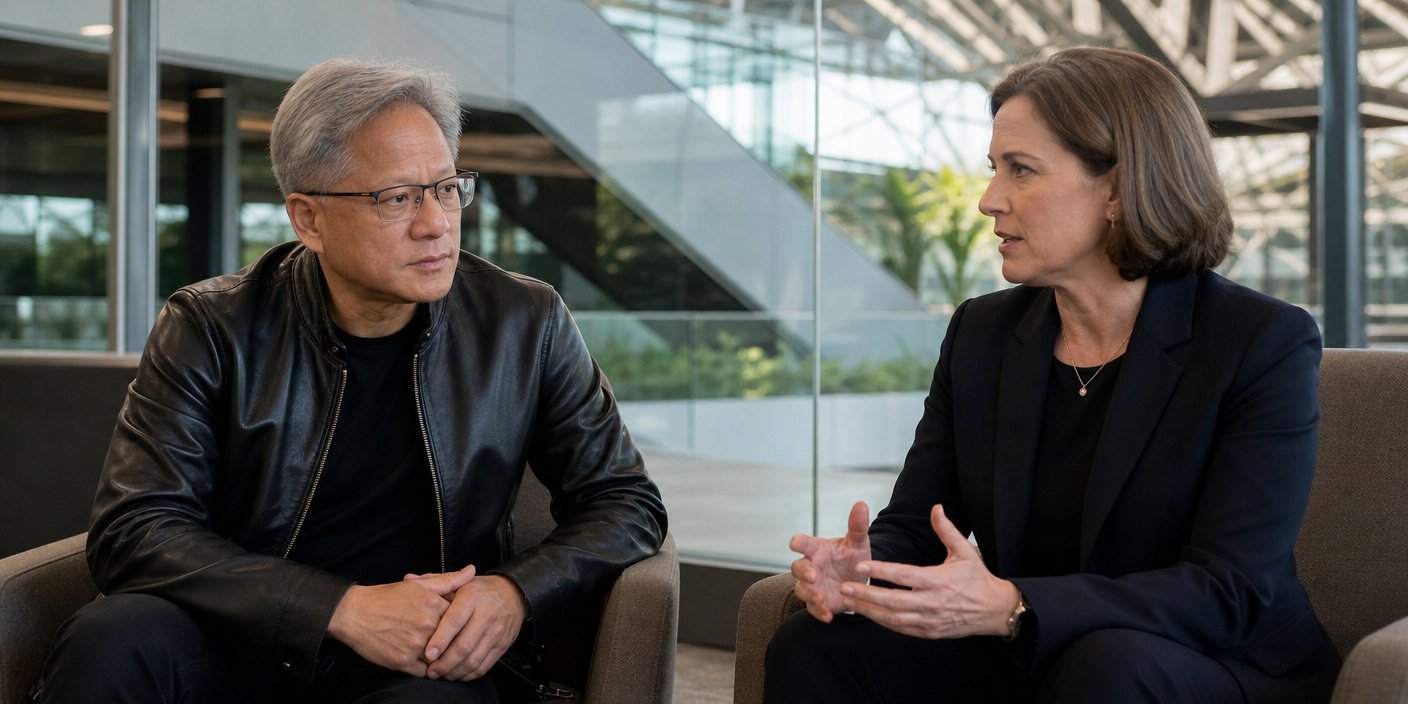

Stock Market Today (Nov. 13, 2026) saw the Nasdaq and S&P 500 end lower as Nvidia’s drama continued to roil the tech sector, casting a long shadow over the broader market performance. Investors were sent scrambling in the final hours of trading after news broke that Nvidia CEO Jensen Huang has resigned, effective immediately, following an internal investigation into his personal ties to a suspected Chinese intelligence asset. The resulting market anxiety wiped significant gains from the semiconductor giant, dragging down major benchmarks and heightening fears about geopolitical risks permeating the tech landscape.
Key Highlights:
- Nvidia CEO Jensen Huang has resigned following an investigation into alleged ties to a suspected Chinese intelligence asset.
- CFO Colette Kress has been appointed interim CEO while the board conducts a comprehensive search for new leadership.
- The Nasdaq and S&P 500 closed the trading session in negative territory as tech-sector volatility peaked.
- Nvidia shares experienced double-digit percentage drops as institutional investors braced for potential regulatory and geopolitical fallout.
The Nvidia Fallout: Market Volatility and the Leadership Crisis
The sudden resignation of Jensen Huang, who has steered Nvidia to the forefront of the global artificial intelligence revolution, has sent shockwaves through Wall Street. The revelation that the investigation involved connections to a suspected Chinese intelligence asset has introduced a new layer of complexity to the tech sector—one that extends beyond mere corporate governance into the realm of national security and geopolitical strategy.
Leadership Vacuum: The Sudden Departure of Jensen Huang




For over a decade, Jensen Huang has been synonymous with Nvidia’s explosive growth. His departure is not merely a change in personnel; it is a fundamental shift in the company’s trajectory. By resigning under the cloud of an active intelligence investigation, the board of directors has effectively signaled that the allegations are being treated with the utmost severity. The sudden nature of the exit left the markets little time to digest the news, causing panic-selling that intensified as the closing bell approached. The transition to interim CEO Colette Kress is intended to provide stability, yet Kress inherits a situation that is fluid and fraught with regulatory risk.
Financial Implications: Wall Street Reacts to Corporate Turmoil
Nvidia’s dominance in the GPU market means that its instability inevitably pulls down other tech giants. Today’s trading session saw a widespread retreat in the semiconductor index, as investors rushed to reduce exposure to companies with high-stakes reliance on Chinese markets or supply chains. The Nasdaq, heavily weighted toward tech, bore the brunt of the selloff, while the S&P 500 struggled to maintain support levels. Institutional investors are now pivoting their portfolios, moving toward defensive sectors like utilities and consumer staples, fearing that this investigation might lead to broader federal inquiries into other industry leaders. The concern is that if the investigation into Huang’s ties reveals systemic issues, it could trigger a wave of regulatory scrutiny that cripples the industry’s ability to operate internationally.
Geopolitical Risks and Corporate Oversight
This incident highlights a growing, uncomfortable reality for investors: the intersection of corporate success and geopolitical liability. In an era where tech companies are essentially the backbone of national infrastructure, their leadership becomes a matter of public and strategic concern. The alleged ties to a foreign intelligence asset represent a catastrophic risk to Nvidia’s intellectual property and long-term viability. As Washington and international regulators begin to weigh in, the market is pricing in the possibility of export restrictions, revoked licenses, and potential legal penalties. For the market at large, this event is a stark reminder that geopolitical risk is now a permanent fixture in portfolio management.
FAQ: People Also Ask
Who is the interim CEO of Nvidia?
Following Jensen Huang’s resignation, current CFO Colette Kress has assumed the role of interim CEO. Kress, a veteran financial executive, is tasked with steadying the company and working with the board to manage the fallout from the ongoing investigation.
Why did the stock market end lower today?
Market sentiment was severely impacted by the uncertainty surrounding Nvidia. Because Nvidia is a primary driver of the tech sector, its leadership crisis caused a sector-wide selloff that dragged the Nasdaq and S&P 500 down with it.
What are the allegations against Jensen Huang?
The board launched an investigation into Huang’s personal ties to a suspected Chinese intelligence asset. Following the investigation’s findings, the board and Huang reached a decision for his resignation, which has now introduced significant legal and geopolitical uncertainty into the tech industry.
What does this mean for Nvidia shareholders?
Shareholders are facing immediate volatility. The uncertainty regarding future leadership and potential regulatory or intelligence-related investigations into the company’s past dealings with China has created a high-risk environment for Nvidia stock in the near term.