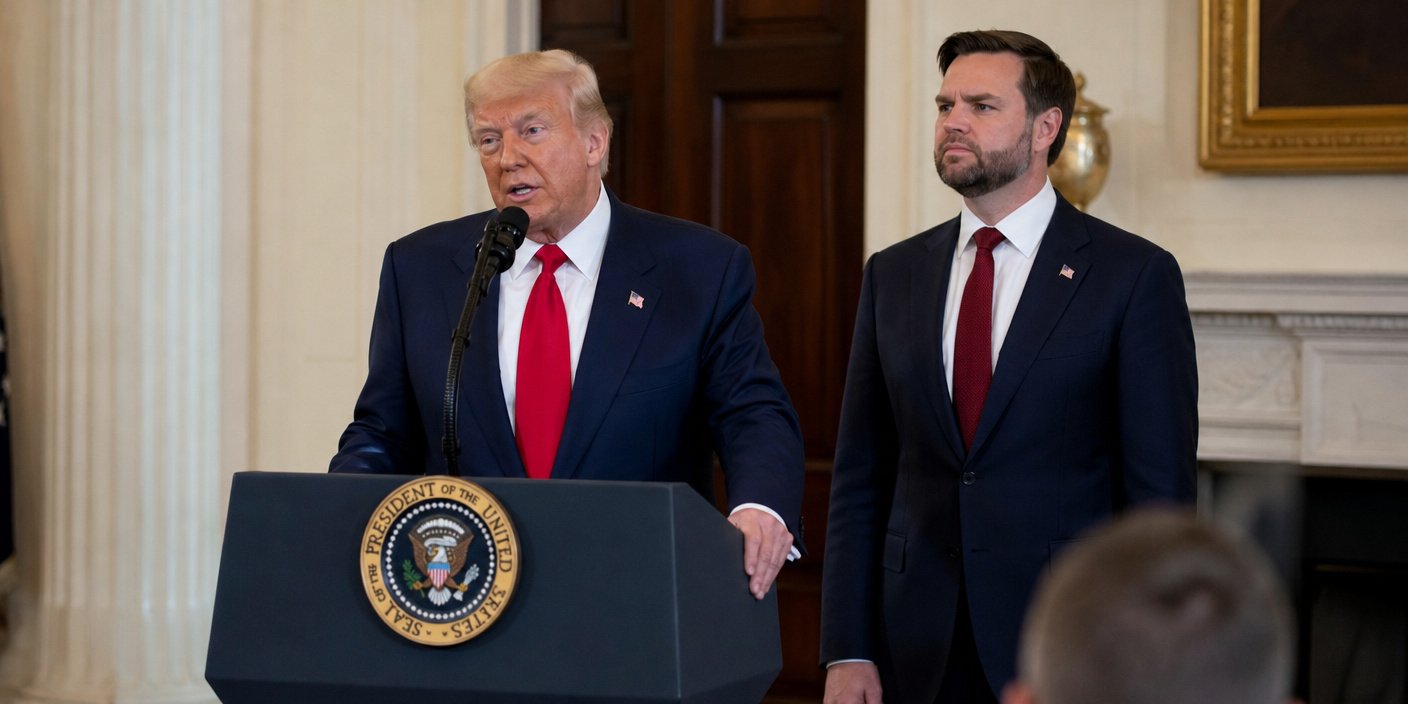
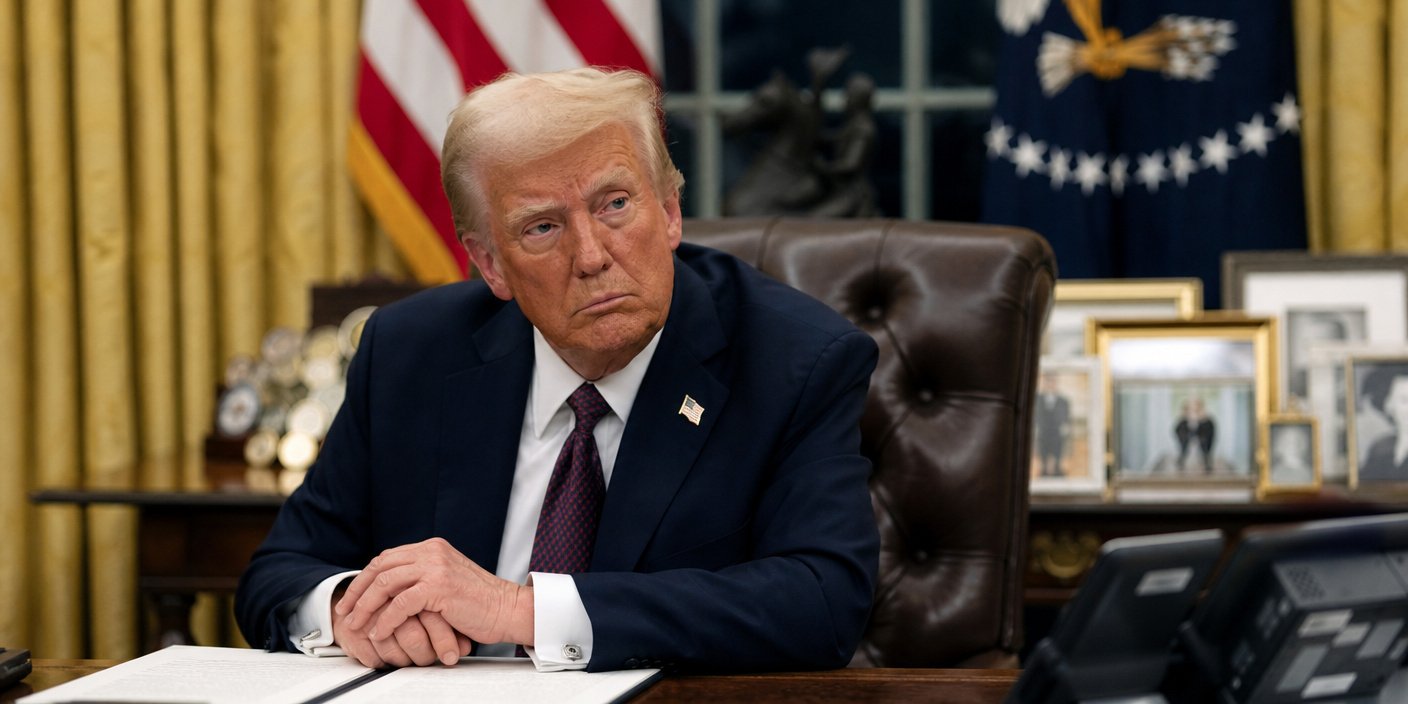
WASHINGTON D.C. – In a significant escalation of rhetoric amid a protracted government shutdown, President Donald Trump declared on Thursday, October 30, 2025, that it is time for Senate Filibuster Abolition. The President’s forceful pronouncement, made via his social media platform, aims to break through Democratic obstruction he claims is prolonging the shutdown and harming the nation, underscoring the urgency for Senate Filibuster Abolition.
Trump’s ‘Nuclear Option’ Call for Senate Filibuster Abolition

President Trump directly urged Republicans to “play their ‘TRUMP CARD,’ and go for what is called the Nuclear Option — Get rid of the Filibuster, and get rid of it, NOW.” This call signifies a willingness to employ procedural means to fundamentally alter Senate rules, a move that has been debated for years in the context of Senate Filibuster Abolition. The “nuclear option” refers to a maneuver allowing the Senate majority to override standing rules with a simple majority vote, bypassing the traditional supermajority requirements. Trump stated he gave considerable thought to this decision during his flight back from Asia, considering the implications of Senate Filibuster Abolition.
The Deepening Government Shutdown’s Economic Toll
The President’s demand comes as a partial government shutdown has now entered its 30th day with no resolution in sight. The economic consequences of this impasse are substantial. The nonpartisan Congressional Budget Office (CBO) estimates that the shutdown will cost the U.S. economy between $7 billion and $14 billion. Furthermore, the shutdown is projected to reduce fourth-quarter GDP by 1.0 to 2.0 percentage points, with some of these losses being permanent due to furloughed federal workers not conducting their duties. The CBO report highlights that federal workers missing paychecks and the interruption of essential services contribute to reduced demand and output in the private sector, demonstrating the negative impact of political obstruction.
Understanding the Senate’s Filibuster and Senate Filibuster Abolition
The filibuster is a long-standing Senate tactic that allows for extended debate to delay or block a vote on legislation or nominations. Historically, it was rooted in the Senate’s tradition of unlimited debate, where senators could speak for as long as they wished. Over time, the Senate introduced rules to end debate, known as “cloture.” Initially requiring a two-thirds majority in 1917, this threshold was lowered to the current three-fifths, or 60 votes, in 1975. This 60-vote requirement means that a minority party can effectively block most legislation, even if it has the support of a simple majority, which is why Senate Filibuster Abolition is a pressing issue for many. The concept of abolish filibuster is central to this debate.
Political Landscape and Ramifications of Senate Filibuster Abolition
At the time of President Trump’s statement, Republicans held a 53-47 majority in the Senate and a 219-213 majority in the House of Representatives. Abolishing the filibuster would dramatically shift the Senate into a more majoritarian institution, potentially allowing the party in power to pass legislation with greater ease, but possibly at the expense of broader consensus-building and bipartisan compromise. Critics argue that the filibuster, while a tool of obstruction, also protects the minority voice and forces compromise, preventing the majority from enacting its agenda unchecked. Conversely, proponents contend that it frequently stalls necessary reforms and empowers obstructionism, particularly in an era of intense partisanship. The push for Senate Filibuster Abolition is a key part of this discussion.
Precedents and Future Implications of Senate Filibuster Abolition
The “nuclear option” has been previously invoked in the Senate, notably by Democrats in 2013 to lower the threshold for confirming executive and judicial nominees, and by Republicans in 2017 to do the same for Supreme Court nominees. However, its use to eliminate the filibuster for all legislation, a core tenet of Senate Filibuster Abolition, has not yet been successfully implemented. If President Trump’s call is heeded, it could herald a significant transformation in the legislative process, potentially impacting the balance of power and the nature of American governance. The ongoing government shutdown and the debate over the filibuster are currently trending topics, highlighting the deep divisions and procedural battles shaping American political stories, and the significance of Senate rules change.
The coming days will reveal whether this latest demand marks a turning point in the long-standing debate over the Senate’s rules, with profound implications for the future of legislation in the United States, particularly concerning Senate Filibuster Abolition.