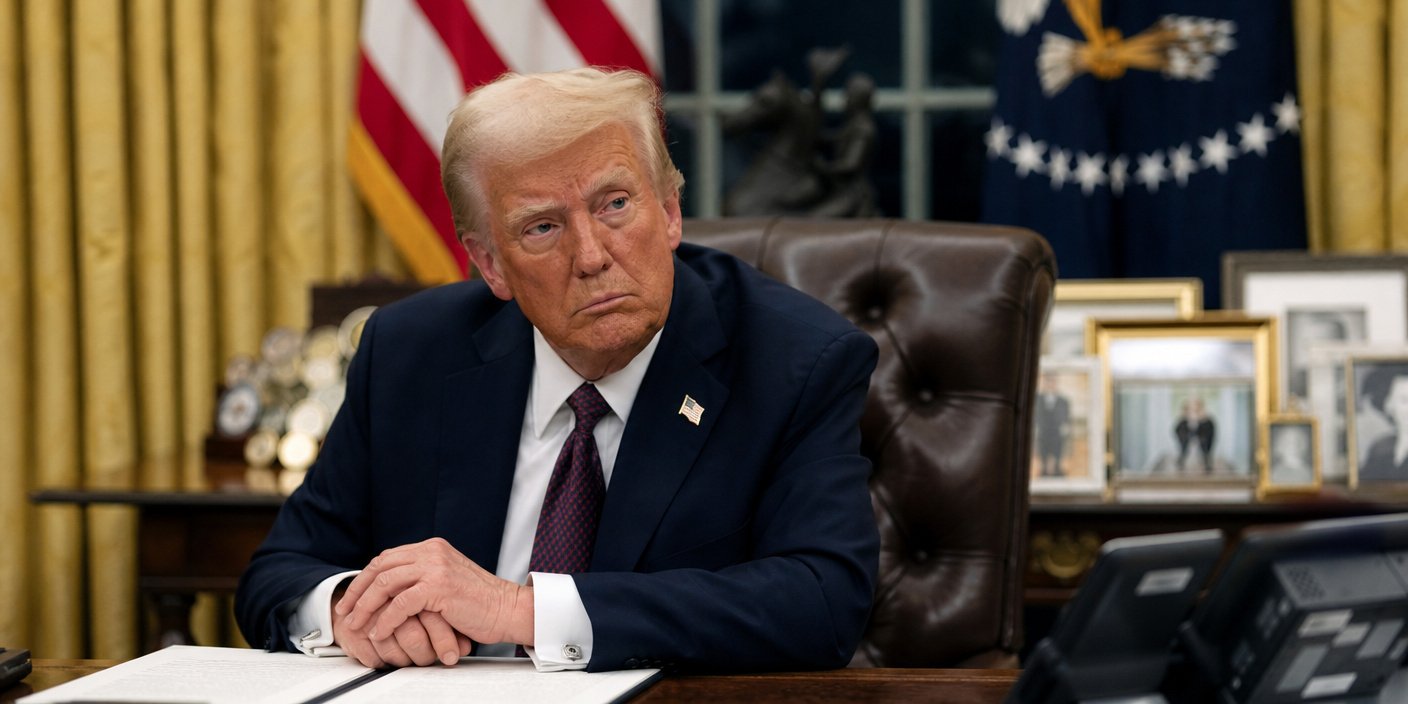
President Donald Trump reaffirmed his demand for U.S. **Trump Greenland Control**. He spoke at a White House briefing on January 20, 2026, before his World Economic Forum address, where he also criticized the United Nations and promoted his new “Board of Peace” initiative, a potential replacement for the UN. The nearly two-hour briefing highlighted Trump’s foreign policy focus and his assertion of **Trump Greenland Control**, despite White House plans for a housing agenda. This stance has caused **NATO alliance tensions**, particularly concerning Greenland, and led to discussions of retaliatory tariffs. The **Trump Greenland demand** underscores a broader strategy of **strategic territorial acquisition**.
Greenland: A Strategic Imperative for Trump Greenland Control

President Trump stated Greenland is essential, and U.S. **Trump Greenland Control** is a national security necessity linked directly to **global security strategy**. This marked a significant escalation in his long-standing desire for U.S. acquisition of Greenland, driven by its strategic value. During the briefing, Trump avoided specifics on how he would achieve **Trump Greenland Control**, merely stating, “You’ll find out.”
Pushing Back Against Allies Amidst Trump Greenland Control Ambitions
Trump’s stance on **Trump Greenland Control** has strained alliances, with NATO allies like Denmark expressing strong opposition. Greenland has firmly stated it is not for sale, a point emphasized by its Prime Minister. Despite the U.S. maintaining a key installation at Pituffik Space Base, Trump insists on “complete and total control,” escalating the **Trump Greenland demand**. The push for **US Greenland control** has been met with resistance from key European nations.
Criticizing the United Nations
President Trump voiced strong criticism of the UN, stating it “just hasn’t been very helpful” and “has never lived up to its potential.” He accused the UN of creating problems and funding migration into Western countries, arguing that despite its great potential, it has failed to deliver. This critique of the UN’s efficacy sets the stage for his alternative proposals, a key element of his **foreign policy briefing**.
The ‘Board of Peace’ Initiative: An Alternative to the UN
Trump unveiled his “Board of Peace” initiative, announced in January 2026, aiming to promote global stability and restore governance. While initially focused on Gaza’s post-war recovery, its scope has expanded globally. Trump chairs the board, which requires a $1 billion contribution, drawing criticism as a “pay-to-play club.” The charter implicitly critiques the UN, suggesting a departure from failing institutions and potentially rivaling the UN Security Council, a move consistent with his challenging approach to international relations as highlighted in his **foreign policy briefing**.
Broader Context: Housing and Prosecutors
The briefing also touched on other matters. Trump’s housing affordability agenda was a key talking point, with plans for longer mortgage terms and banning large institutional investors from buying homes, a significant domestic concern. Additionally, a Trump-appointed prosecutor, Lindsey Halligan, who pursued indictments against Trump’s adversaries, is leaving her post due to legal challenges regarding her authority, adding to the administration’s internal political narrative.
Looking Ahead: Davos and Global Tensions
President Trump is heading to Davos to address the World Economic Forum, following the contentious briefing. His focus remains on asserting American interests, with the **Trump Greenland Control** dispute heightening **NATO alliance tensions**. The “Board of Peace” initiative may reshape global diplomacy, as Trump aims to project American strength abroad. The world watches his next moves closely, as this top story reveals a clear strategy prioritizing U.S. dominance and challenging existing international structures, a core component of his assertive American approach and **global security strategy**.