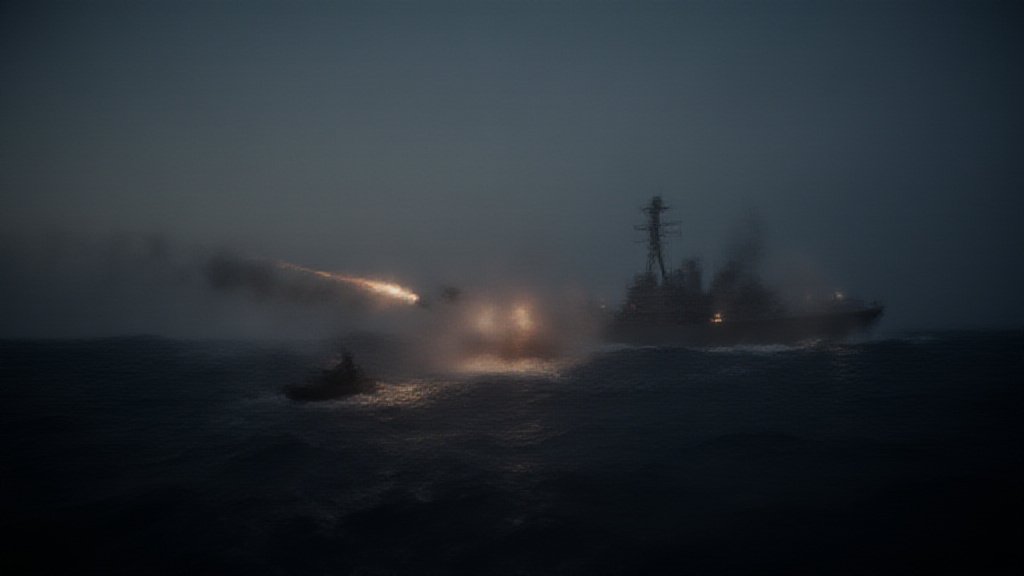
SEOUL, South Korea – North Korea announced Wednesday it had successfully test-fired sea-to-surface strategic cruise missiles into its western waters, a calculated display of military prowess timed to coincide with United States President Donald Trump’s arrival in South Korea. The launches, which occurred on Tuesday, October 28, 2025, shortly before President Trump landed in the region, underscored Pyongyang’s ongoing commitment to advancing its North Korea missiles capabilities amid stalled denuclearization talks and heightened regional security tensions.
North Korea Missiles: Pyongyang’s Strategic Show of Force
According to North Korea’s official Korean Central News Agency (KCNA), the North Korea missile test involved sea-to-surface cruise missiles that flew for approximately two hours and ten minutes (over 7,800 seconds) before accurately striking their designated targets in the Yellow Sea. The KCNA report, released on Wednesday, detailed that the test was overseen by top military official Pak Jong Chon, vice chairman of the Central Military Commission of the ruling Workers’ Party. While North Korean leader Kim Jong Un was reportedly not present for this specific test, Pak Jong Chon emphasized that “important successes are being made” in developing the country’s nuclear forces in line with the party’s strategic plans. He further stated that the North Korea missiles tests aim to assess the reliability of various strategic offensive systems and to impress their capabilities upon adversaries, reinforcing the nation’s duty to continuously strengthen its nuclear combat posture as a war deterrent.


The agency claimed these North Korea missiles would contribute to expanding the operational sphere of North Korea’s nuclear-armed military, signaling a clear message of defiance to the international community. This latest provocation follows closely on the heels of recent short-range ballistic missile tests, which Pyongyang had claimed involved new hypersonic technology, further demonstrating an accelerated pace in weapons development. The development of such North Korea missiles is a key concern for global stability.
Regional Scrutiny and American Response to North Korea Missiles
South Korea’s Joint Chiefs of Staff confirmed the detection of North Korea’s launch preparations and the subsequent missile firing. Military analysts from both South Korea and the United States were immediately engaged in analyzing the specifics of the weapons and maintaining a combined defense readiness posture, prepared for a “dominant response” to any North Korean provocation. The timing of the North Korea missiles test was particularly pointed, occurring just hours before President Trump was scheduled to attend the Asia-Pacific Economic Cooperation (APEC) forum and engage in bilateral summits in Gyeongju, South Korea, including his Trump South Korea visit.
Speaking to reporters aboard Air Force One en route to South Korea, President Trump downplayed the significance of the missile test. “He’s been launching missiles for decades, right?” Trump remarked, seemingly referring to Kim Jong Un. He reiterated his desire to meet with the North Korean leader, with whom he had held three summits in 2018 and 2019 before denuclearization diplomacy derailed over disagreements concerning sanctions. The American president indicated that engagement with North Korea would happen “at some point we’ll be involved with North Korea… we’ll meet with them not too far in the future”. This stance contrasts with the more hardline “maximum pressure” approach his administration initially pursued, which was intended to curb North Korea missiles development and address the nation’s nuclear ambitions.
A Diplomatic Stalemate and Shifting Alliances Regarding North Korea Missiles
The cruise missile launch serves as a stark reminder of the persistent challenges in achieving denuclearization on the Korean Peninsula. North Korea has largely shunned direct talks with Washington and Seoul since the collapse of the 2019 Hanoi summit, where President Trump refused to ease sanctions without substantial denuclearization steps from Pyongyang. Instead, Kim Jong Un’s regime has increasingly prioritized its relationship with Russia, engaging in deeper military cooperation. This collaboration has reportedly involved North Korea supplying military equipment and troops to support Russia’s war in Ukraine in exchange for technological assistance in weapons development, including advancements related to North Korea missiles.
The Trump administration’s foreign policy toward North Korea during its first term was characterized by unpredictability, oscillating between confrontational rhetoric like “fire and fury” and historic, albeit ultimately unproductive, summits with Kim Jong Un. While North Korea has not conducted nuclear weapons tests since September 2017, it has continued to develop its ballistic and cruise missile arsenals, including its operational Hwasal-2 and Hwasal-1 cruise missiles and the development of submarine-launched ballistic missiles. The ability of cruise missiles to fly at lower altitudes and their comparative stealth make them harder to detect and intercept than ballistic missiles, posing a unique challenge for missile defense systems against these types of North Korea missiles. The ongoing Pyongyang military display, including these missile tests, fuels regional security tensions.
Implications for Regional Security Tensions
This latest demonstration of North Korean military capability complicates President Trump’s agenda for his Asia trip, which also included planned talks with Chinese President Xi Jinping. The missile launches increase pressure on South Korea and Japan to enhance their missile defense coordination and preparedness. For regional leaders, the event highlights the delicate balance required to address Pyongyang’s escalating weapons programs while pursuing diplomatic avenues to ease regional security tensions. The strategic placement of this test, just as a major international economic forum convenes, signals North Korea’s intent to remain a significant player on the global security stage, regardless of diplomatic progress or lack thereof regarding denuclearization talks.
The North Korean narrative underscores their perspective of continuous self-strengthening and deterrence, framing their actions as a necessary response to perceived threats and a commitment to national security. As President Trump navigates this complex geopolitical landscape, the successful cruise missile tests serve as a potent reminder of the enduring strategic challenges posed by Pyongyang and the ongoing need for vigilance and strategic diplomacy in Northeast Asia. The story of North Korea missiles continues to unfold, with the international community closely watching how these actions will shape future negotiations and the Korean Peninsula security calculus in the region.