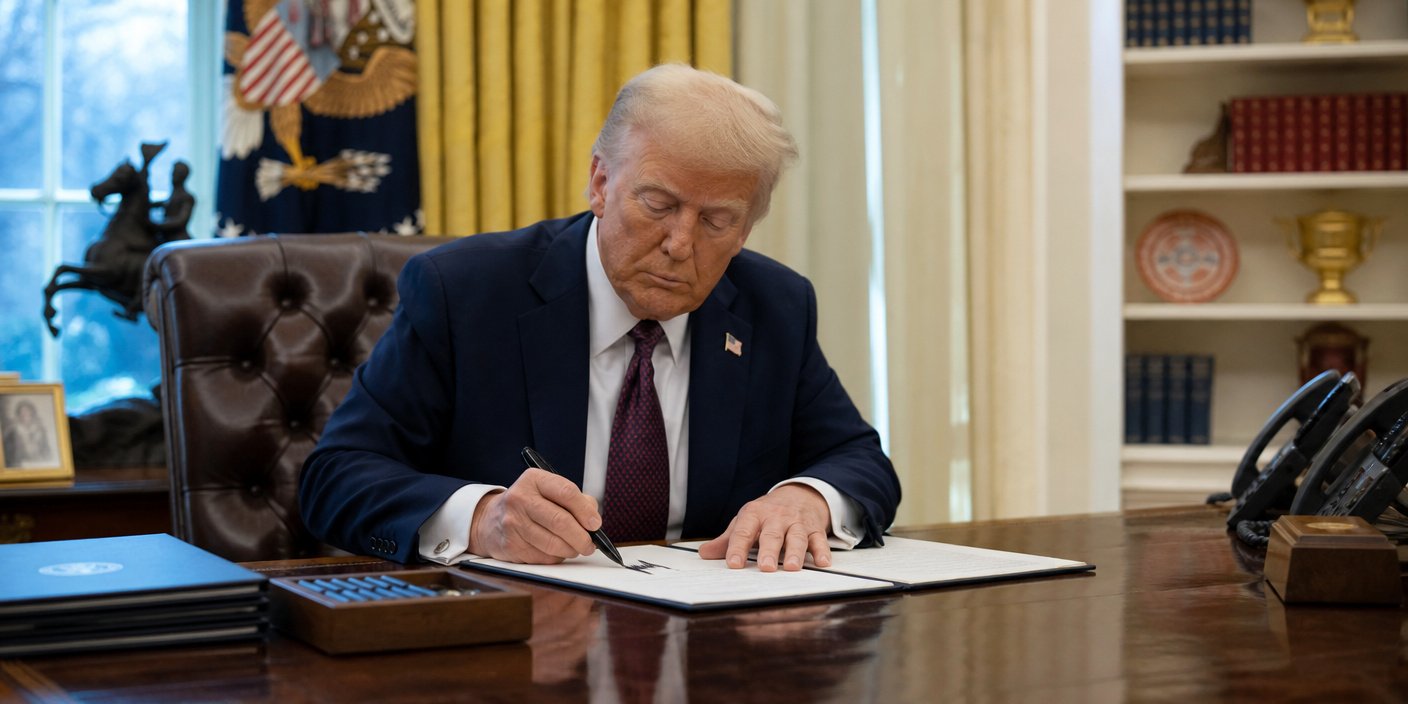
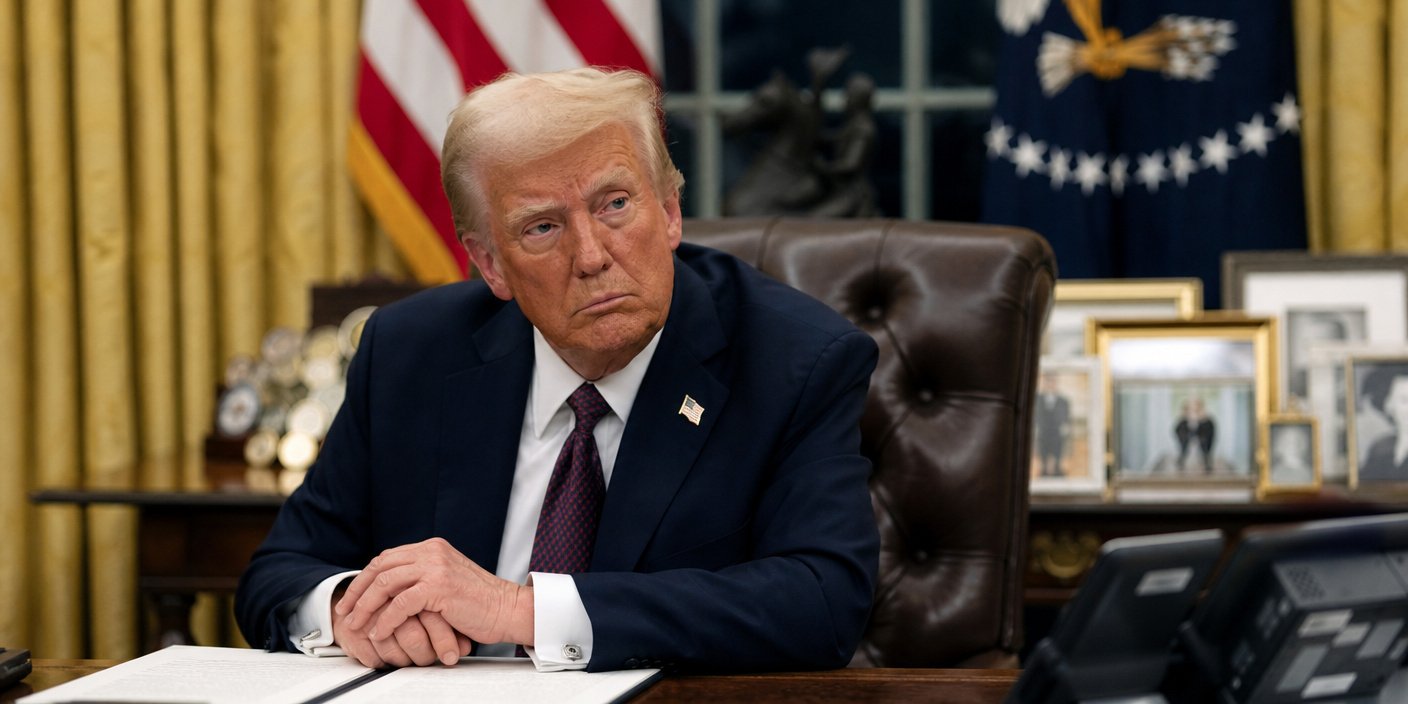
In a decisive and controversial move that has sent shockwaves through the American scientific community, the Trump administration has terminated all 22 members of the National Science Board (NSB), the independent governing body responsible for overseeing the National Science Foundation (NSF). The abrupt dismissal, delivered via email on behalf of President Donald J. Trump, marks the latest and most significant escalation in an ongoing effort to fundamentally restructure the federal government’s advisory landscape. This wholesale removal of the board—which plays a critical role in setting national policy for basic scientific research—threatens to destabilize the nation’s $9 billion primary funding agency at a time when American leadership in technology and innovation faces intensifying global competition.
Key Highlights
- Total Dismissal: All 22 members of the National Science Board were terminated simultaneously, effective immediately, following a brief email from the Presidential Personnel Office.
- Institutional Instability: The board, established in 1950, is designed to be an independent entity that insulates scientific funding from political cycles; its sudden removal leaves the NSF without its primary governing and advisory arm.
- The ‘DOGE’ Influence: The move is widely viewed as part of a broader strategy, heavily influenced by the Department of Government Efficiency (DOGE), to slash budgets and consolidate civilian research oversight.
- Scientific Backlash: Prominent figures in academia, including dismissed board members like Keivan Stassun, have condemned the decision, warning of long-term damage to fundamental research, training of future scientists, and the loss of US competitive advantage.
A Watershed Moment for American Science
The National Science Board is not a typical advisory committee; it is a statutory body created by Congress in 1950 to provide impartial, evidence-based guidance to the President and Congress regarding national science and engineering policy. It serves as the governing board of the National Science Foundation, an agency that has been the bedrock of US scientific breakthroughs—from the early development of the internet and MRI technology to contemporary advancements in nanotechnology and climate science. By dismissing the entire board, the Trump administration has effectively decapitated the oversight mechanism that ensures the NSF’s multi-billion dollar budget is allocated based on scientific merit rather than political whim.
The Mechanism of Purge
Unlike previous administrations, which typically replaced board members as their six-year terms expired, this administration opted for a clean sweep. The termination notices were described by recipients as cold and perfunctory. “On behalf of President Donald J. Trump, I’m writing to inform you that your position as a member of the National Science Board is terminated, effective immediately,” read the email, according to screenshots circulated by the Washington Post and other outlets. For many of the scientists involved—ranging from aerospace engineers to chemists and mathematicians—the news was unexpected. While some had anticipated ideological friction, the scale of the dismissal suggests a calculated desire to remove any potential roadblocks to the administration’s aggressive budgetary and regulatory agenda.
The Shadow of DOGE
Observers within the Washington beltway point to the influence of the Department of Government Efficiency (DOGE) as the primary architect behind this maneuver. Having already targeted federal agencies for massive consolidation and spending cuts throughout the previous year, the administration appears to be applying a similar “blunt force” approach to science. The NSF, which manages Antarctic research stations, fleet research vessels, and thousands of laboratory grants across the country, has been a frequent target for those who argue that federal research funding should be redirected toward more immediate, profit-oriented, or defense-linked technologies rather than the long-term, “high-risk” fundamental research the NSF is known for.
The Threat to Fundamental Research
The long-term implications of this purge are profound. The strength of the US innovation ecosystem lies in its ability to support basic research—the kind of science that does not have immediate commercial application but serves as the foundational knowledge for future industries. Without the NSB to advocate for this long-horizon research, experts fear the NSF will be forced to pivot toward the administration’s preferred “applied” projects, potentially at the expense of breakthroughs that take decades to mature.
Brain Drain and Institutional Memory


Scientific research relies heavily on institutional memory and long-term planning. The board members, who represent the pinnacle of their fields, provide the stability necessary to navigate complex policy landscapes. Their removal leaves a vacuum. Furthermore, the signal sent to the broader academic community is chilling: that expert service to the federal government carries the risk of public termination for ideological reasons. This could accelerate a “brain drain” where top scientific minds choose to leave government-adjacent work, preferring the private sector or international institutions where their expertise is shielded from shifting political winds.
The Global Competitiveness Gap
As the US reorganizes its scientific infrastructure, geopolitical competitors are not standing still. Nations like China have significantly increased their investment in basic research and infrastructure, viewing scientific dominance as a primary pillar of national power. By dismantling the structures that ensure US scientific rigor, critics argue the administration may be inadvertently ceding the high ground in the race for dominance in artificial intelligence, quantum computing, and bioengineering—all fields where the NSF has historically been the lead sponsor.
FAQ: People Also Ask
1. What is the role of the National Science Board?
The National Science Board (NSB) was created by the National Science Foundation Act of 1950. It serves two main purposes: to oversee the National Science Foundation (NSF) and to act as an independent body of advisors to the President and Congress on national science and engineering policy.
2. Is this the first time a US administration has fired an advisory board?
While presidents often replace advisory boards with their own appointees, the wholesale dismissal of an entire independent statutory board like the NSB is extremely rare and considered highly disruptive to the continuity of government operations. It follows a recent pattern of similar actions taken against CDC and NIH advisory committees.
3. Will this affect my scientific research grant?
While the administration claims the work of the NSF “continues uninterrupted,” the long-term impact on grant cycles, funding priorities, and peer-review processes is unknown. Researchers are advised to monitor official communications from the NSF, though uncertainty remains high.
4. What happens next for the National Science Board?
The administration is expected to appoint new members to the board. However, confirmation processes and the time required to re-establish the board’s operational capacity could lead to significant delays in decision-making and policy implementation at the NSF.