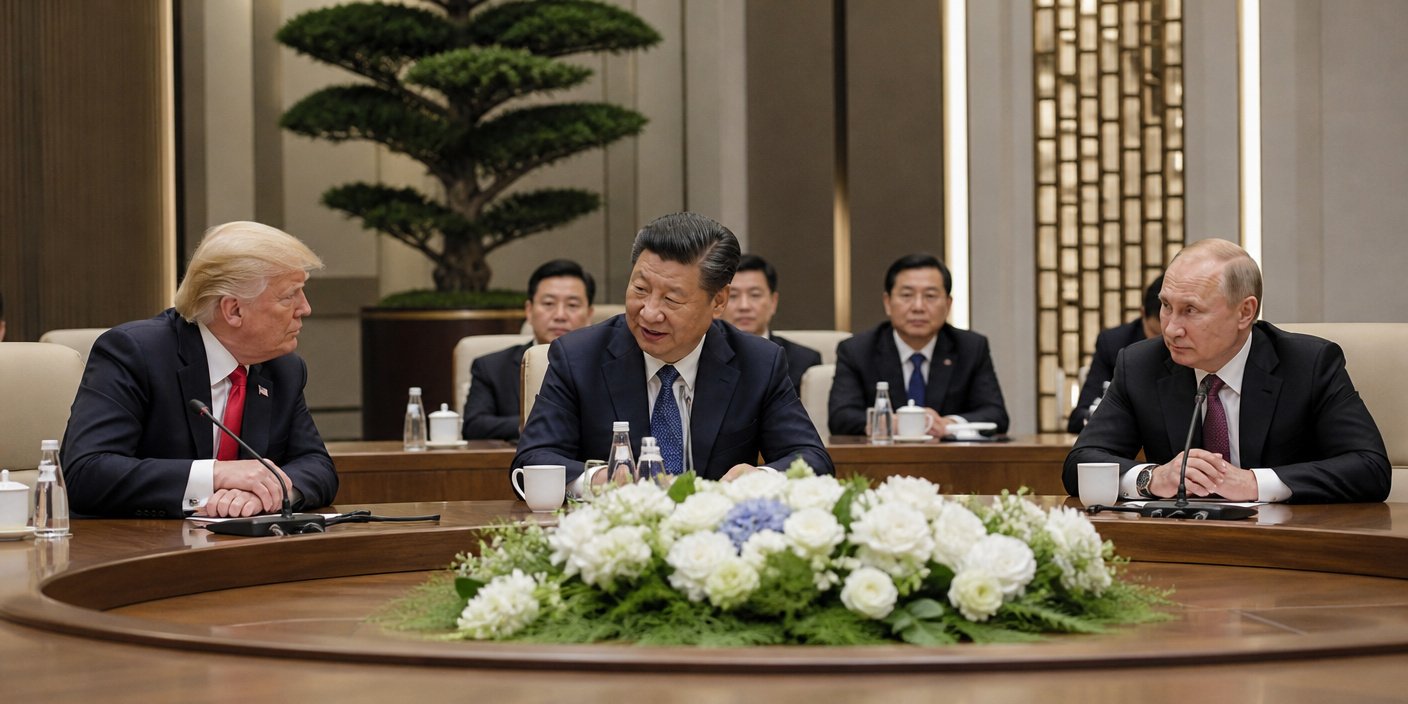
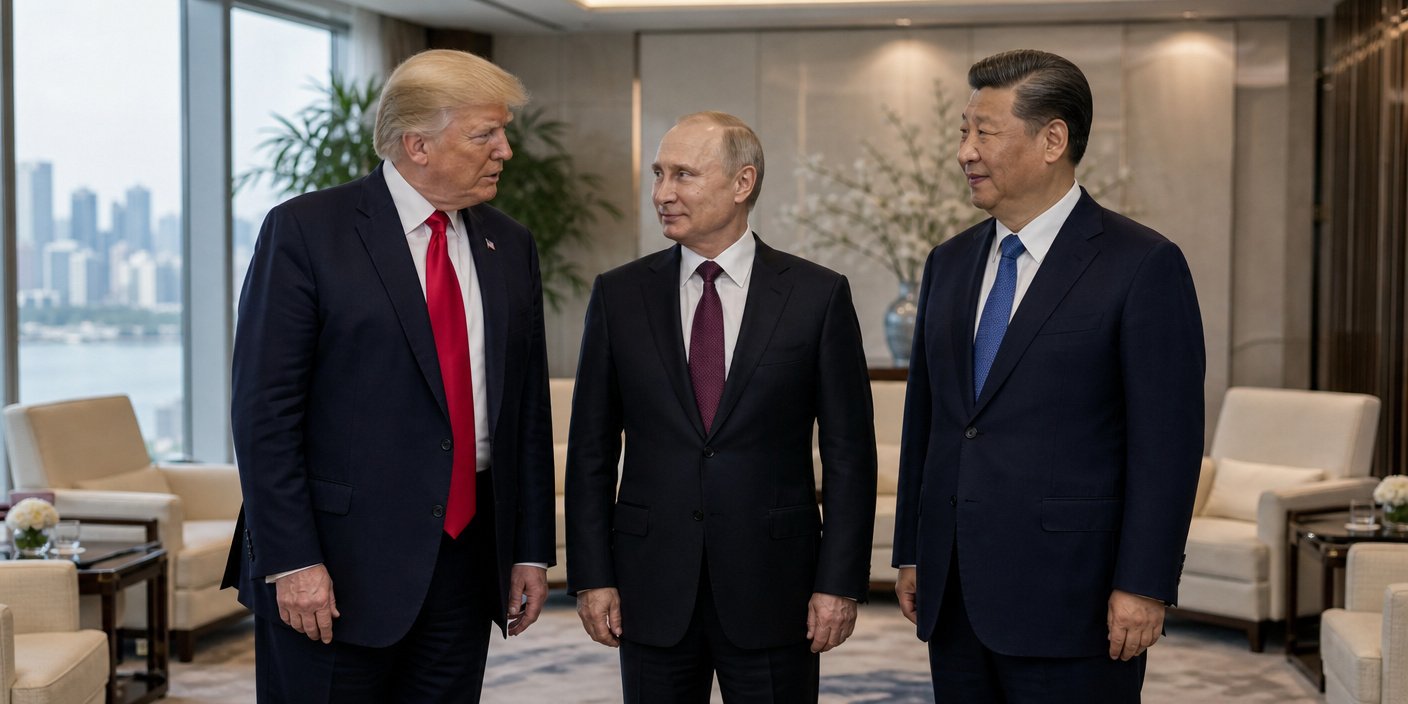
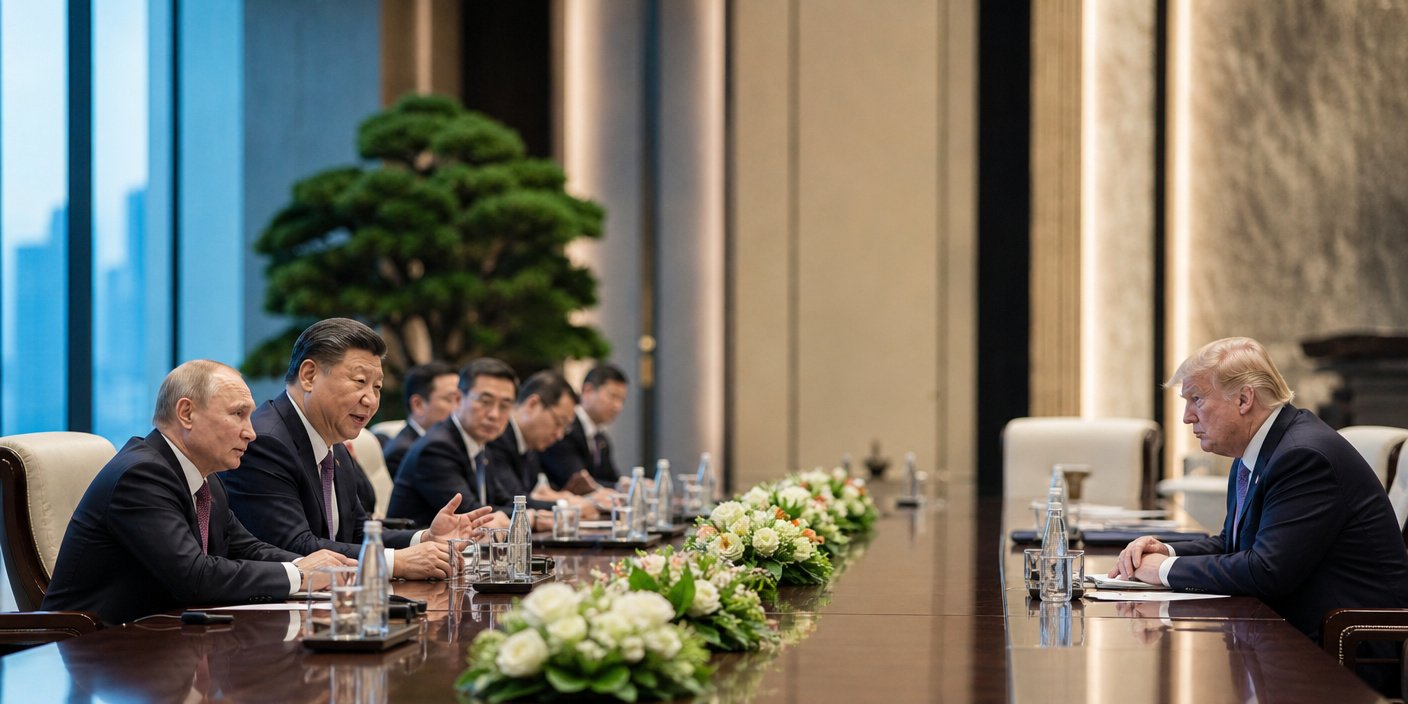
In an unprecedented diplomatic pivot at the APEC summit in Shenzhen, President Donald Trump, President Xi Jinping, and President Vladimir Putin convened for a historic trilateral meeting. The discussion, described by senior officials as a critical attempt to address high-stakes global security, saw President Xi Jinping characterize the current state of China-U.S. relations as “stable and improved,” setting a tone of cautious optimism against a backdrop of escalating geopolitical friction. This rare, face-to-face engagement marks the first time in recent years that these three world leaders have shared a dedicated forum to address the most pressing existential threats to the current global order.
Key Highlights
- A rare trilateral summit was convened in Shenzhen, China, on the sidelines of the Asia-Pacific Economic Cooperation (APEC) summit, featuring leaders from the U.S., China, and Russia.
- The core agenda prioritized nuclear arms control, seeking a framework to prevent proliferation and manage strategic arsenals amidst rising global tensions.
- The meeting addressed the critical geopolitical crises of the ongoing war in Ukraine and the volatile situation in Iran.
- President Xi Jinping explicitly signaled a positive trajectory for China-U.S. relations, describing them as “stable and improved,” a statement that reverberated through international markets and diplomatic channels.
Geopolitical Realignment in Shenzhen
The choice of Shenzhen—China’s premier technological and economic hub—as the host city for this trilateral gathering is not coincidental. Known as the “Silicon Valley of China,” the city represents the intersection of the manufacturing prowess and the digital future that both Washington and Beijing are competing to lead. By moving the trilateral talks into this space, the participants acknowledged that the current geopolitical impasse is no longer solely about trade or regional influence, but about the bedrock of the global security architecture.
The Pivot Toward Nuclear De-escalation


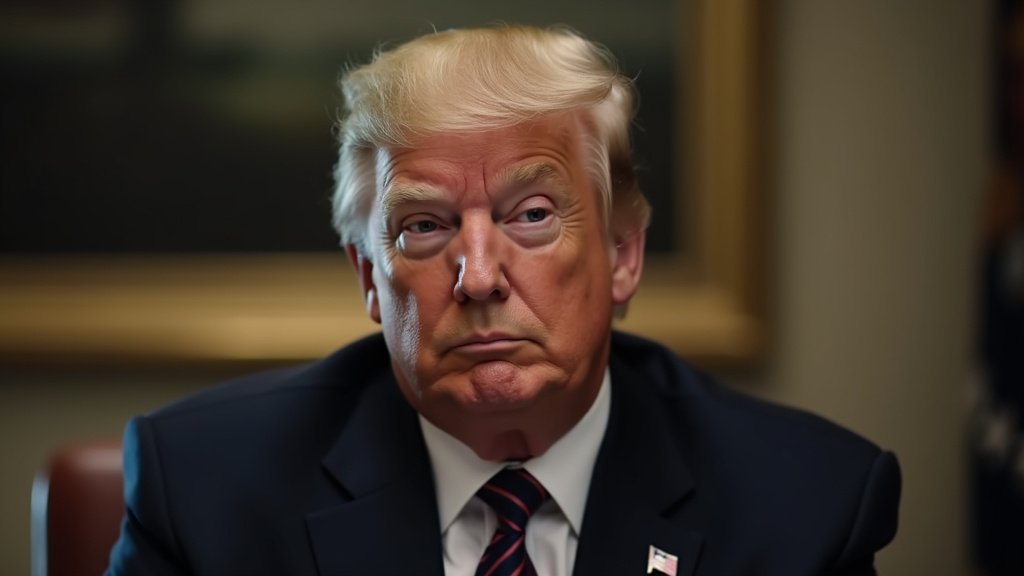

The central pillar of the discussion was nuclear arms control. With the expiration and suspension of several legacy treaties over the past decade, the world has entered a precarious period of unconstrained nuclear modernization. The meeting served as a high-level consultation on how to manage strategic stability. Experts suggest that the trilateral format was specifically designed to ensure that no single power felt isolated. By bringing Russia into the conversation with the U.S. and China, the leaders are exploring a trilateral mechanism that could potentially mirror or succeed the defunct Cold War-era bilateral structures. The focus here was on communication channels—specifically, the creation of a “red phone” style hotline protocol for nuclear-armed states to prevent miscalculation during kinetic military operations.
Addressing the Ukraine-Iran Nexus
While nuclear discourse set the structural framework, the tactical reality of the meeting was defined by the wars in Ukraine and Iran. These two theatres represent the most immediate points of friction between the three nations. President Trump’s inclusion in the dialogue underscores a shift toward direct, personality-driven diplomacy intended to bypass traditional bureaucratic stagnation. The discussions regarding Ukraine focused on the parameters of a potential ceasefire and the long-term territorial status quo. Similarly, the Iran file—centered on its regional proxy network and nuclear enrichment capacity—was treated with urgent priority. The presence of all three leaders suggests an acknowledgment that none of these crises can be resolved without a tacit or explicit “great power” consensus.
The “Stable and Improved” Narrative
Perhaps the most significant takeaway from the summit was President Xi Jinping’s explicit assessment of China-U.S. relations. By labeling the relationship as “stable and improved,” Xi is signaling to domestic audiences and international investors that the era of runaway volatility may be shifting toward a period of “managed competition.” This rhetoric serves as a stabilizing agent for global markets, which have been battered by tariff wars and supply chain decoupling. Whether this stability can hold amidst the ongoing frictions in the South China Sea and Taiwan Strait remains the primary question for global observers. The shift suggests that Beijing is prioritizing economic consolidation and internal growth over overt confrontation with Washington, provided that the U.S. respects China’s core security interests.
FAQ: People Also Ask
Q: Why was the trilateral meeting in Shenzhen significant?
A: It was the first time in recent years that leaders from the U.S., China, and Russia held a formal, private trilateral summit, specifically leveraging the APEC platform to address global security rather than trade issues.
Q: What were the primary topics of the Xi-Trump-Putin meeting?
A: The discussions focused heavily on nuclear arms control mechanisms, establishing protocols for high-stakes diplomacy, and seeking pathways to address or de-escalate the ongoing wars in Ukraine and Iran.
Q: What did President Xi Jinping say about U.S.-China relations?
A: During the summit, President Xi described the current status of China-U.S. relations as “stable and improved,” a significant rhetorical shift aimed at signaling a reduction in bilateral tensions.
Q: How does this impact the global security landscape?
A: The meeting indicates a possible movement toward a new tripartite security framework, where the three major powers aim to coordinate on critical global threats, potentially reducing the likelihood of accidental conflict.