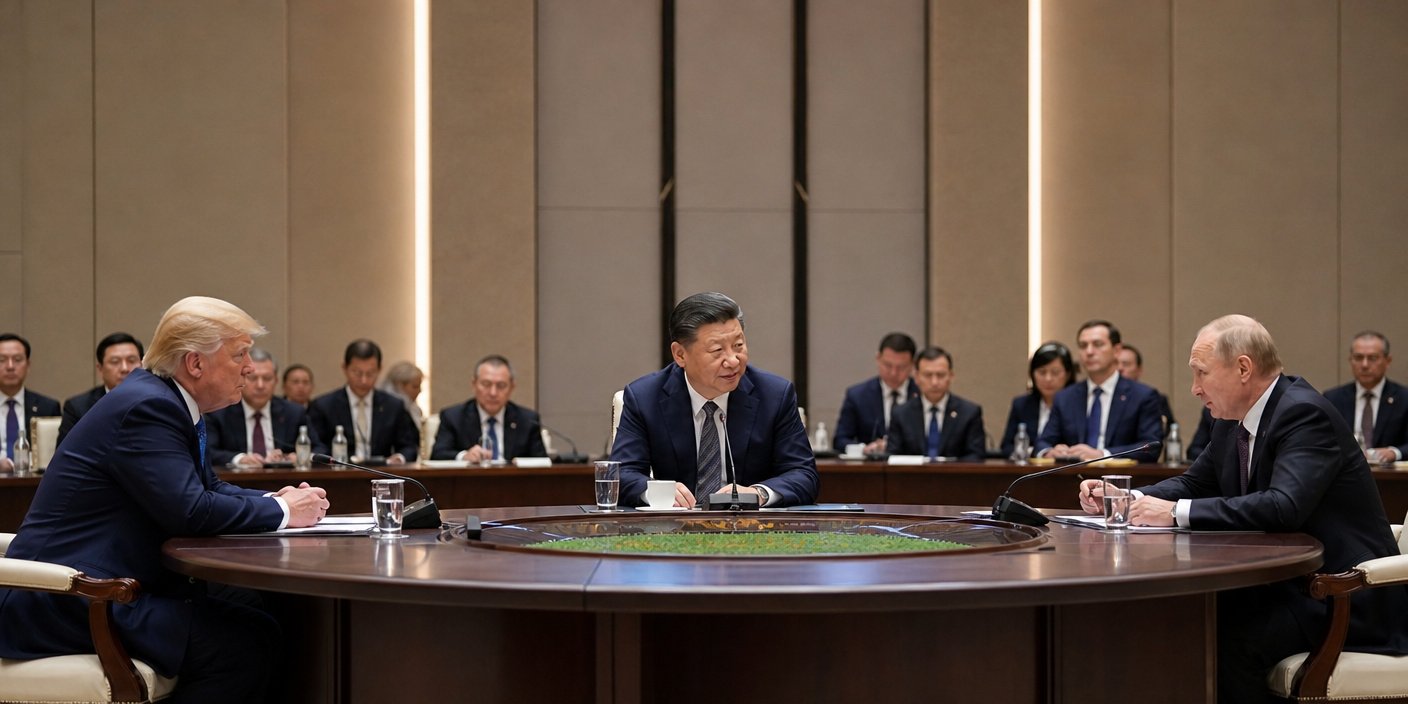
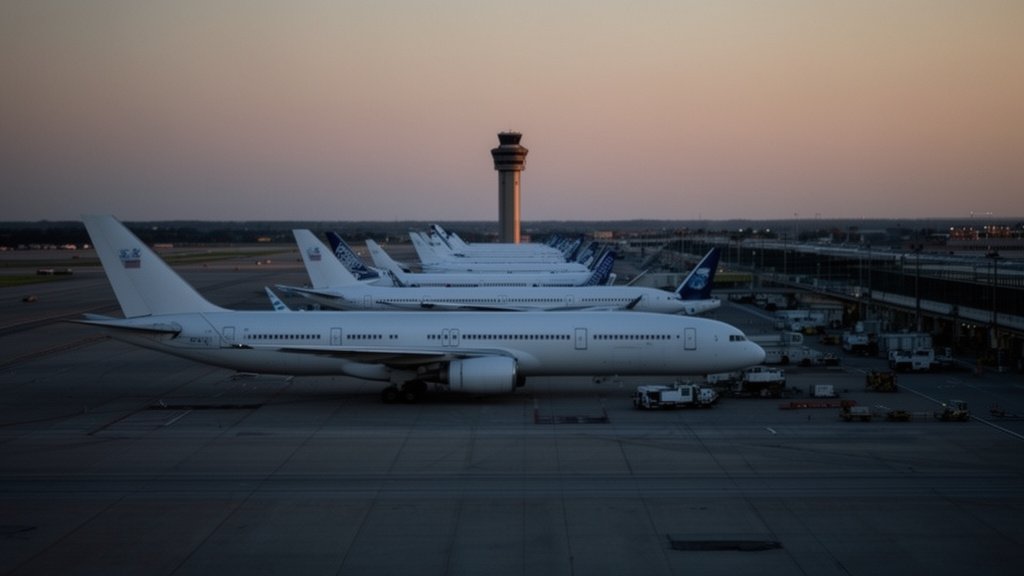
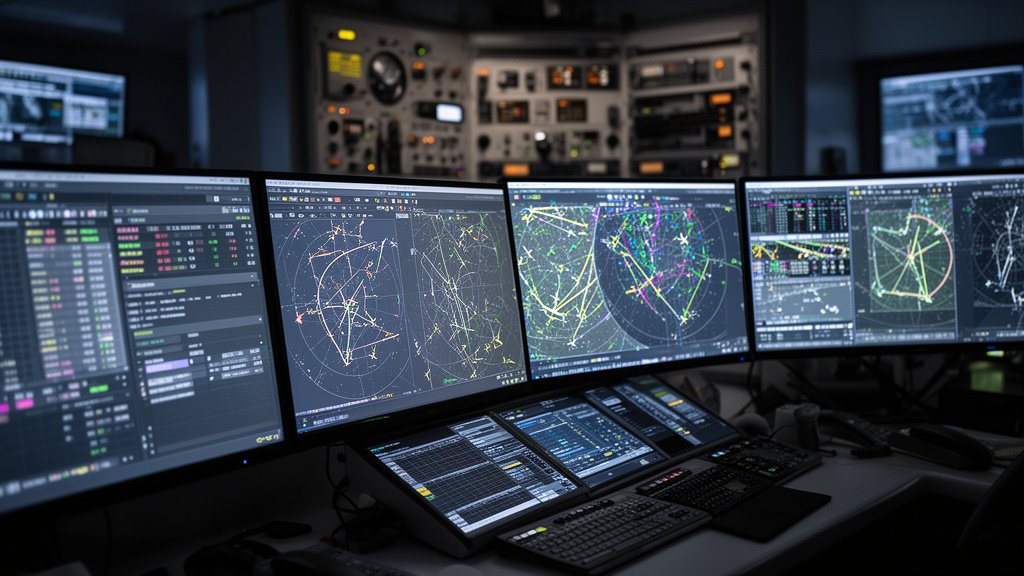
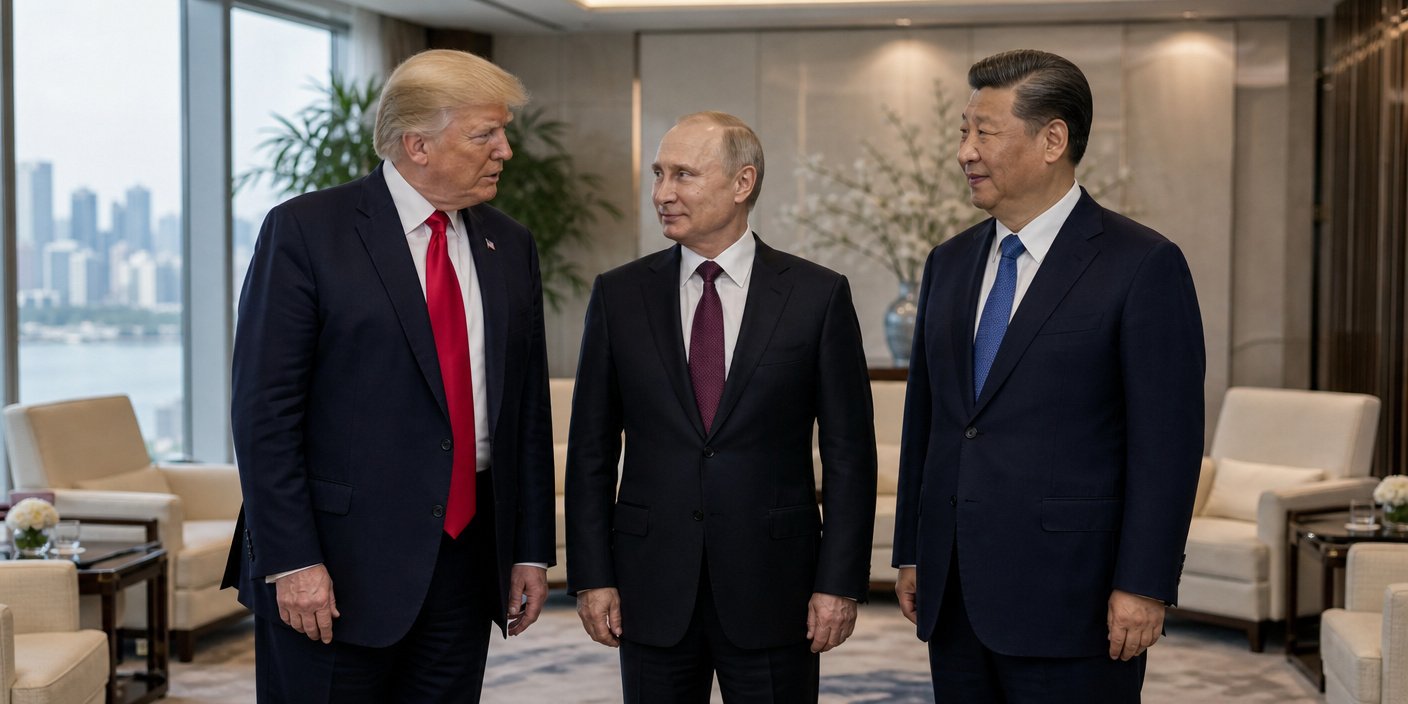
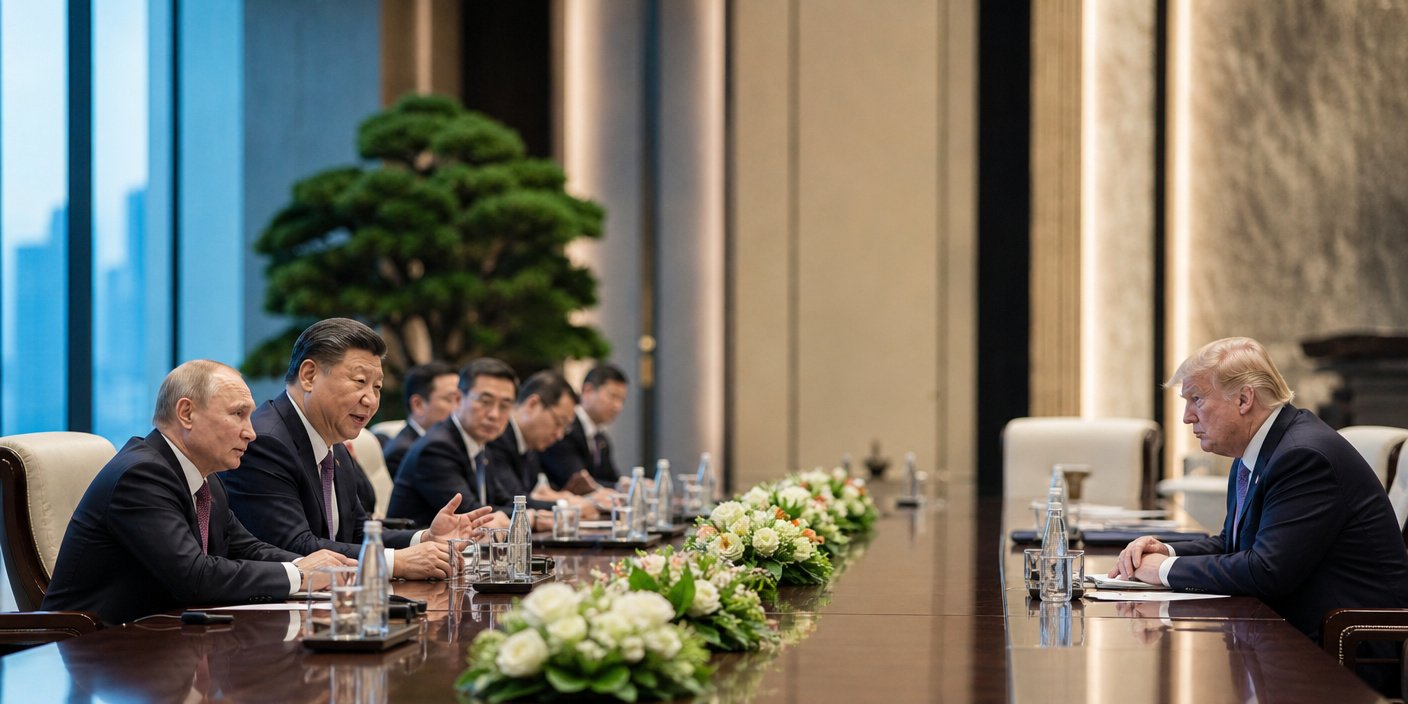
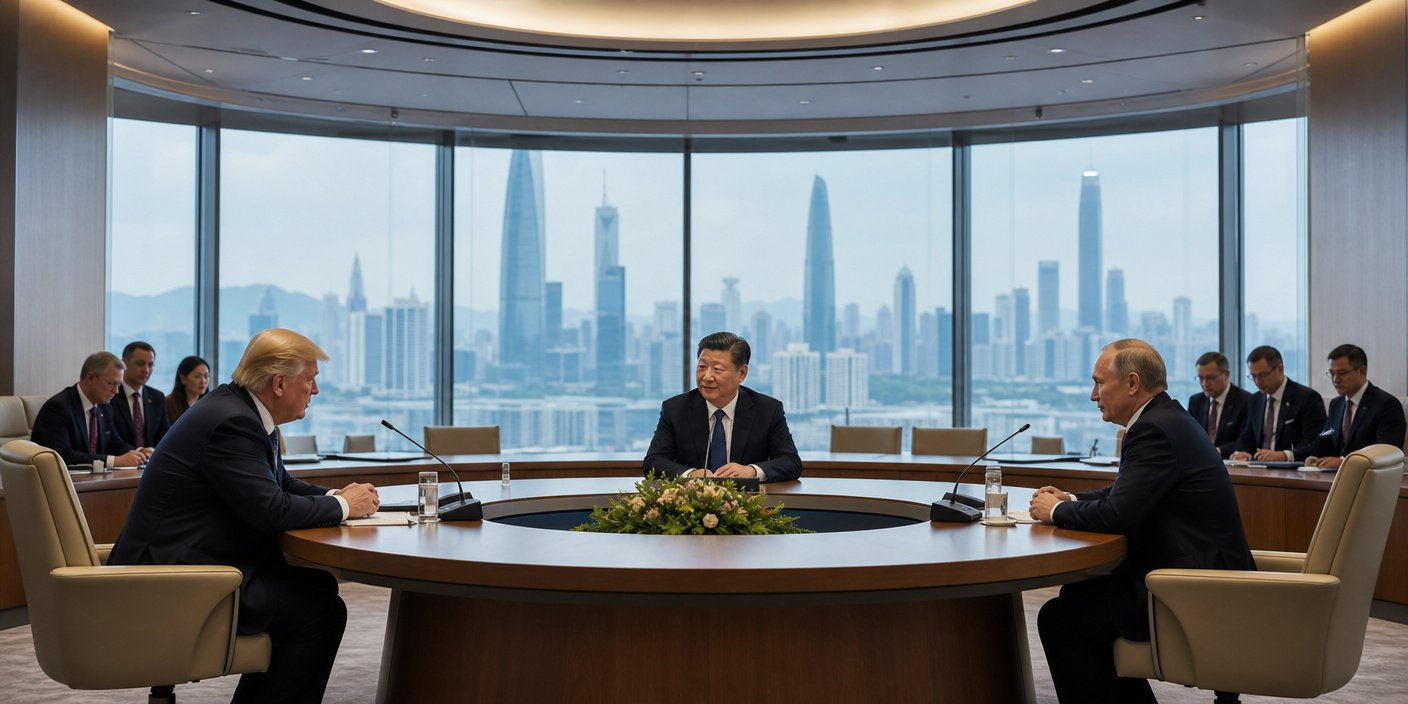
In a display of high-stakes statecraft, President Donald Trump, Chinese President Xi Jinping, and Russian President Vladimir Putin have convened for a rare trilateral summit on the sidelines of the APEC Economic Leaders’ Meeting in Shenzhen, China. This unprecedented meeting represents a fundamental pivot in the current geopolitical landscape, bringing together three of the world’s most influential leaders to address the urgent complexities of nuclear-age policy and global security architecture. Observers have long described the diplomatic relations between Washington, Beijing, and Moscow as a fragile triad; this summit, hosted in the technological hub of Shenzhen, serves as the first deliberate attempt to stabilize this dynamic through direct, multilateral dialogue.
Key Highlights
- Historic Trilateral Meeting: President Donald Trump, President Xi Jinping, and President Vladimir Putin held a dedicated three-way discussion during the APEC Economic Leaders’ Meeting in Shenzhen.
- Nuclear-Age Policy Focus: The primary agenda centered on re-evaluating global nuclear policy, strategic stability, and modern arms control frameworks.
- Unprecedented Diplomatic Venue: Utilizing the APEC summit in China as the neutral stage for these negotiations highlights the shifting gravity of Pacific economic and political influence.
- Global Markets React: The meeting is being closely monitored by international institutions, as policy shifts among these three nations carry direct implications for global supply chains and economic volatility.
The Shenzhen Accord: Reshaping the Global Geopolitical Landscape
The choice of Shenzhen—a symbol of China’s rapid technological ascent—as the backdrop for this historic encounter is not merely coincidental. By staging this trilateral dialogue within the APEC Economic Leaders’ Meeting, the three powers have signaled that the era of isolated, binary diplomacy is giving way to a more complex, interconnected strategic environment. For decades, the global order has navigated the intricacies of the U.S.-Russia nuclear standoff and the intensifying U.S.-China economic competition. The Shenzhen summit marks an attempt to synthesize these disparate streams into a coherent conversation about global survival and economic continuity.
The Architecture of the Meeting
The mechanics of the meeting reflect a high level of diplomatic preparation. While the details of the private sessions remain largely confidential, sources indicate the conversation was structured around three core pillars: strategic nuclear stability, cyber-sovereignty, and the maintenance of maritime trade routes. For President Trump, the summit represents a transactional approach to global peace, prioritizing direct negotiation over bureaucratic intermediaries. For President Xi, the location underscores China’s maturation as a diplomatic mediator, shifting the nation’s role from a passive participant in international forums to a primary architect of global policy. President Putin’s presence ensures that Russian interests in security and Eastern European stability remain at the forefront of the discussion.
This is not a return to Cold War-era summits; rather, it is the birth of a ‘Multiplex’ diplomacy. In the mid-20th century, summits were binary, focusing on the limitations of two-party arsenals. Today, the variables are exponential: artificial intelligence, autonomous weapon systems, and the integration of digital infrastructure into national security mean that any policy discussion must account for technological rapid-response scenarios. The Shenzhen meeting reportedly focused on establishing ‘red lines’ for cyber-defense and nuclear threshold technologies, a necessity in an age where the speed of communication often outpaces the speed of decision-making.
Economic Implications and Trade Stability
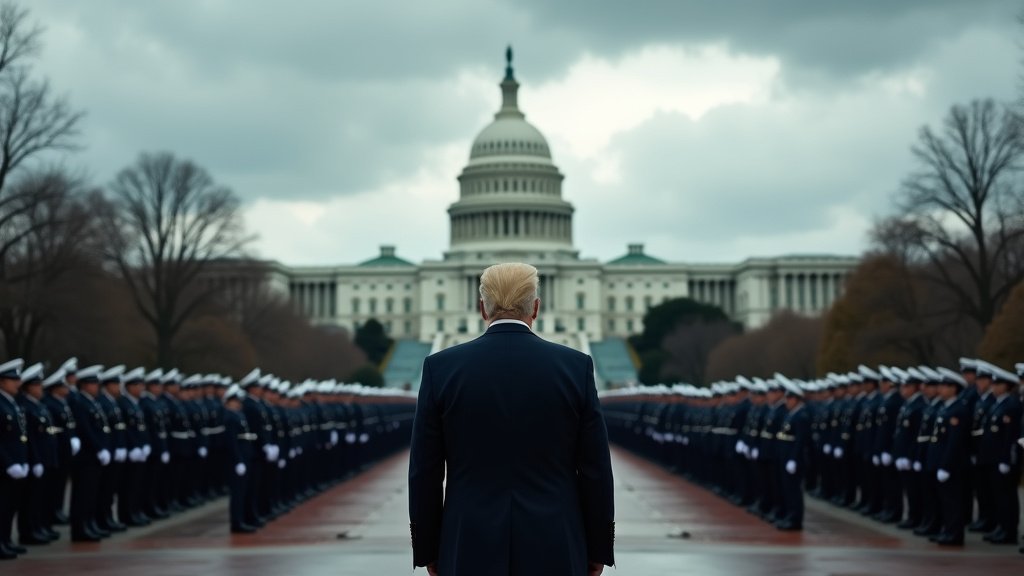

Beyond the security concerns, the Shenzhen summit carries immense economic weight. The APEC (Asia-Pacific Economic Cooperation) setting serves as a vital reminder that security and trade are inextricably linked. The participating leaders understand that any escalation in nuclear tension or diplomatic estrangement would instantly destabilize global markets, particularly in the semiconductor and rare-earth mineral sectors—industries that are heavily concentrated in the Pacific region.
By engaging directly, the three leaders are attempting to minimize ‘tail risk’ for the global economy. A commitment to transparency in arms policy, even if limited, creates a more predictable environment for international trade. For businesses and investors, the key outcome of this summit is the potential for reduced geopolitical friction, which could lead to more stable currency valuations and a renewed focus on multilateral trade agreements within the APEC framework.
Historical Context: From Reykjavik to Shenzhen
To understand the significance of this meeting, one must compare it to previous monumental summits. While the Reykjavik summit of 1986 focused on the total elimination of nuclear weapons, the Shenzhen summit is distinctly pragmatic. It does not aim for idealistic disarmament but rather for ‘durable management.’ The global community has moved past the expectation of total peace, favoring a model of ‘managed competition.’
This shift is largely due to the rise of new, non-traditional threats. The involvement of China in this specific trilateral format—traditionally a U.S.-Russia discussion area—is the most dramatic departure from historical norms. It acknowledges that no global security framework can function in the 21st century without the explicit inclusion of Beijing. This recognition effectively ends the lingering vestige of the post-Cold War unipolar moment, cementing a new reality of tripartite influence.
The Future of Tripartite Relations
Looking ahead, the question remains whether the Shenzhen summit will result in concrete protocols or if it will remain a symbolic gesture. Diplomacy is rarely defined by a single meeting, but the optics here are undeniable. The establishment of a dedicated communication channel between the three administrations could prevent future miscalculations, particularly in the South China Sea and along the NATO-Russia border. The true success of this summit will be measured in the months to come—by the absence of escalation and the gradual alignment of these nations on issues of global, existential concern.
FAQ: People Also Ask
Q: Why was Shenzhen chosen for the meeting?
A: Shenzhen is the epicenter of China’s technological and economic growth. Hosting the summit there during APEC emphasizes China’s role as both a global economic engine and an indispensable diplomatic mediator in the modern era.
Q: How does this summit differ from past APEC meetings?
A: While APEC is traditionally an economic forum focused on trade and prosperity, the side-summit between Trump, Xi, and Putin elevated the event to a high-level geopolitical security summit, effectively blending economic policy with critical nuclear-age security discussions.
Q: What is meant by ‘nuclear-age policy discussions’?
A: It refers to a modern framework for managing the relationship between nuclear deterrence, emerging technologies like AI-integrated weaponry, and cyber-security, aiming to prevent accidental conflict in a digital, rapid-response world.
Q: Will this summit lead to a new nuclear treaty?
A: While immediate treaty formation is unlikely, the summit is seen as a critical, foundational step toward establishing the trust and communication channels necessary to eventually negotiate new, comprehensive arms control agreements.