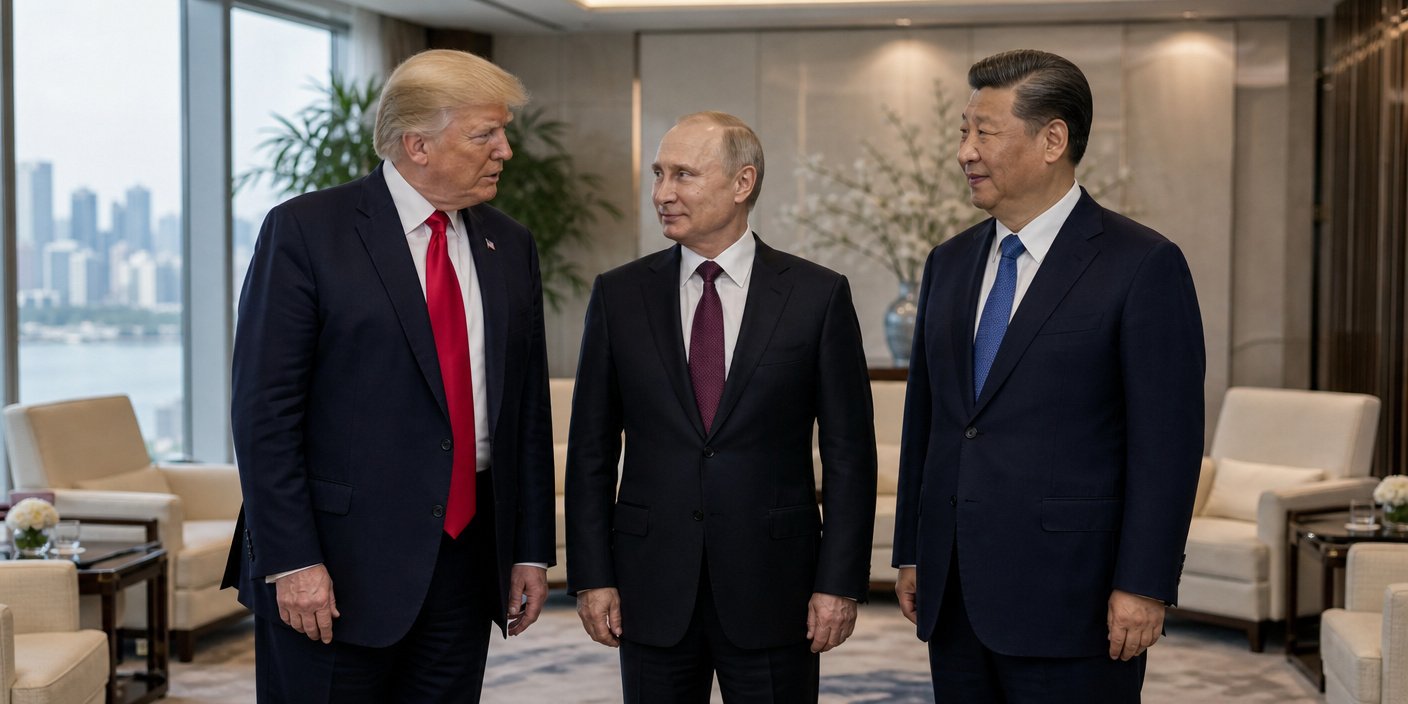
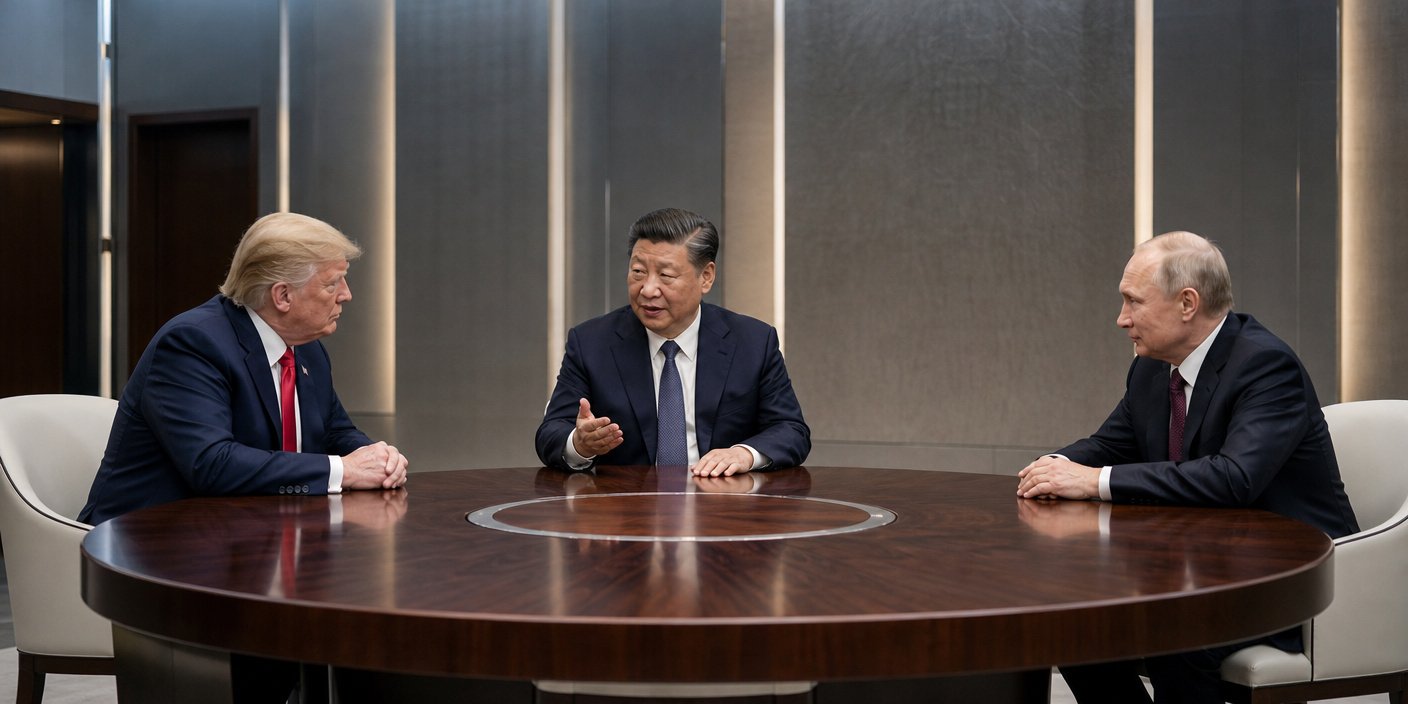
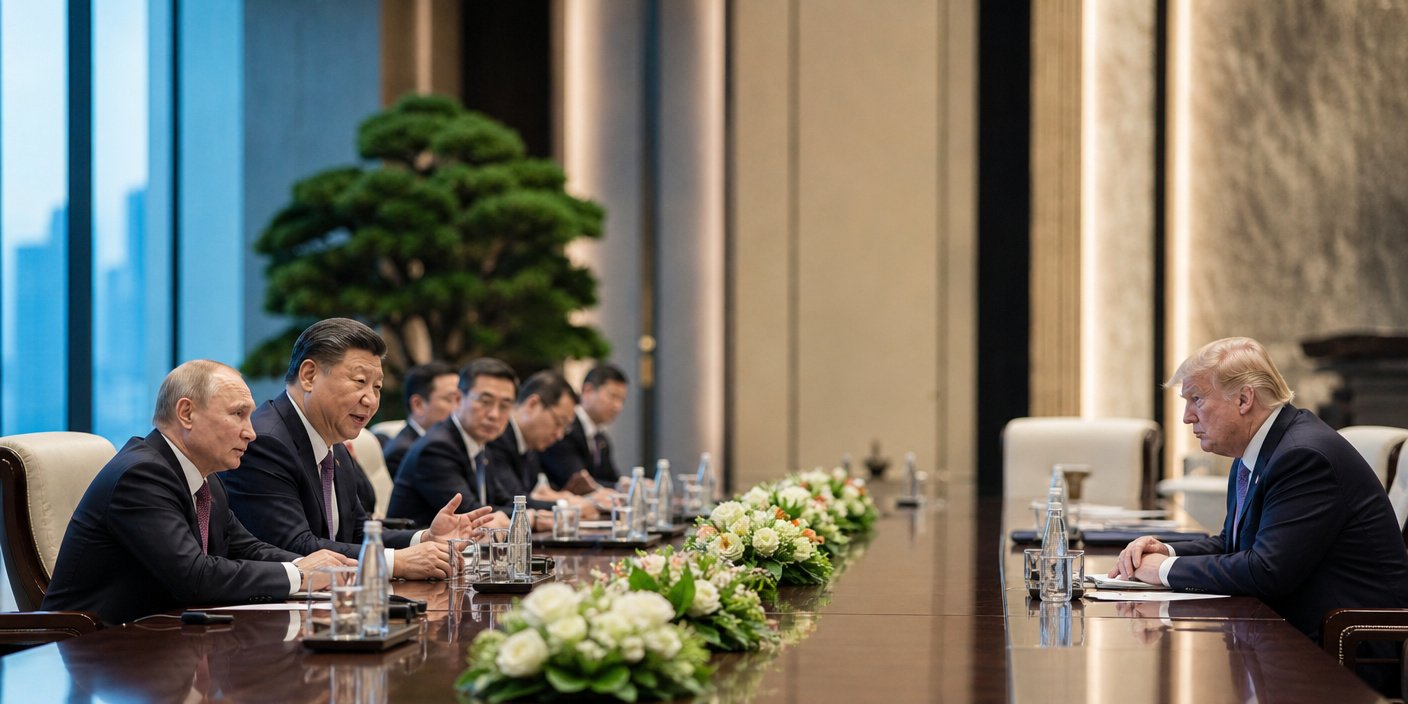
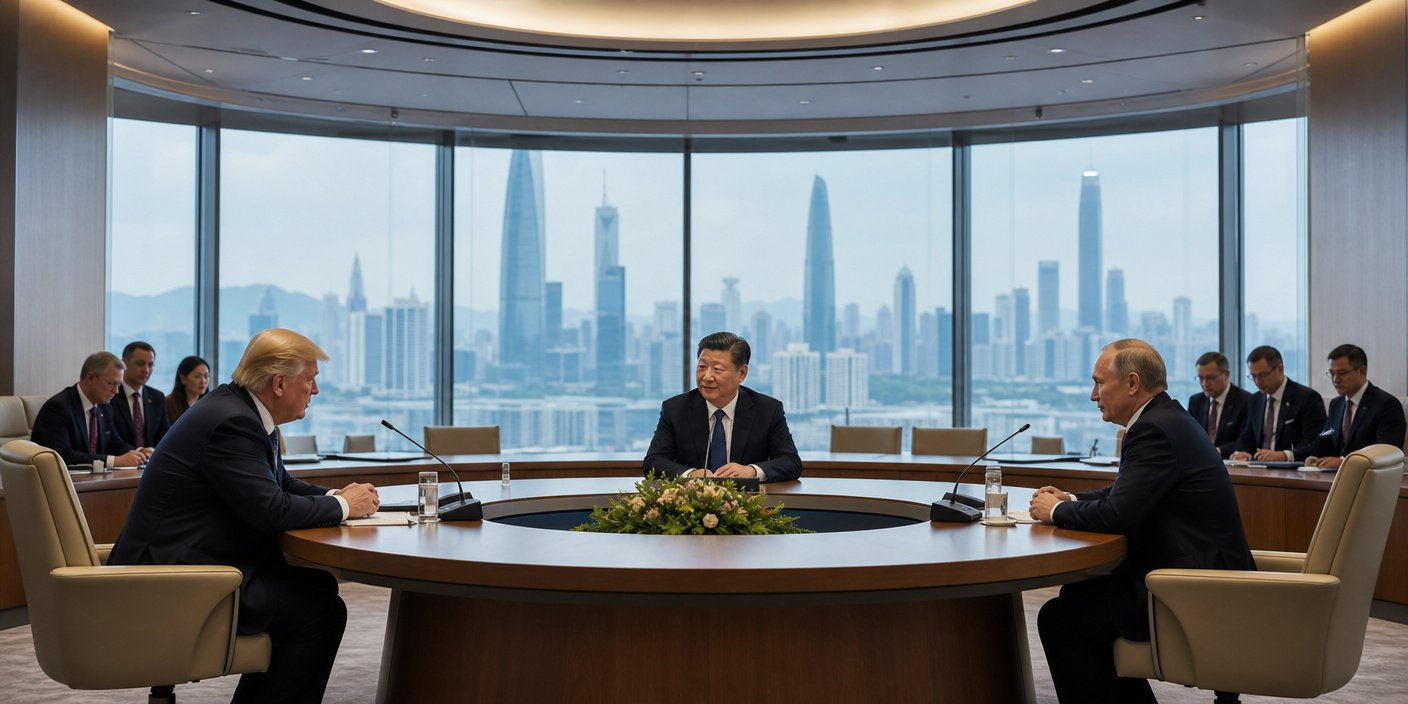
In an extraordinary diplomatic development, Chinese President Xi Jinping convened a high-stakes meeting with U.S. President Donald J. Trump and Russian President Vladimir Putin within the Shenzhen Special Economic Zone. Occurring on the sidelines of the APEC summit, this trilateral dialogue centered on critical global concerns, most notably the urgent need for nuclear disarmament and the recalibration of international trade frameworks. The meeting, which has sent shockwaves through global markets and diplomatic circles, represents a rare moment of direct alignment between three of the world’s most powerful geopolitical architects.
Key Highlights
- Trilateral Focus: The summit served as a formal venue for addressing the growing tension between nuclear superpowers, with a shared commitment to stabilizing the NPT framework.
- Trade Realignment: Economic leaders are reviewing the specific trade tariffs and market access stipulations discussed between President Xi Jinping and U.S. President Donald J. Trump during this pivotal summit.
- Shenzhen Significance: The choice of the Shenzhen Special Economic Zone symbolizes a focus on innovation-driven diplomacy and the integration of global markets.
- Disarmament Commitments: All three nations have signaled a willingness to engage in multi-lateral arms control dialogues to reduce global volatility.
Geopolitical Realignment in Shenzhen: The Trilateral Dialogue
The unexpected meeting in Shenzhen has fundamentally altered the trajectory of international relations. While the APEC summit is historically defined by economic cooperation across the Asia-Pacific region, this specific trilateral engagement between President Xi Jinping, President Donald J. Trump, and President Vladimir Putin elevates the event to a global strategic summit. The sheer density of issues covered—ranging from the complexities of the nuclear non-proliferation agenda to the delicate mechanics of bilateral trade wars—suggests that the world is witnessing a structural shift in how great power competition is managed.
The Economic Calculus: Navigating Trade and Tariffs
The trade component of this meeting cannot be overstated. With global supply chains under immense pressure, the discussions between the United States and China represent a critical juncture for the world economy. For analysts, the key question remains: can the principles of free trade be reconciled with the realities of national security and protectionist domestic agendas? The Shenzhen meeting functioned as a testing ground for this hypothesis.
By engaging directly in the heart of the Shenzhen Special Economic Zone, a symbol of China’s economic opening, both sides acknowledged the interconnectedness of their financial systems. The negotiation of potential tariff rollbacks or adjustments is not merely a policy matter; it is an exercise in managing global market expectations. Investors and stakeholders are closely monitoring the technical details emerging from the summit, specifically regarding sector-specific tariffs on manufacturing, technology, and energy commodities. The focus is now on establishing a predictable framework that minimizes volatility and encourages long-term capital investment. Furthermore, the inclusion of Russian economic interests in the wider regional discussion highlights the need for a comprehensive view of energy security—a cornerstone of current global economic stability.
The Nuclear Question: Restoring Global Stability


Perhaps the most significant outcome of the Shenzhen summit is the explicit commitment to dialogue regarding nuclear disarmament. In an era where existing treaties are increasingly strained, the alignment of the three nuclear superpowers—China, the United States, and Russia—is a necessary condition for global stability. The discussions focused on renewing the spirit of the Nuclear Non-Proliferation Treaty (NPT), with particular emphasis on preventing the escalation of arms races in the Pacific theater and beyond.
Experts note that this is the first time in recent years that these specific leaders have engaged in such a focused, high-level tripartite discussion on weapons reduction. While the exact mechanics of these potential treaties remain under negotiation, the public commitment to creating a safer, less volatile nuclear landscape is a significant diplomatic milestone. It signals a move away from brinksmanship toward a more managed, predictable competition. The success of these talks will likely be measured by the creation of new channels for military-to-military communication, designed to prevent accidental escalation during moments of geopolitical tension.
Future Projections and Strategic Implications
The meeting in Shenzhen is unlikely to be a one-off event. It signals the beginning of a new chapter in trilateral relations where direct leader-to-leader communication becomes the primary mechanism for crisis resolution. The implications for the Asia-Pacific region are profound: a more stable relationship between the three powers will create a more permissive environment for economic growth and regional integration.
However, the path forward is complex. Significant hurdles remain regarding technological dominance, regional territorial integrity, and the enforcement of international laws. Nevertheless, the Shenzhen summit has set a new baseline for engagement. By prioritizing face-to-face negotiations, the involved nations are acknowledging that the complexities of 21st-century diplomacy cannot be handled through diplomatic channels alone. The world will be watching closely to see if the commitments made in Shenzhen translate into measurable policy actions in the coming months, particularly regarding the reduction of trade barriers and the solidification of disarmament protocols.
FAQ: People Also Ask
1. Why was Shenzhen chosen for this high-stakes meeting?
Shenzhen was selected for its symbolic importance as the flagship of China’s economic liberalization. Its status as a global hub for technology and innovation provided a fitting backdrop for discussions on the future of global trade and industrial cooperation.
2. Did the meeting result in an immediate change to trade tariffs?
While the summit was a high-level strategic dialogue, the discussions established a framework for future negotiations. Official statements suggest that working groups will be formed to follow up on the specific trade issues raised during the sessions.
3. How does this summit affect the Nuclear Non-Proliferation Treaty?
By bringing together the leaders of three major nuclear powers, the summit underscored a shared commitment to the stability of the global nuclear order, reinforcing the importance of the NPT as a foundational mechanism for international security.
4. Is this the first time these three leaders have met in this format?
Yes, the trilateral summit in Shenzhen represents a rare and significant departure from standard diplomatic practice, bringing together the heads of state of China, the United States, and Russia for a dedicated, in-depth session on global policy.