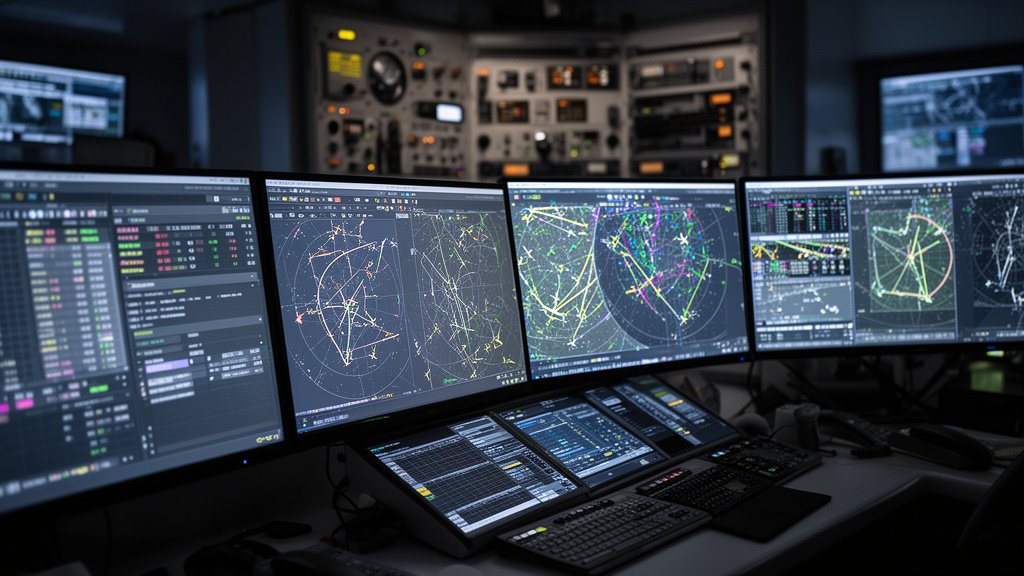
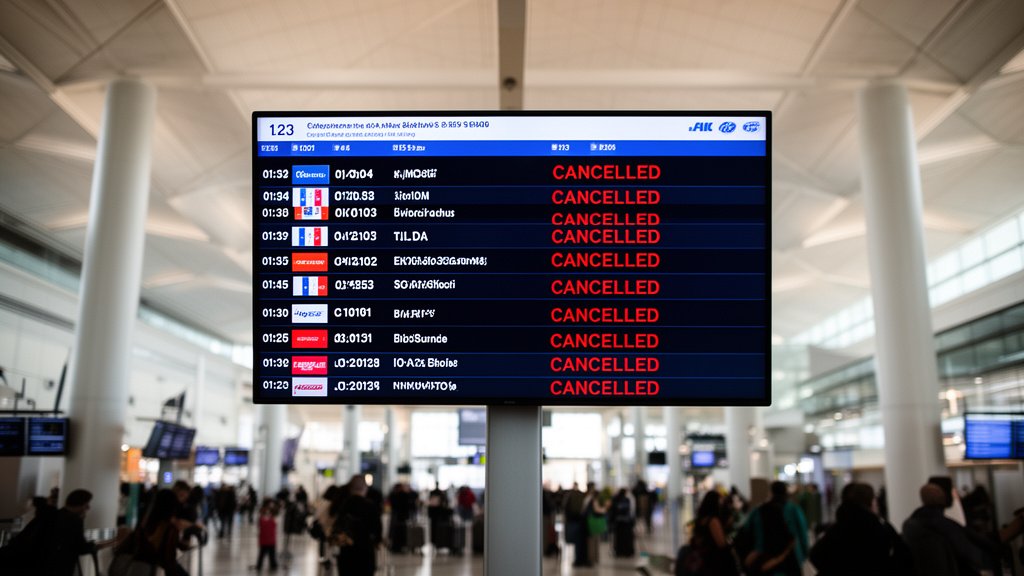
The Federal Aviation Administration (FAA) has issued an unprecedented nationwide ground stop, halting all departing flights across the United States in response to catastrophic technical difficulties. The immediate order, which has left thousands of passengers stranded at airports nationwide, appears to stem from a systemic failure within the newly implemented SMART (Strategic Management of Airspace, Routes and Trajectories) AI system. Aviation authorities are currently working to isolate the disruption, though the scale of the failure has triggered emergency response protocols across the aviation sector.
Key Highlights
- Nationwide Ground Stop: All departing commercial and private flights are prohibited from taking off as a safety precaution.
- SMART AI Malfunction: Preliminary reports identify the new SMART (Strategic Management of Airspace, Routes and Trajectories) AI system as the source of the critical technical data corruption.
- Thousands Impacted: Airports across the country are reporting severe delays and cancellations, with thousands of travelers currently unable to depart.
- Infrastructure Scrutiny: The incident raises immediate and significant questions regarding the reliance on automated AI systems for critical national airspace infrastructure.
Unraveling the SMART System Crisis
The aviation industry is reeling today as the FAA confirmed a “catastrophic technical anomaly” originating from the SMART (Strategic Management of Airspace, Routes and Trajectories) AI system. This software, designed to streamline air traffic flow and optimize flight paths, appears to have propagated data errors that forced the agency to freeze departures nationwide to ensure passenger safety. While air traffic control systems have previously experienced localized outages, a total ground stop tied to an AI algorithmic error represents a significant shift in aviation risk profiles.
The Architecture of the Failure
The SMART system was marketed as a revolutionary approach to airspace management, utilizing machine learning to predict trajectory conflicts and automate route planning for thousands of aircraft. Unlike legacy systems, which rely on deterministic algorithms, the SMART AI was intended to handle complex, real-time data inputs from thousands of sensors simultaneously. However, technical analysts suggest that a “feedback loop” within the AI’s decision-making layer may have led to invalid airspace data being broadcast to controllers. This forced the FAA to revert to emergency manual safety protocols, a transition that, by design, cannot support the volume of departure traffic currently operating in the U.S. National Airspace System.
Economic and Logistical Ripple Effects



The economic ramifications of this ground stop are immediate and severe. Each hour of a nationwide ground stop is estimated to cost the U.S. aviation sector tens of millions of dollars in direct operational expenses, not accounting for the secondary impacts on tourism, cargo logistics, and corporate business continuity. Major hubs such as Hartsfield-Jackson Atlanta International, Chicago O’Hare, and Los Angeles International are currently experiencing cascading delays that will likely ripple through the global aviation network for days. Airlines are struggling to re-book passengers as the sheer volume of disrupted flights exceeds current reservation system capacity.
The Human and Technological Balance
This incident provides a stark case study in the risks of integrating “black box” AI systems into critical national infrastructure. The Department of Transportation (DOT) and the FAA are now under immense pressure to explain how a system that was intended to increase efficiency resulted in such a profound failure. Critics point to the complexity of the SMART AI as a primary vulnerability; when these systems fail, they often do so in ways that are difficult for human controllers to diagnose in real-time. This forces a “fail-safe” state, which, while prioritizing safety over efficiency, effectively shuts down the movement of an entire nation.
Lessons in System Resilience
Historically, the FAA has relied on robust, hardened systems with significant manual overrides. The transition to the SMART AI environment, while necessary to address the increasing density of domestic airspace, may have outpaced the regulatory framework’s ability to manage failure states. Industry experts are already calling for a formal audit of the FAA’s procurement and validation process for AI-driven software. The focus moving forward will likely be on implementing “human-in-the-loop” requirements that prevent AI systems from having total authority over critical safety decisions, ensuring that a software glitch cannot translate into a national transportation paralysis.
FAQ: People Also Ask
1. Why did the FAA issue a ground stop instead of just slowing down traffic?
The ground stop is a safety-mandated procedure. When the integrity of the data used by air traffic controllers is compromised—as occurred with the SMART AI system—the only way to ensure the safety of aircraft in the air is to prevent new aircraft from entering the system. It is a protective, rather than punitive, measure.
2. Is the SMART AI system being permanently shut down?
While the FAA has not yet announced a permanent decommissioning, the system is currently offline while the “anomaly” is investigated. It is highly likely the system will undergo a lengthy recalibration and independent cybersecurity audit before being permitted to resume any active role in airspace management.
3. What should passengers do if their flight is grounded?
Passengers should contact their respective airlines immediately. Under Department of Transportation rules, airlines are obligated to provide assistance during significant operational failures. Check your airline’s mobile app for rebooking options, but prepare for significant congestion at customer service desks.
4. How does this compare to past aviation outages?
Unlike the 2023 NOTAM outage, which was a data distribution failure, this incident is specifically linked to an AI-driven decision-making system. This makes the root cause more complex, as it involves algorithmic behavior rather than simple data transmission failures.