The U.S. White House is actively exploring avenues for the Greenland Acquisition, reviving a long-standing U.S. territorial ambition. President Trump views Greenland as a national security priority, and the administration is considering various options, including diplomatic and economic measures, with military action also on the table for the Greenland Acquisition. The White House confirmed these discussions, a development that has alarmed European allies and Arctic security analysts. This initiative follows recent U.S. military actions in Venezuela, which have reframed perceptions of U.S. willingness to act and highlighted ongoing geopolitical shifts and growing Arctic security concerns.
Historical U.S. Interest and the Greenland Acquisition Plan
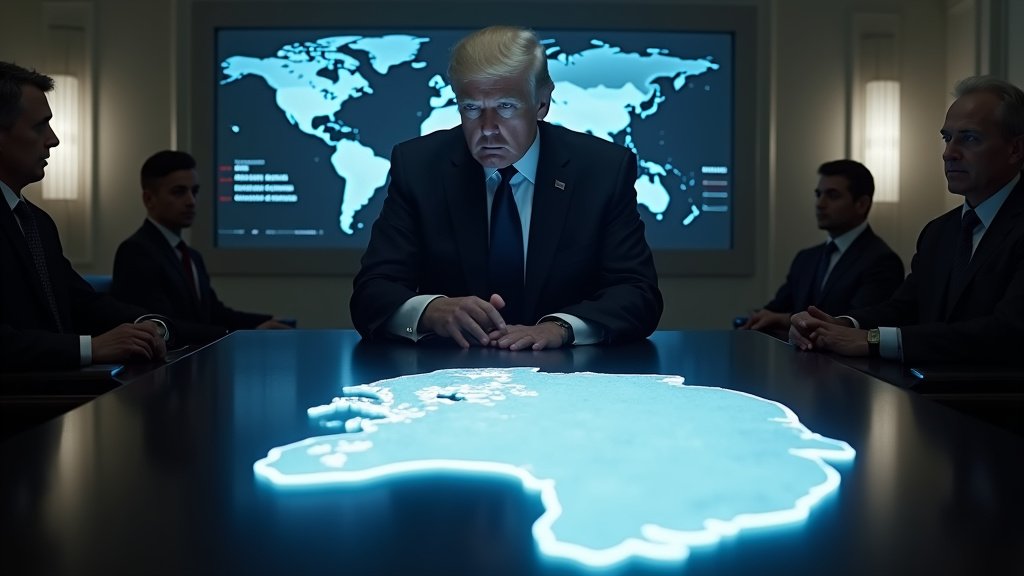
The U.S. has a long history of interest in Greenland, dating back to the 19th century, with several past attempts at acquisition. President Andrew Johnson’s administration considered it in 1867, with Secretary of State William H. Seward actively pursuing acquisition. Later, in 1946, President Harry S. Truman offered Denmark $100 million for Greenland, viewing it as a “military necessity” for the nation. During World War II, the U.S. occupied Greenland to prevent German control, and the U.S. military has maintained a presence since then, formalized by a 1951 treaty for defense cooperation. President Trump first floated the idea of buying Greenland in 2019 and has revived this aspect of the Greenland Acquisition plan since his re-election, viewing territorial expansion as a legacy-building opportunity tied to the broader Greenland Acquisition strategy.
Strategic and Economic Motivations for Greenland Acquisition
Greenland’s strategic location, at the nexus of North America, Europe, and the Arctic, is a primary driver for the potential Greenland Acquisition. This makes it crucial for military security, with the Pituffik Space Base (formerly Thule Air Base) vital for early warning and missile defense, monitoring potential threats from Russia and China. As melting ice opens new Arctic routes, Greenland’s importance increases, impacting geopolitical shifts Arctic. Furthermore, the island holds significant rare earth minerals Greenland reserves, critical for technology and defense industries, and securing access to these alternative sources is a strategic goal for the U.S., especially given China’s current dominance in the global supply. The pursuit of this Greenland Acquisition is therefore multifaceted, driven by both security and economic imperatives.
Greenland Sovereignty and Denmark Greenland Relations
Both Greenland and Denmark have firmly rejected any acquisition plans. Greenland is an autonomous territory within the Kingdom of Denmark, and its authorities assert their right to self-determination. Denmark has explicitly stated Greenland is “not for sale,” with leaders in both nations emphasizing that only their people can decide Greenland’s future, crucial for understanding Denmark Greenland relations. Greenlandic Prime Minister Jens-Frederik Nielsen has called for an end to “fantasies about annexation,” and Danish Prime Minister Mette Frederiksen warned that attacking Greenland would end NATO, underscoring the delicate nature of Denmark Greenland relations in the context of the Greenland Acquisition discussions. The concept of Greenland sovereignty is paramount.
International Reactions to U.S. Territorial Ambition
European leaders have united against the U.S. plans, issuing joint statements that reaffirm Greenland’s sovereignty and stress that Greenland belongs to its people, advocating for collective Arctic security within NATO. Major powers like the UK, France, Germany, Italy, Spain, and Poland support this stance, warning that seizing territory violates international law and could destabilize NATO. Some analysts worry about increased Arctic militarization, which could escalate rivalries with Russia and China. The White House has acknowledged discussions on diplomatic transactions but has not ruled out military options, fueling fears that rhetoric is becoming policy and highlighting a concerning U.S. territorial ambition. These trending stories about the Greenland Acquisition are captivating and underscore significant geopolitical shifts.
Future Outlook on the Greenland Acquisition
The U.S. administration is discussing various options for the Greenland Acquisition, including a potential purchase or a Compact of Free Association. Diplomacy is cited as the president’s first instinct; however, the White House maintains that military use is “always an option,” a stance that continues to create diplomatic friction. European allies and Greenlandic leaders remain firm in their insistence on sovereignty and self-determination. The situation remains a significant point of international concern, with the ongoing discussions potentially reshaping Arctic security dynamics and testing alliances and international norms surrounding U.S. military presence and expansionist desires related to the Greenland Acquisition.