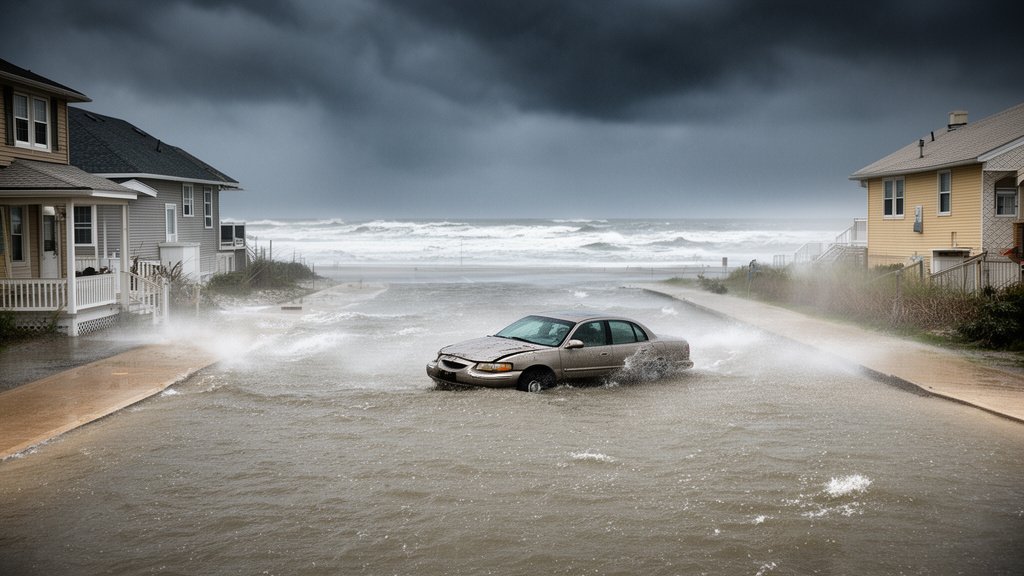
A massive storm system stretching from the Midwest to the East Coast caused widespread power outages and significant travel disruptions on Thanksgiving Day, affecting nearly one million electricity customers and causing hundreds of flight cancellations. The convergence of peak holiday travel volume and severe meteorological conditions has created a logistical nightmare, challenging infrastructure resilience across a vast swath of the United States.
Key Highlights
- Nearly 1 million electricity customers are currently without power across the Midwest and East Coast regions.
- Hundreds of commercial flights have been canceled or severely delayed, disrupting holiday travel plans for millions of passengers.
- The Federal Aviation Administration (FAA) has implemented ground stops at multiple major transit hubs due to low visibility and icy runway conditions.
- Utility companies have mobilized emergency crews, but hazardous road conditions are hampering initial repair efforts.
The Anatomy of a Holiday Travel Crisis
The storm arrived with little mercy, hitting the nation during one of the most concentrated travel periods of the year. While meteorologists from the National Weather Service (NWS) had forecasted the system, the sheer scale of the moisture influx and temperature drops created a “perfect storm” scenario that exceeded the resilience thresholds of local power grids and regional airport operations. The primary concern is not merely the precipitation, but the combination of heavy, wet snow—which accumulates on power lines and tree limbs—and sustained high-velocity winds that have exacerbated the structural damage to energy infrastructure.
Aviation Industry Paralysis
The aviation sector faced a dual threat: active precipitation causing low visibility and, more critically, the buildup of ice on aircraft surfaces. The FAA has been forced to manage a cascading series of delays, as airports from Chicago to New York struggle to keep runways operational. Unlike typical delays, these are compounding; when one major hub experiences a ground stop, the resulting ripple effect across the National Airspace System causes a logarithmic increase in delays for secondary and tertiary airports. Airlines have been scrambling to rebook passengers, but the saturation of available seats—typical for the Thanksgiving holiday—means that stranded travelers face an exceptionally difficult path to their destinations.
The Fragility of Modern Energy Infrastructure

The report from PowerOutage.us confirms the severity of the blackout, noting that nearly one million customers lost electricity as of late Thursday. This scale of impact highlights the growing vulnerability of the aging electrical grid. When trees, weighted down by ice and whipped by winds, collapse onto distribution lines, the resulting outages are not always quick to fix. Utility companies, including regional providers in the Midwest, are fighting a race against time and conditions. With roads iced over and visibility near zero in rural areas, the deployment of repair trucks is severely compromised. This event serves as a stark reminder of how interconnected and fragile our modern utility systems remain in the face of increasingly volatile weather patterns.
Climate Volatility and Infrastructure Resilience
A critical secondary angle emerging from this crisis is the debate over infrastructure hardening. Climate scientists have long predicted that atmospheric shifts would lead to more intense, unseasonable storm systems. The economic cost of such a disruption is staggering. Beyond the immediate repair costs for utility companies, there is the unquantified economic impact of business closures, lost retail opportunities, and the massive logistical costs associated with commercial air travel cancellations. Analysts from the Department of Energy (DOE) are likely to view this event as a case study in grid decentralization needs. Can microgrids or more robust, buried cabling mitigate the impact of future events? These are questions that will dominate the post-mortem analysis of this Thanksgiving disruption.
The Socio-Economic Ripple Effect
Finally, we must consider the human toll beyond the statistics. The Thanksgiving holiday represents the year’s largest travel peak. For many, these disruptions are not merely inconveniences but personal crises. The psychological impact of being stranded, coupled with the potential for property damage from power outages (including food spoilage and heating failure), creates a complex social burden. Local emergency management agencies have been forced to open warming centers in impacted counties, adding a layer of municipal strain on top of an already exhausted utility workforce.
FAQ: People Also Ask
Q: What is the primary cause of the widespread power outages?
A: The primary cause is the accumulation of heavy, wet snow and ice on power lines, coupled with high winds. This weight causes trees to collapse onto the distribution grid, severing power lines and damaging utility infrastructure.
Q: Why are there so many flight cancellations if modern airports are equipped for weather?
A: While airports have de-icing capabilities, the volume of the storm exceeded capacity at several hubs. When visibility drops below safety thresholds or crosswinds exceed operating limits, the FAA issues ground stops. These stops cause a ripple effect that overwhelms airline scheduling software, leading to broad delays.
Q: When can affected customers expect power to be restored?
A: Restoration times vary by region and the severity of local damage. Utility companies typically prioritize critical infrastructure like hospitals and emergency services first. Residents should check their local utility provider’s online outage map for the most accurate, real-time restoration estimates.
Q: Is this level of storm severity normal for Thanksgiving?
A: While storms during the late November holiday period are not unprecedented, the intensity and geographical reach of this specific system—stretching from the Midwest to the East Coast—is significant and exceeds average historical storm activity for this specific window.