Former U.S. Army Major Nidal Hasan, who was sentenced to death for the 2009 mass shooting at Fort Hood, has officially filed a motion requesting a stay of his scheduled military execution. The execution is currently set for December 3, 2026. This legal maneuver is intended to secure Hasan the time necessary to initiate federal habeas corpus proceedings, a pivotal step that could further delay the first military execution in the United States since 1961.
Key Highlights
- Execution Timeline: Nidal Hasan’s execution is currently slated for December 3, 2026, marking a rare moment in modern military justice history.
- The Filing: The motion for a stay of execution aims to exhaust all avenues for federal habeas corpus review, a constitutional protection allowing prisoners to challenge the lawfulness of their detention.
- Historical Context: Hasan was convicted for the 2009 shooting at Fort Hood (now Fort Cavazos), which resulted in the deaths of 13 individuals and the wounding of more than 30 others.
- Legal Precedent: Executions within the U.S. military system are exceedingly rare, with the last execution carried out in 1961, making every step of this legal process subject to intense national scrutiny.
The Legal Gambit: Habeas Corpus and the Military Death Penalty
The motion filed by Nidal Hasan represents a classic, albeit highly anticipated, legal strategy in capital punishment cases. By requesting a stay of execution, Hasan’s legal team—or Hasan himself, given his history of acting pro se—is attempting to leverage the federal habeas corpus process. Habeas corpus, often referred to as the “Great Writ,” allows a prisoner to challenge the constitutionality of their incarceration and the legitimacy of their sentence in a civilian federal court.
In the context of the Uniform Code of Military Justice (UCMJ), capital cases face a bifurcated system. While military courts-martial handle the initial trial and conviction, the integration of federal civilian court oversight through habeas petitions adds a layer of complexity that often results in significant delays. For a prisoner on military death row, these appeals are the final barrier between their current status and the execution chamber. The military has not executed a service member in over six decades, and many legal scholars argue that the procedural hurdles—specifically the appeals process—are designed precisely to prevent the state from committing irrevocable errors. The request for a stay is not merely an attempt to delay the inevitable; it is a fundamental assertion of the right to contest the conviction at the highest possible levels of the federal judiciary.
The Shadow of the 2009 Fort Hood Attack
To understand the gravity of the current legal filing, one must return to the events of November 5, 2009. Nidal Hasan, then a U.S. Army psychiatrist, opened fire at a deployment readiness processing center at Fort Hood, Texas. The attack claimed the lives of 13 people, including a pregnant soldier, and left dozens more with physical and psychological trauma. The incident remains one of the deadliest acts of domestic terrorism on a U.S. military installation.



Following the attack, Hasan was tried by a military court-martial. In 2013, a jury of military officers found him guilty on all counts, including 13 counts of premeditated murder and 32 counts of attempted premeditated murder. He was subsequently sentenced to death. However, the path from sentencing to the current execution date has been arduous and characterized by a slow, meticulous review process within the military appellate system. The upcoming December 2026 date was seen by many as a signal that the military justice system was finally reaching a resolution, but this new motion underscores how fragile such deadlines can be in the face of persistent constitutional appeals.
Challenges Within the UCMJ and Military Appeals
The U.S. military operates under the UCMJ, a separate legal system from the civilian criminal justice system. However, the military death penalty is subject to review by the Court of Appeals for the Armed Forces, and eventually, the potential for Supreme Court involvement. The primary challenge in this case lies in the lack of recent precedent. Because the United States military has not executed a prisoner since the 1961 case of Army Private John A. Bennett, there is no contemporary operational playbook for carrying out such a sentence.
This lack of precedent creates a unique environment for defense attorneys. Every step—from the selection of the execution method to the timeline of final appeals—is scrutinized for potential violations of the Eighth Amendment, which prohibits cruel and unusual punishment. Hasan’s attempt to initiate federal habeas proceedings essentially forces the civilian judiciary to weigh in on the military court’s conviction. Should a federal judge grant the stay, the December 3, 2026, date could be effectively vacated, potentially pushing the timeline back by years as the case winds through the civilian appellate court system.
The Impact on Survivors and the Military Justice System
The victims of the 2009 shooting and their families have lived through years of uncertainty, marked by repeated legal delays and the slow progression of military bureaucracy. For these families, the execution date provided a sense of finality—a belief that justice was finally nearing its conclusion. The filing of this motion to stay the execution reopens a painful chapter, forcing survivors to once again wait as the legal system grinds forward.
Furthermore, the case of Nidal Hasan acts as a stress test for the U.S. military justice system. It highlights the tension between the desire for swift accountability in cases of mass violence and the deep-seated protections built into the U.S. legal framework. Whether the motion is granted or denied, the outcome will likely set a significant precedent for how the military handles future capital cases and whether it can effectively maintain a death penalty apparatus in an era where such punishments are increasingly scrutinized.
FAQ: People Also Ask
1. What is federal habeas corpus in this context?
Federal habeas corpus is a legal process that allows an individual, in this case, Nidal Hasan, to petition a federal civilian court to review the lawfulness of their detention and the validity of their military conviction. It acts as an oversight mechanism to ensure constitutional rights were not violated during the military trial.
2. Is the December 3, 2026, execution date guaranteed to change?
Nothing is guaranteed. The filing of a motion for a stay does not automatically grant the stay. A judge must review the motion and decide whether there are sufficient grounds—such as unresolved constitutional issues—to delay the execution. If the motion is denied, the scheduled date stands.
3. Why hasn’t the military executed anyone since 1961?
It is not due to a single law, but rather the cumulative effect of a complex, highly cautious appeals process. Every military death penalty case undergoes an exhaustive review that often spans decades, ensuring every possible legal error is corrected before the sentence is carried out.
4. Where is Nidal Hasan currently imprisoned?
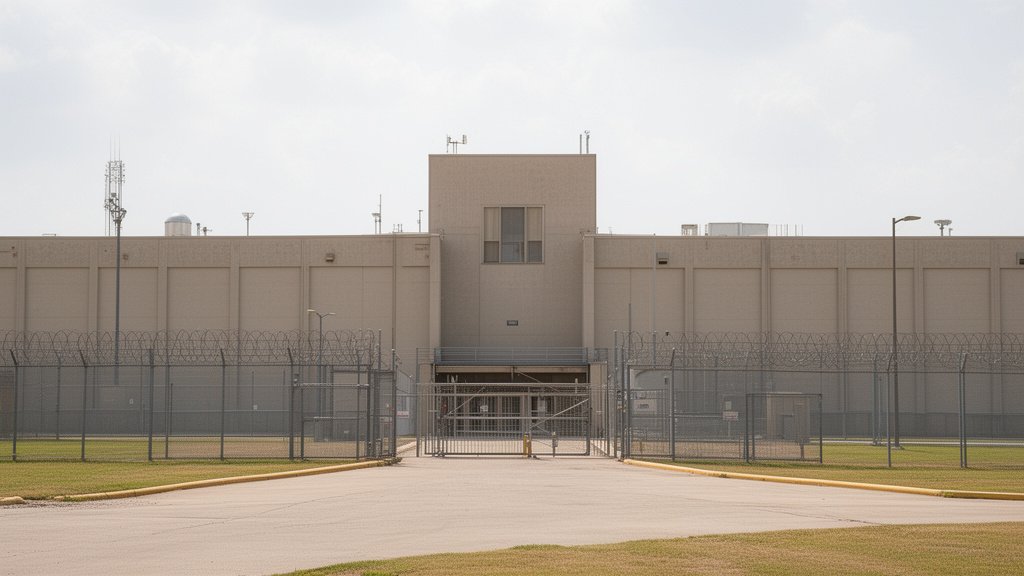
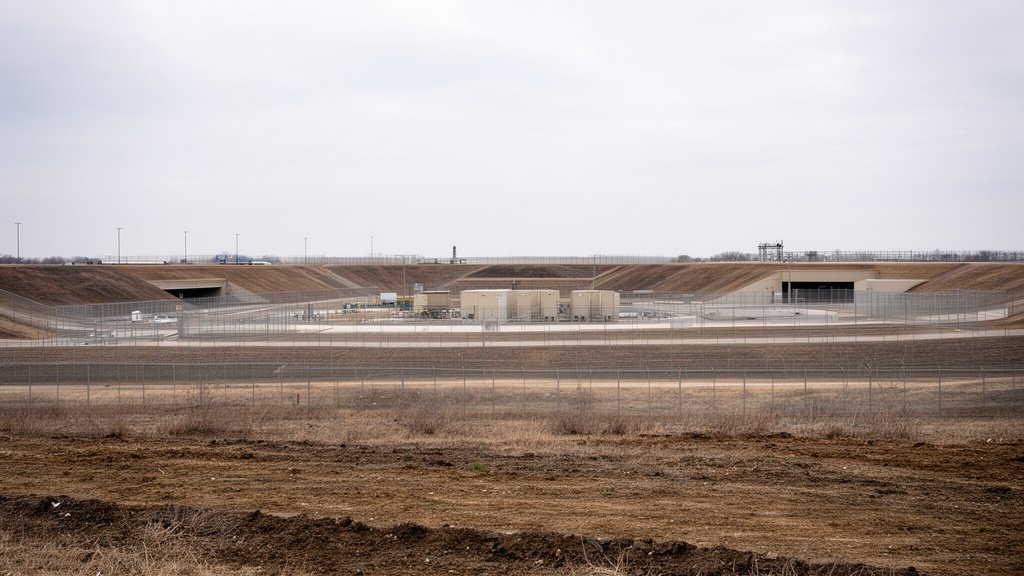
Nidal Hasan is currently held at the United States Disciplinary Barracks at Fort Leavenworth, Kansas, which serves as the military’s maximum-security prison and home to military death row.