Asian stock markets posted broad gains on Friday, November 27, buoyed by ongoing strength in AI-related equities and positive sentiment ahead of Wall Street’s post-Thanksgiving reopening. Despite lingering concerns regarding potential U.S. tariffs, major indices including Japan’s Nikkei 225 and South Korea’s Kospi saw significant upward movement, signaling a robust appetite for risk in the closing stages of the trading week.
Key Highlights
- AI Momentum Drives Indices: Persistent strength in semiconductor and AI-hardware equities provided a vital tailwind for the Nikkei 225 and Kospi.
- Wall Street Anticipation: Markets across Asia displayed a tactical defensive optimism as investors repositioned portfolios ahead of the high-volume volatility expected upon the U.S. market’s return.
- Tariff Sentiment Mitigation: While protectionist rhetoric regarding potential U.S. tariffs continues to cast a shadow, traders are currently prioritizing current-quarter earnings growth over long-term geopolitical policy fears.
The Semiconductor Supercycle and Regional Market Dynamics
The rally observed across Asian exchanges on November 27 is not merely a reflection of regional optimism but a direct correlation to the structural dominance of the semiconductor supercycle. Japan’s Nikkei 225, often viewed as the primary proxy for global manufacturing health, benefited immensely from domestic chip-equipment manufacturers tracking the bullish trends established by U.S.-based AI bellwethers. This coupling effect illustrates a deep-seated reliance on the health of the Artificial Intelligence (AI) sector, which continues to act as a floor for market valuation during periods of macroeconomic uncertainty.
Similarly, the South Korean Kospi experienced a notable uptick, heavily influenced by the performance of the country’s memory chip giants. As these corporations continue to secure supply contracts for high-bandwidth memory (HBM) modules—the backbone of current AI infrastructure—the resulting capital inflows have mitigated the broader fears regarding the cooling of consumer electronics demand. Investors are increasingly viewing these equities not as cyclical plays, but as essential infrastructure investments, a pivot that has provided a defensive buffer against wider market corrections.
Balancing Trade Protectionism and Growth



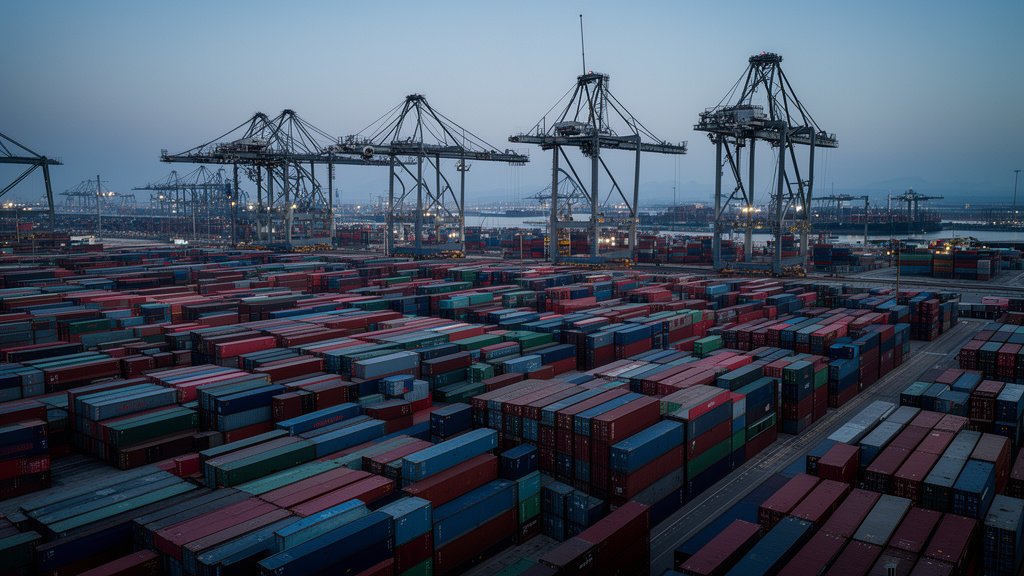
While the current momentum is bullish, the specter of potential U.S. tariffs remains the primary risk factor for the Asian trading bloc. The dialogue surrounding a more protectionist U.S. trade policy has created a fractured sentiment environment. Throughout the session on Friday, market participants were seen weighing the immediate profitability of the AI sector against the medium-term impact of potential trade barriers that could disrupt the global supply chain.
This duality has led to a ‘selective rally.’ While tech-heavy indices have thrived, more traditional manufacturing and export-dependent sectors have shown signs of consolidation or stagnation. This divergence highlights a market that is increasingly data-dependent, reacting sharply to headlines involving trade policy negotiations while simultaneously ignoring valuation concerns within the tech sector. Analysts suggest that the market is currently in a ‘wait-and-see’ phase, with participants aggressively accumulating positions in AI-adjacent firms while holding cash reserves in anticipation of potential volatility upon the U.S. market reopening.
The Wall Street Reopening: A Liquidity Catalyst
The anticipation surrounding Wall Street’s reopening after the Thanksgiving holiday break serves as a critical inflection point for Asian traders. Historically, the period following a major U.S. holiday is characterized by a surge in institutional volume and a realignment of cross-border capital flows. For investors in Tokyo, Seoul, and beyond, the U.S. market acts as the ultimate signal for sentiment.
Liquidity is expected to tighten as the calendar year draws to a close, and the actions taken by U.S. fund managers immediately following the holiday will likely dictate the short-term trajectory for Asian indices. The optimism observed on November 27 suggests that regional institutional investors are betting on a positive outcome, or at the very least, a stable environment in the U.S. equity markets. Should Wall Street open with sustained momentum in the tech sector, Asian markets are positioned to extend their gains into the coming week. However, any unexpected fiscal contraction or hawkish signals regarding future trade policy could quickly evaporate the current gains, leading to a swift rotation out of risk assets.
Strategic Outlook for Institutional Investors
The market’s performance this week underscores the necessity of a granular approach to regional investing. Diversification across sectors—specifically separating AI-linked infrastructure from traditional import-export manufacturing—has become the prerequisite for maintaining portfolio stability. As the year-end approaches, the focus is shifting from simple growth metrics to the durability of supply chains under the threat of impending tariff legislation.
FAQ: People Also Ask
Q: Why are Asian markets so sensitive to U.S. market holidays?
A: Asian markets are deeply integrated into the global financial ecosystem. U.S. market closures reduce global liquidity, and the reopening serves as a barometer for institutional sentiment, often determining the direction of capital flows for the following trading session.
Q: How do potential U.S. tariffs specifically impact the Kospi and Nikkei?
A: Both indices are heavily skewed toward export-oriented companies. If tariffs are imposed on goods manufactured in or exported from Asia to the U.S., it directly compresses profit margins and increases the risk profile of these major exporters, leading to market volatility.
Q: What is the current role of AI-related equities in Asian stock performance?
A: AI-related equities, particularly those involved in the semiconductor and hardware supply chain, are currently functioning as a ‘safe haven’ for growth. High demand for AI infrastructure products allows these companies to maintain strong earnings growth, which helps hold up indices even when other sectors are underperforming.