The Pentagon is rapidly accelerating its military posture in the Middle East, with defense officials confirming plans to deploy a third aircraft carrier strike group alongside approximately 9,000 to 10,000 additional Marines and sailors. This strategic maneuver, expected to culminate by late November, marks one of the most significant force expansions in the region in recent years, signaling an urgent effort by the United States to deter regional escalation and bolster maritime security.
Key Highlights
- Strategic Expansion: The U.S. is adding a third carrier strike group to its existing regional assets, dramatically increasing its power projection capabilities.
- Personnel Surge: The deployment includes an influx of 9,000 to 10,000 Marines and sailors, reinforcing existing expeditionary units.
- Timeline: All assets and personnel are projected to arrive in the theater of operations by late November.
- Objective: The core mission is focused on enhanced deterrence against state and non-state actors and ensuring the freedom of navigation in critical international waterways.
Strengthening Deterrence: The Anatomy of the Surge
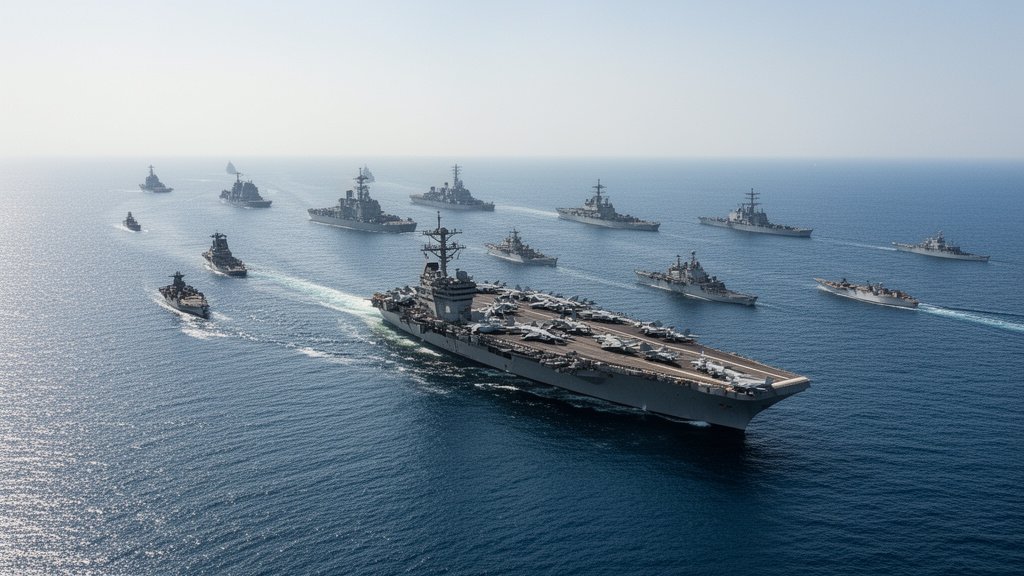
The decision to inject a third carrier strike group into the Middle East represents a calculated shift in the U.S. military strategy. An aircraft carrier strike group (CSG) is far more than just the ship itself; it is a self-contained, mobile military base. A standard CSG typically comprises the carrier, at least one guided-missile cruiser, a squadron of destroyers, an air wing of 60 to 75 aircraft, and a nuclear-powered submarine. By tripling this force presence, the Pentagon is effectively creating an iron-clad layer of defense that can conduct long-range precision strikes, engage in electronic warfare, and provide an umbrella of anti-air and anti-missile defense across a vast operational geography.
The Operational Rationale
Defense analysts suggest that the concentration of these assets is intended to serve as a clear, visible signal. The presence of three carrier groups in the region simultaneously is rarely seen outside of major conflict scenarios, suggesting the U.S. is preparing for the possibility of a rapidly evolving regional conflict. This “maximum deterrence” posture is designed to communicate resolve to regional rivals, demonstrating that the U.S. maintains the capacity to conduct multi-domain operations if necessary.
Integrating the 10,000 Troops
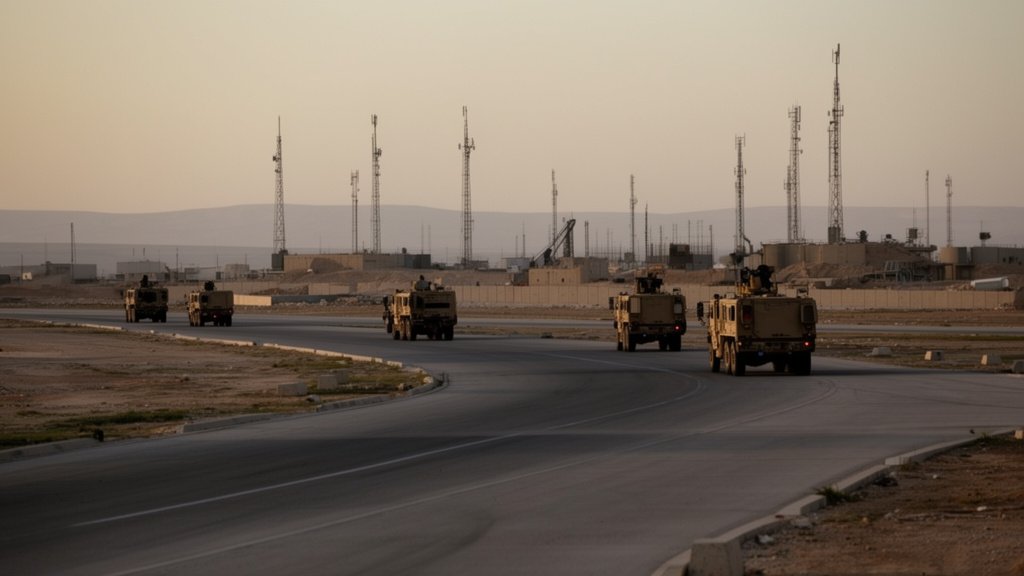
Beyond the naval power, the deployment of 9,000 to 10,000 additional Marines and sailors brings essential ground and expeditionary capabilities. These forces, likely drawn from Marine Expeditionary Units (MEUs), provide the Pentagon with the agility needed to respond to non-combatant evacuations, humanitarian crises, or specialized rapid-response missions that carrier-based air power alone cannot address. Their arrival by late November creates a tiered defensive structure: the naval assets providing the ‘outer shell’ of protection, and the Marines serving as the ‘on-the-ground’ crisis response capability.
Geopolitical Ripples and Regional Stability


The arrival of this massive force structure does not exist in a vacuum. It interacts directly with the current political sensitivities of the region.
Deterrence vs. Escalation
Critics and supporters of the move disagree on the outcome. Proponents argue that a robust U.S. presence acts as a firewall, preventing regional conflicts from spilling over into broader, uncontrollable wars. By establishing a clear threshold of power, the U.S. aims to convince hostile actors that the cost of an attack outweighs any potential gain. Conversely, some geopolitical analysts warn of the ‘security dilemma,’ where the deployment itself might be perceived as a provocative act, potentially accelerating the very hostilities the U.S. seeks to suppress.
Economic Implications
One of the critical factors driving this military surge is the protection of commercial shipping lanes. The Middle East remains the world’s most critical chokepoint for energy supplies. The concentration of naval power ensures that trade routes, specifically those traversing the Red Sea and the Persian Gulf, remain open and secure. Any disruption to these lanes would have immediate, cascading effects on global oil markets and inflation, making the deployment a strategic economic imperative as much as a military one.
Historical Context: The Carrier Diplomacy Doctrine
Historically, ‘Carrier Diplomacy’ has been a hallmark of U.S. foreign policy since the Cold War. The ability to project force without requiring permission from host nations to build land bases makes the carrier group the ultimate tool of American sovereignty and reach. By late November, the region will host a concentration of maritime power that harkens back to the height of 20th-century geopolitical containment. This underscores the Biden administration’s commitment to maintaining a ‘preeminent’ military footprint, even as the global focus shifts toward other areas like the Indo-Pacific.
FAQ: People Also Ask
1. Why is the Pentagon sending so many troops to the Middle East now?
The deployment is a strategic move designed to deter potential aggression from regional actors and to provide the U.S. with a rapid-response capability in the event of an escalation. The primary goal is the protection of U.S. interests, allies, and freedom of navigation.
2. What is a ‘Carrier Strike Group’ and why is it significant?
A Carrier Strike Group is a massive naval task force led by an aircraft carrier. It includes destroyers, cruisers, and submarines, supported by an advanced air wing. It allows the U.S. to project air power, intelligence, surveillance, and missile defense anywhere in the world without needing fixed local airfields.
3. How long will these troops remain in the region?
The Pentagon has not provided a definitive timeline for the withdrawal of these specific units. Deployments of this nature are generally ‘condition-based,’ meaning they will remain as long as the strategic threat environment necessitates their presence.
4. Is this deployment a precursor to ground combat?
Pentagon officials consistently emphasize that these deployments are primarily for deterrence and defensive posture. While the assets have the capacity for offensive strikes, the strategic intent is to prevent a conflict from occurring, rather than initiating an invasion.