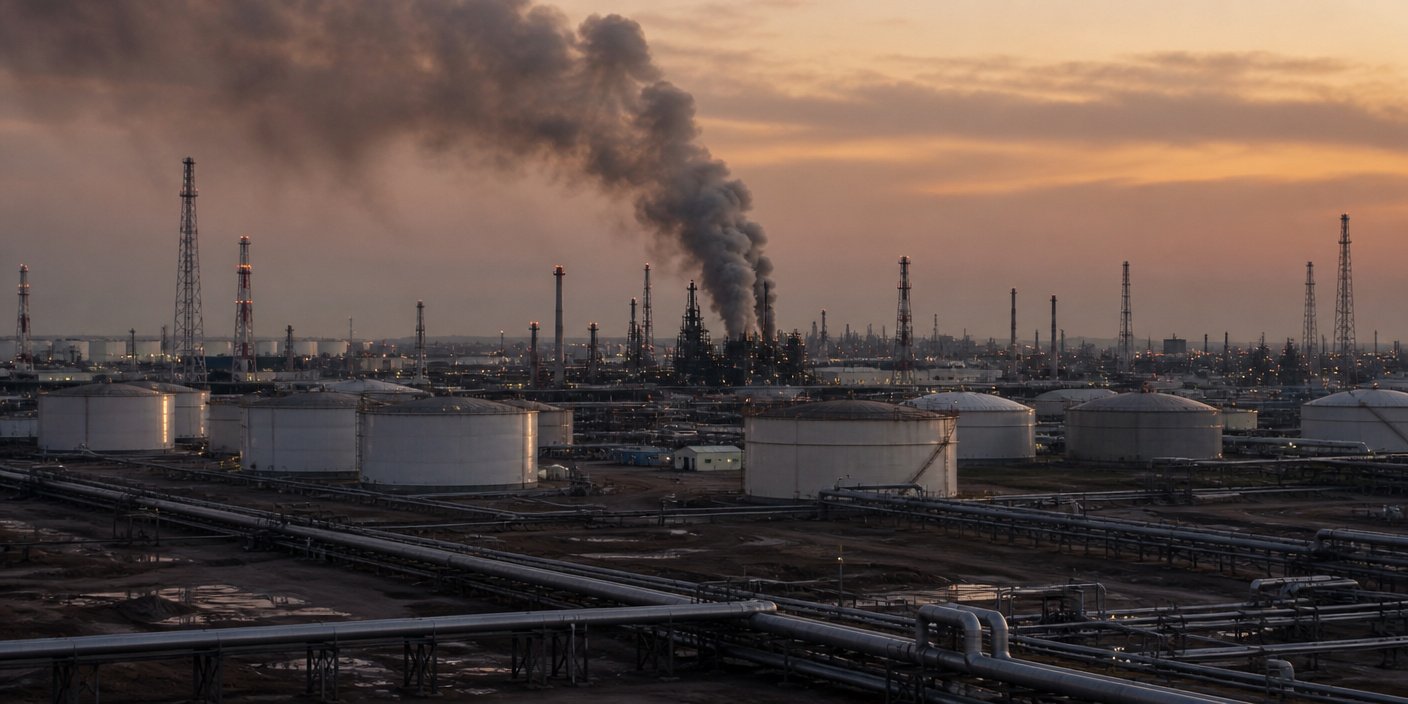
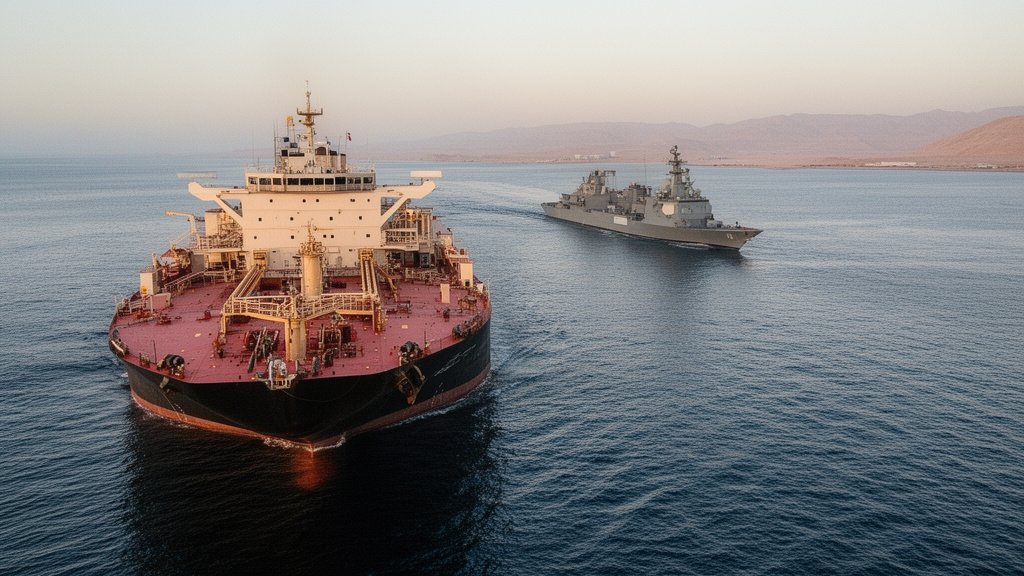
The Persian Gulf has become the focal point of a major military escalation as the United States shifts its naval strategy in response to sustained aggression. The U.S. military has confirmed the destruction of five additional Iranian oil tankers, a tactical maneuver that brings the total number of neutralized vessels to eight over a condensed four-day period. This kinetic response from the U.S. Navy follows a series of direct ballistic missile attacks targeting American warships patrolling the region, signaling a dramatic shift in the rules of engagement for forces operating within the Strait of Hormuz.
Key Highlights
- Rapid Escalation: The U.S. Navy has destroyed a total of eight Iranian oil tankers in a four-day operation.
- Direct Provocation: The strikes are a direct retaliatory response to Iranian ballistic missile attacks launched against U.S. naval assets.
- Strategic Shift: This represents an aggressive posture from the U.S. military, emphasizing the protection of naval vessels over traditional containment.
- Regional Volatility: The situation creates immediate uncertainty in global energy transit, with the Strait of Hormuz remaining a critical chokepoint.
The Strategic Reckoning in the Persian Gulf
The recent series of military engagements marks a departure from the previously observed “grey zone” tactics that have characterized U.S.-Iranian interactions in the region for years. By actively targeting the operational logistics of the Iranian maritime energy sector, the U.S. is signaling that the “tit-for-tat” threshold has been significantly lowered. The destruction of eight tankers in less than 96 hours is not merely a tactical victory; it is a clear demonstration of naval superiority designed to degrade the maritime capabilities of the Islamic Revolutionary Guard Corps (IRGC) and deter further ballistic missile launches.
Timeline of the Naval Confrontation
The operational pace over these four days has been relentless. Intelligence reports and CENTCOM (U.S. Central Command) communiqués indicate that the attacks on U.S. Navy warships began earlier this week, with ballistic missiles fired from coastal batteries. The U.S. response was almost immediate, utilizing carrier-based aircraft and surface-to-surface missile systems to identify and neutralize the oil tankers, which intelligence suggested were either serving as refueling hubs for attacking craft or were otherwise complicit in the regional military support network. The systematic nature of these strikes—targeting specific, high-value tankers—suggests a pre-planned contingency that was activated the moment the threshold of a direct strike on U.S. vessels was crossed.
The Ballistic Missile Threat and Naval Doctrine



For the U.S. Navy, the primary concern has been the proliferation of anti-ship ballistic missiles (ASBMs) in the Iranian arsenal. These weapons represent a “keep-out” threat to naval formations. When these missiles are launched at U.S. warships, the Navy’s Aegis Combat System and supporting defenses are engaged in a high-stakes interception scenario. The retaliatory strikes on the tankers are an attempt to disrupt the logistics chain that keeps these missile batteries operational and to impose a tangible cost on the Iranian military for violating the safety of U.S. international waters. This is a clear move to re-establish deterrence through punitive action rather than purely defensive maneuvering.
Global Economic and Energy Consequences
The Strait of Hormuz is the world’s most critical oil chokepoint, with roughly one-fifth of the world’s petroleum passing through its waters daily. The destruction of eight tankers is sending shockwaves through global energy markets. Traders are currently pricing in a “risk premium” on oil futures, fearing that continued kinetic activity will restrict shipping lanes or lead to further retaliatory attacks on civilian shipping. The volatility is exacerbated by the ambiguity of the situation; as long as the exchange of fire continues, the stability of the global energy supply remains compromised. Economists are closely monitoring Brent crude prices, which often react violently to news of instability in the Gulf.
Future Implications for Middle East Stability
Looking ahead, the question remains whether this is a contained escalation or the start of a broader, uncontrolled conflict. The U.S. military is currently balancing the need to project strength and protect its sailors with the desire to avoid a wider regional war. However, by destroying eight tankers, the United States has committed to a course of action that requires a decisive response from the adversary. Diplomatic channels are reportedly active, but the military reality on the ground—or rather, on the water—suggests that both sides are preparing for a protracted standoff. The focus for U.S. planners is now likely on intelligence gathering to determine if the IRGC will attempt to escalate by targeting additional U.S. assets or if they will pull back their maritime logistics to preserve their remaining fleet.
FAQ: People Also Ask
Why is the U.S. targeting Iranian oil tankers?
The U.S. strikes are categorized as a defensive, retaliatory measure. Following unprovoked ballistic missile attacks on U.S. Navy warships, the U.S. military responded by destroying logistical assets—in this case, oil tankers—to degrade the capability of the forces responsible for the missile launches.
Does this impact the global oil supply?
Yes, the Strait of Hormuz is a vital chokepoint for global oil. The sustained military activity and the destruction of tankers create immediate market anxiety, leading to potential spikes in oil prices and increased shipping insurance costs for all vessels operating in the region.
Will this lead to an all-out war?
While tensions are at an extreme high, military analysts view these actions as “strategic signaling.” The U.S. aim is to restore deterrence by imposing costs on Iranian aggression, while Iran is evaluating its options for asymmetrical responses. The situation remains volatile and is being monitored by global powers.
How many tankers have been hit in total?
As of the latest reports, a total of eight Iranian oil tankers have been destroyed over the last four days as a result of U.S. military actions.