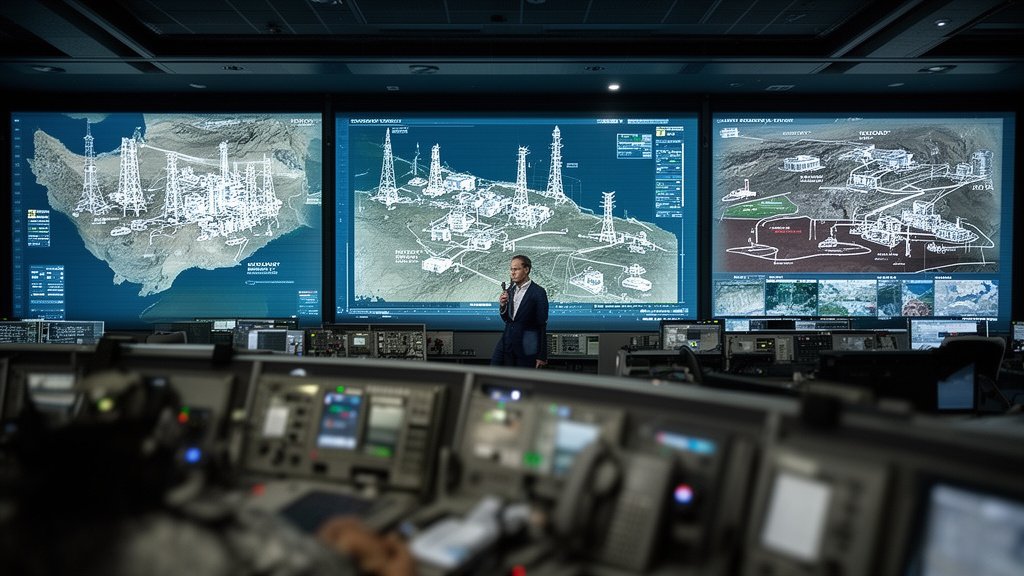
Top U.S. military commanders, including the service chiefs of the Army, Navy, and Air Force, have delivered a formal, classified assessment to Defense Secretary Pete Hegseth, warning that the current tempo of large-scale military operations against Iran is fundamentally unsustainable. The assessment, which represents a significant friction point within the Department of Defense, argues that the continued intensification of kinetic activities in the Middle East is rapidly degrading the military’s ability to maintain a credible deterrent posture in other high-priority theaters, specifically Europe and the Indo-Pacific.
Key Highlights
- Classified Sustainability Assessment: Senior service heads have officially flagged the operational tempo against Iran as a readiness liability, citing the depletion of precision munitions and naval carrier strike group fatigue.
- The Readiness Trade-off: The warning explicitly details how resources diverted to the Iranian theater are reducing the surge capacity of U.S. forces required to respond to emergent crises in the South China Sea and Eastern Europe.
- Inter-Agency Friction: This move marks a rare, public-facing insight into internal discord between the civilian leadership under Secretary Hegseth and the professional Joint Chiefs of Staff.
- Force Preservation Concerns: The Pentagon is signaling that current attrition rates of both personnel and advanced hardware are surpassing the Department’s replenishment capabilities.
The Strategic Sustainability Gap: Analyzing the Pentagon’s Warning
The delivery of this classified warning to Secretary Pete Hegseth signifies more than routine bureaucratic disagreement; it is a fundamental challenge to the current U.S. defense strategy in the Middle East. At the core of the military leadership’s argument is the concept of ‘force readiness’—the ability of the Armed Forces to mobilize and sustain combat operations across multiple geographic combatant commands (COCOMs) simultaneously. By concentrating an inordinate amount of high-end assets, specifically naval firepower and aerial refueling capabilities, into the Iranian theater, the Department of Defense is creating a vacuum in other critical regions.
The Erosion of Global Deterrence




When the Navy reallocates a Carrier Strike Group to the Persian Gulf, that unit is effectively removed from the rotation schedule for the Indo-Pacific. This creates a dangerous ‘readiness gap.’ In the Indo-Pacific, the U.S. relies on presence-based deterrence to mitigate tensions surrounding the Taiwan Strait. Similarly, in Europe, the ongoing commitment to NATO and support for Ukraine requires a constant flow of intelligence, surveillance, and reconnaissance (ISR) assets. The service chiefs argue that the Iran-focused operations are now consuming more than 40% of available ISR bandwidth globally, a figure they describe as a structural threat to national security.
Logistic Attrition and Fiscal Impact
Beyond the strategic alignment, there is the raw, logistical reality of attrition. The use of advanced interceptors and standoff munitions against Iranian-backed proxies has created a supply chain bottleneck. The Army and Air Force have reported that the ‘burn rate’ of sophisticated weaponry—specifically air-defense missiles and drone-countermeasure systems—is currently outpacing the industrial base’s ability to restock. This creates an economic impact that goes beyond direct budget spending; it forces a prioritization of limited assets that the current administration appears unwilling to make.
Historical Context: The Trap of ‘Forever Operations’
Historically, the Department of Defense has struggled with the phenomenon of ‘mission creep’ in the Middle East. Military strategists often reference the lessons of the post-2003 era, where a singular focus on regional counter-insurgency weakened the military’s preparation for great-power competition. The current commanders are framing their warning to Hegseth through this historical lens, urging the Secretary to recognize that military power is a finite resource. They warn that continuing the current trajectory risks creating a ‘hollow force’—a military that is active and engaged, but lacks the depth and equipment to fight and win a conflict against a near-peer adversary.
The Future Outlook: A Shift in Doctrine?
Looking ahead, this friction points to an inevitable recalibration of U.S. defense priorities. If Hegseth continues to press for an aggressive operational posture, he may face an unprecedented challenge to his authority, potentially resulting in the resignation of senior officers or a public questioning of policy from the Joint Chiefs. Alternatively, the administration may be forced to adopt a strategy of ‘strategic patience’ or diplomatic de-escalation to preserve the operational viability of the fleet. The outcome of this standoff will likely define the Pentagon’s agenda for the remainder of the current term, determining whether the U.S. prioritizes regional containment of Iran or a broader global readiness posture.
FAQ: People Also Ask
1. Why are the service chiefs warning the Defense Secretary?
The service chiefs have a statutory responsibility to maintain the readiness of their respective branches. They are warning the Secretary because they believe current operations are depleting resources (munitions, personnel, and equipment) at a rate that undermines the military’s ability to protect national interests in other parts of the world, such as Europe and the Pacific.
2. What does ‘operational sustainability’ mean in this context?
It refers to the military’s capacity to maintain specific combat operations over an extended period without exhausting its supplies, personnel, or equipment to a point where it cannot respond to new, unexpected threats. The chiefs are arguing that the U.S. has reached or exceeded this capacity.
3. How does the Iran conflict affect U.S. readiness elsewhere?
It is primarily a resource allocation issue. By dedicating a significant portion of naval and air assets to the Iranian theater, the U.S. reduces the number of assets available for presence missions and rapid response in the Indo-Pacific (China) and Europe (Russia).