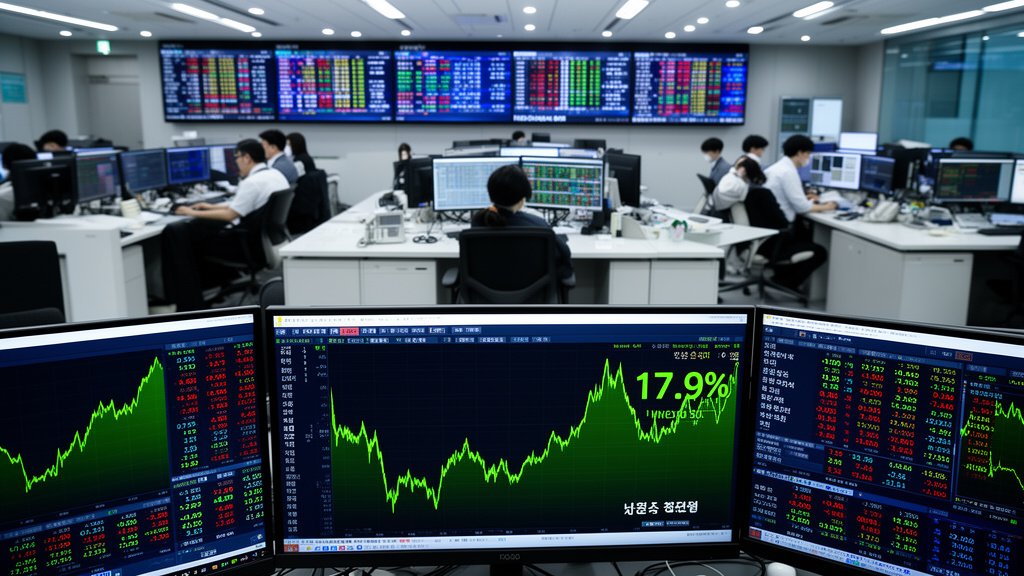
U.S. stocks concluded lower on Tuesday, as investor sentiment soured amid a resurgence of concerns over escalating tensions in the Middle East. The Dow Jones Industrial Average, the S&P 500, and the Nasdaq Composite all registered declines, reflecting a broader market apprehension about potential disruptions to global energy supplies and geopolitical stability.
Key Highlights:
- Major U.S. stock indices closed in negative territory.
- Renewed geopolitical tensions in the Middle East were the primary driver of market weakness.
- Investors are closely monitoring the impact of these tensions on oil prices and global economic outlook.
- Trading volumes saw an uptick as market participants reacted to the evolving situation.
Market Reacts to Middle East Uncertainty
The financial markets experienced a notable downturn as the specter of increased conflict in the Middle East cast a shadow over investor confidence. The Dow Jones Industrial Average shed points, while the broader S&P 500 and the technology-heavy Nasdaq Composite also ended the session in the red. This sell-off was largely attributed to a renewed sense of unease stemming from the volatile geopolitical landscape in the Middle East, a region critical to global energy production and trade routes.
Geopolitical Drivers of Market Decline
Escalating rhetoric and heightened military postures in the Middle East have once again become a focal point for global financial markets. Investors are acutely aware of the potential ramifications of any significant escalation, particularly concerning the stability of oil supplies. Crude oil prices have shown volatility in response to these developments, and any sustained upward pressure on energy costs could have ripple effects across the global economy, impacting inflation and corporate profitability.
Sector Performance Amidst Uncertainty



The impact of these geopolitical concerns was not uniform across all sectors. Energy stocks, while potentially benefiting from higher oil prices in the short term, also faced uncertainty related to supply disruptions. Conversely, sectors typically considered more defensive, such as utilities and consumer staples, may have seen some resilience, though the overall market sentiment leaned negative. Technology and growth stocks, often more sensitive to interest rate expectations and broader economic outlooks, also succumbed to the prevailing risk-off sentiment.
Investor Sentiment and Trading Activity
Investor sentiment visibly shifted towards caution, leading to a palpable increase in trading volumes as market participants adjusted their portfolios. The move away from riskier assets was evident, with a preference for safer havens, although the immediate impact on U.S. Treasury yields and the U.S. dollar was still unfolding. The VIX, often referred to as the fear index, saw an uptick, indicating heightened market volatility and investor anxiety.
Economic Implications and Outlook
The sustained geopolitical uncertainty in the Middle East poses a significant challenge to the global economic outlook. Beyond the direct impact on energy prices, broader concerns about supply chain stability, international trade, and potential inflationary pressures weigh on economic forecasts. Central banks worldwide are already grappling with inflation, and any exacerbation of these pressures could complicate monetary policy decisions, potentially leading to a more prolonged period of economic adjustment.
FAQ: People Also Ask
Q1: What specifically caused U.S. stocks to fall today?
A1: U.S. stocks fell primarily due to renewed concerns over escalating tensions in the Middle East, which has historically led to volatility in global energy markets and investor apprehension.
Q2: How do Middle East tensions typically affect the stock market?
A2: Middle East tensions can affect the stock market by threatening oil supply, leading to price increases, which can then increase inflation, raise interest rates, and reduce corporate profits. This often drives a ‘risk-off’ sentiment in markets.
Q3: Which sectors are most affected by geopolitical instability in the Middle East?
A3: The energy sector is directly impacted, with potential for both supply disruption and price spikes. Airlines and transportation companies can also be affected by higher fuel costs. Broader economic impacts can influence technology and consumer discretionary sectors.
Q4: What is the outlook for U.S. stocks if Middle East tensions persist?
A4: If tensions persist, the outlook for U.S. stocks could be characterized by continued volatility. Investors may favor defensive assets, and companies with strong balance sheets and pricing power may outperform. Sustained high energy prices could dampen overall economic growth and corporate earnings.
Q5: How are oil prices reacting to these events?
A5: Oil prices tend to react to geopolitical developments in the Middle East by increasing due to fears of supply disruptions. The extent of the increase depends on the perceived severity and duration of the tensions.