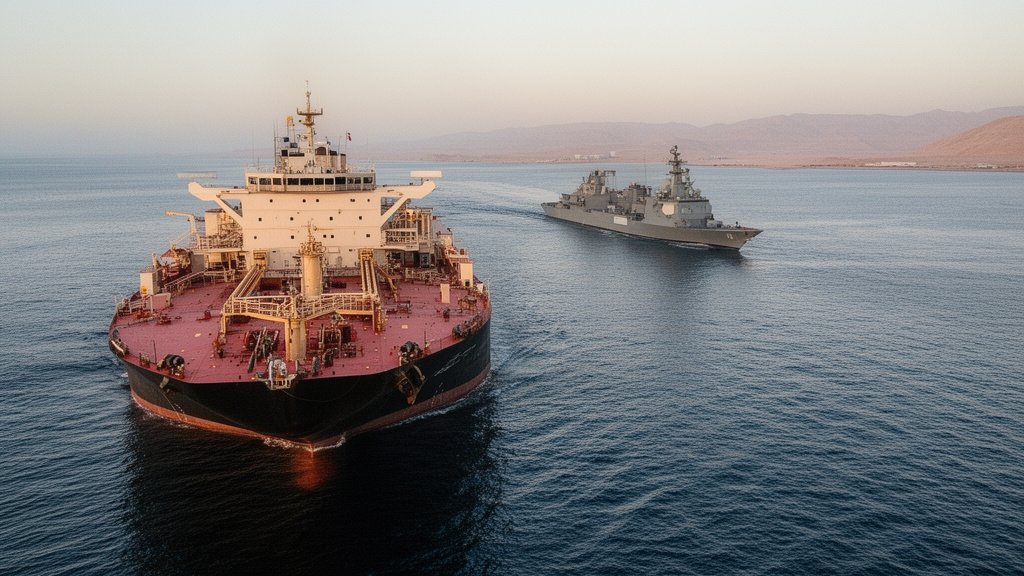
Japan’s government has officially enacted a seismic shift in national security policy, with Prime Minister Sanae Takaichi’s Cabinet voting to scrap the long-standing prohibition on the export of lethal weapons. This policy reversal, finalized on Tuesday, April 21, 2026, signals the end of the restrictive framework that has defined Japan’s postwar military stance for nearly a century. By reclassifying defense equipment into distinct ‘lethal’ and ‘non-lethal’ categories, Tokyo has effectively opened its domestic defense manufacturing sector to the global market, allowing for the potential export of fighter jets, warships, and advanced missile systems to select partner nations. This move is explicitly framed by the administration as a necessary response to an increasingly volatile security environment, particularly regarding regional tensions involving China and North Korea.
Key Highlights
- Formal Policy Overhaul: The Cabinet has abolished the ‘five-category’ restriction system that previously limited Japanese military exports to non-lethal equipment like rescue vehicles and radar.
- Lethal Classification: Under the new directive, equipment with ‘lethal or destructive capabilities’—including destroyers, fighter jets, and missiles—can now be transferred to countries with existing defense technology agreements.
- The 17-Nation Architecture: Exports are currently restricted to 17 specific nations that have signed bilateral defense and technology transfer pacts with Tokyo, ensuring strict oversight.
- Strategic Rationale: Government officials cite the necessity of building ‘fighting resilience’ and a more sustainable domestic defense industrial base to ensure regional peace and stability.
- Pacifist Pushback: The decision has ignited domestic debate, with critics arguing the move undermines Japan’s identity as a ‘peace-loving nation’ under its constitution, while China has expressed sharp disapproval of the policy shift.
The Strategic Pivot: Remaking Japan’s Defense Identity
The decision to lift the ban on lethal arms exports represents the culmination of a decade-long incremental easing of military restrictions. For much of the post-World War II era, Japan adhered to a strict interpretation of its pacifist constitution, notably Article 9, which renounces the use of force as a means of settling international disputes. Historically, this meant Japan’s ‘Self-Defense Forces’ existed purely for territorial defense, and the industrial capacity for war was heavily curtailed to prevent the resurgence of a militaristic state.
However, the current administration, led by Prime Minister Sanae Takaichi, has argued that the geopolitical reality of the mid-2020s renders the old ‘isolationist’ defense model untenable. The new guidelines, approved through the National Security Council (NSC), replace the antiquated ‘five-category’ rule—which had restricted exports to rescue, transport, vigilance, surveillance, and minesweeping equipment—with a more robust, dual-tiered classification system. By dividing equipment into ‘weapons’ and ‘non-weapons,’ the government has created a clear regulatory pathway for the sale of advanced weaponry.
The Mechanics of the Export Framework
This is not a blanket legalization of arms sales. The framework is characterized by high-level oversight and strict geographic limitations. Exports of lethal weaponry—such as combat drones, frigates, and long-range interceptors—are limited exclusively to nations that have formalized defense technology and equipment transfer agreements with Japan.




As of April 2026, this network includes 17 countries, notably Australia, the Philippines, and Indonesia. These partnerships are critical, as they allow Tokyo to exert influence over the end-use of its technology. The National Security Council is tasked with reviewing every proposed lethal export. Furthermore, the policy maintains an in-principle ban on exporting weapons to nations currently engaged in active armed conflict, though the language allows for ‘exceptional circumstances’ where Japan’s own national security is directly at stake. This ‘exception’ clause is expected to be a major point of contention and legal scrutiny in the Diet (parliament) in the coming months.
Industrial Revitalization and Regional Deterrence
The economic logic behind this shift is as significant as the military one. Japan’s defense industrial base has historically suffered from a lack of scale, as domestic production was only for the Self-Defense Forces. Without the ability to export, Japanese defense firms could not achieve the economies of scale necessary to lower costs and fund R&D for next-generation systems like the collaborative fighter jet programs currently underway with Britain and Italy.
By allowing exports, the government aims to boost the sustainability of its domestic defense sector. A more vibrant industrial base not only provides economic benefits but ensures that Japan can maintain its own equipment and replenish stores quickly during a regional contingency. This ‘combat sustainability’ is a recurring theme in the Cabinet’s public statements, reflecting a shift from a reactive to a proactive defense posture.
Geopolitical Implications: China, North Korea, and the Pacific
The regional response to this policy shift is bifurcated. Allies like Australia, the United States, and the Philippines have largely welcomed the move as a stabilizing force in the Indo-Pacific. Japan’s integration into the regional security architecture allows for deeper interoperability; for instance, Japanese-made missile components can now be seamlessly integrated into allied systems, creating a more cohesive deterrence network against regional adversaries.
Conversely, the move has drawn sharp criticism from Beijing. China has framed the policy as a destabilizing act that fuels an arms race and threatens regional security. Within Japan, the opposition parties and pacifist advocacy groups have voiced concerns that the oversight mechanisms—specifically the ‘special circumstances’ clause—could be abused, potentially dragging Japan into regional conflicts it would otherwise avoid. The challenge for the Takaichi administration will be to maintain public support while proving that these exports enhance, rather than endanger, the peace and stability of the Asia-Pacific region.
FAQ: People Also Ask
1. What specific types of weapons can Japan now export?
Under the new guidelines, Japan can export ‘lethal’ weapons, including fighter jets, combat drones, warships, and various missile systems. These were previously restricted under the ‘five-category’ rule.
2. Who is eligible to purchase Japanese-made lethal weapons?
Exports are limited to 17 countries that have signed specific bilateral defense equipment and technology transfer agreements with Japan. This list is expected to grow as Tokyo solidifies more security partnerships.
3. Is there a risk that Japan will export weapons to countries at war?
In principle, the government maintains a ban on exporting lethal weapons to countries currently engaged in active combat. However, the new policy includes a provision for ‘exceptional circumstances’ based on Japan’s national security needs, which will be subject to case-by-case review by the National Security Council.
4. Does this mean Japan is abandoning its pacifist constitution?
The government insists that the move adheres to the fundamental spirit of its pacifist policies. Officials argue that ‘proactive pacifism’ requires a stronger defense industry and deeper cooperation with allies to deter potential aggression and prevent conflict before it begins.