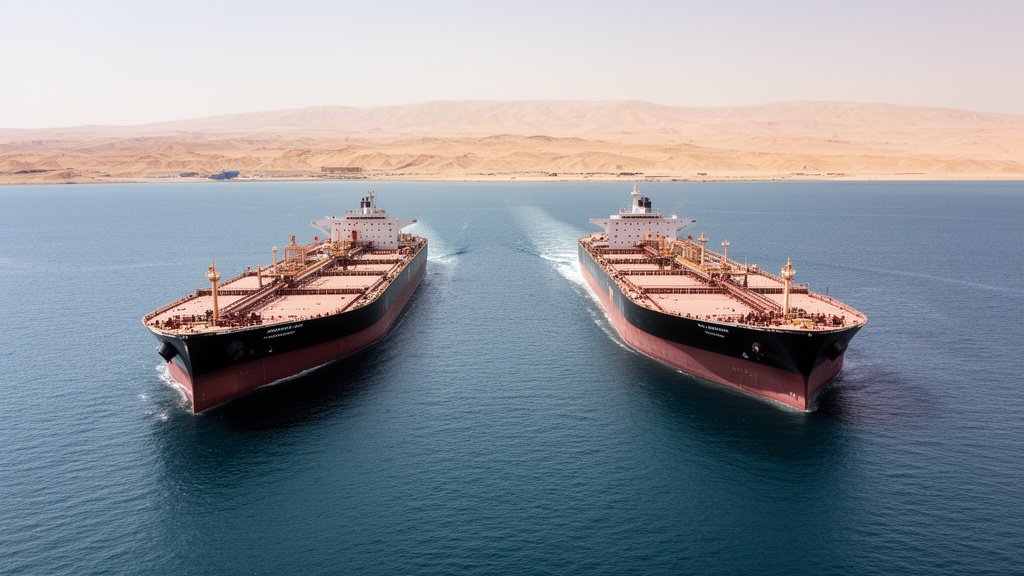
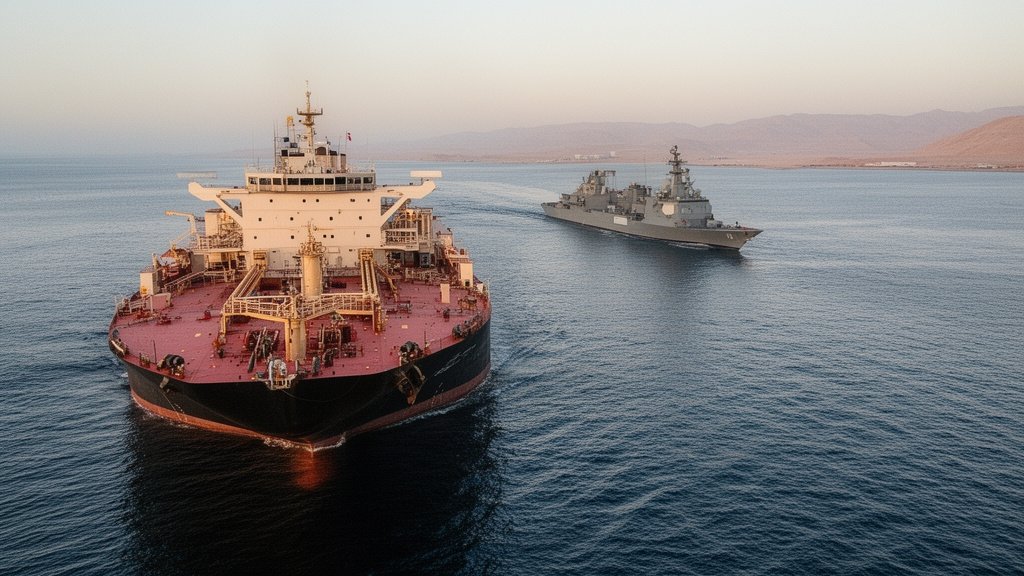
The United States military has reportedly begun developing contingency strike plans that include the potential deployment of the GBU-43/B Massive Ordnance Air Blast (MOAB)—colloquially known as the ‘Mother of All Bombs’—against Iranian energy and nuclear infrastructure. This strategic pivot follows an alarming spike in volatility near the Strait of Hormuz, where the sinking of two commercial vessels has signaled a profound deterioration in regional maritime security. Pentagon officials are balancing these severe military options against the need to preserve stability in the Persian Gulf, a region that remains the jugular of the global energy supply chain. The introduction of such a high-yield conventional weapon into the strategic calculus marks a significant departure from standard deterrence operations, signaling that U.S. Central Command (CENTCOM) is treating the current disruption as an existential challenge to maritime freedom of navigation.
Key Highlights
- Strategic Contingency: U.S. military planners are evaluating the use of the GBU-43/B, a 21,600-pound precision-guided munition, to neutralize fortified Iranian facilities.
- Maritime Flashpoint: The Strait of Hormuz has become the primary theater of conflict following the sinking of two ships, escalating the risk to commercial shipping lanes.
- Energy Market Anxiety: Analysts warn that any direct kinetic strike against Iranian infrastructure could trigger a severe global supply shock, impacting oil prices instantaneously.
- Asymmetrical Warfare: Iran’s reliance on fast-attack craft and mine-laying capabilities continues to challenge traditional naval deterrence models.
Strategic Escalation in the Persian Gulf
The prospect of employing the GBU-43/B, the most powerful non-nuclear weapon in the U.S. arsenal, against Iranian targets represents an escalation of extraordinary proportions. Historically, the MOAB has been reserved for theater-specific operations where massive subterranean penetration and blast radius are required to disable hardened, deep-buried targets, such as the 2017 deployment in Nangarhar, Afghanistan. In the context of the Persian Gulf, the potential use of such ordnance suggests the U.S. is prioritizing the total neutralization of critical Command and Control (C2) centers, integrated air defense systems, and illicit nuclear research facilities that are otherwise resistant to standard cruise missile strikes.
The GBU-43/B: Capability and Strategic Intent
The GBU-43/B is not merely a bomb; it is a psychological and strategic lever. Weighing approximately 21,600 pounds, the munition is designed to be delivered by heavy transport aircraft like the MC-130, making it a unique asset that does not rely on stealth fighter capacity. By explicitly weighing this option, the U.S. is communicating to the Islamic Revolutionary Guard Corps (IRGC) that no facility—regardless of its subterranean reinforcement—is beyond the reach of conventional U.S. firepower. The blast effect is designed to collapse tunnels, destroy reinforced bunkers, and incapacitate personnel through massive overpressure, creating a strategic ‘denial of area’ that prevents Iranian forces from operating their most sensitive strategic assets during a conflict.
The Strait of Hormuz: A Vital Global Chokepoint
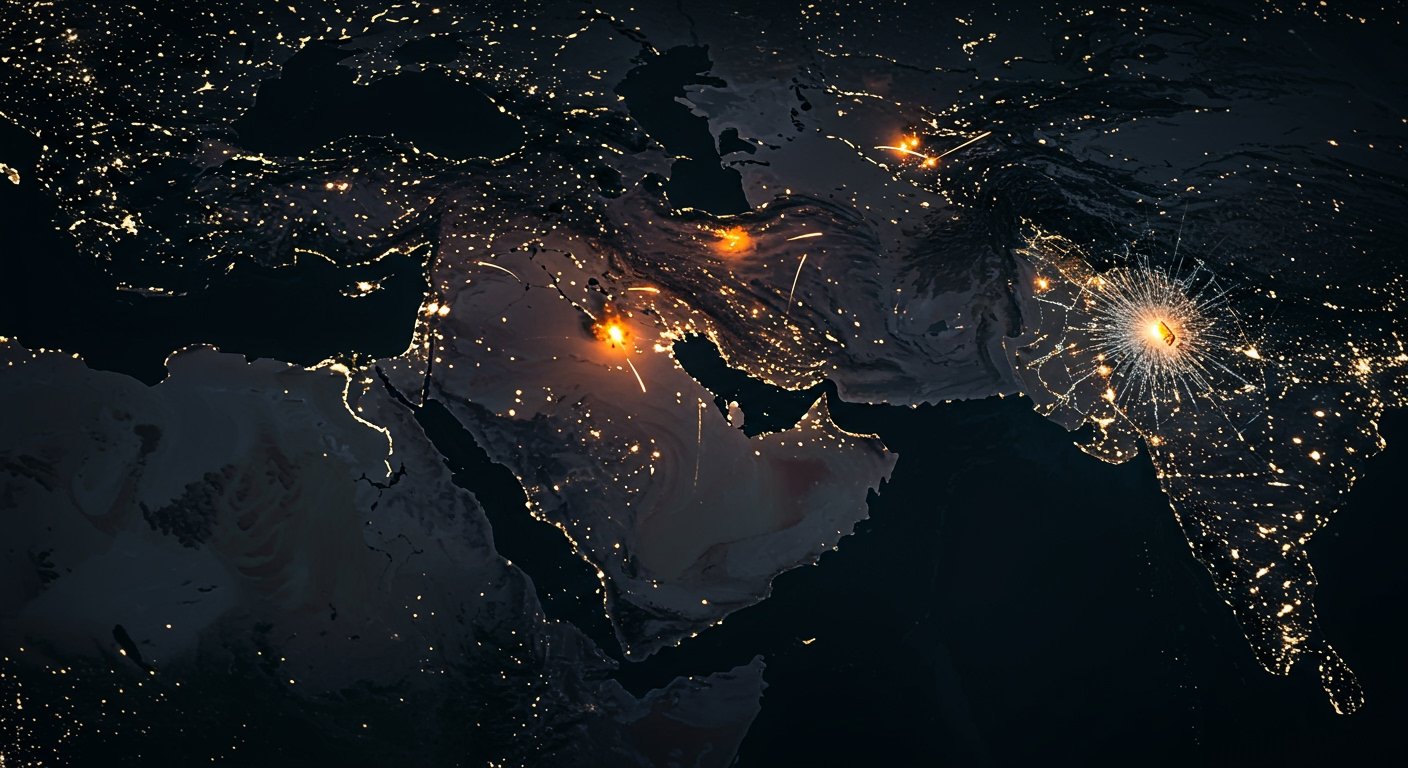


The Strait of Hormuz is the world’s most important petroleum transit chokepoint, with an average of 21 million barrels of petroleum and petroleum products flowing through it daily. This represents nearly one-third of the world’s seaborne-traded oil. The recent sinking of two ships in this narrow passage has fundamentally changed the risk profile for every shipping conglomerate operating in the region. Should the U.S. military move forward with a MOAB-centric strike package, the immediate risk is a total or near-total closure of the Strait by Iranian countermeasures. The strategic dilemma facing the Pentagon is clear: how to degrade Iran’s offensive capacity without triggering an economic catastrophe that would force global oil prices to historic highs.
Analyzing the Maritime Security Crisis
The sinking of two vessels in the vicinity of the Strait serves as the primary catalyst for the current military re-evaluation. These maritime incidents are widely attributed to the IRGC’s Navy, which has employed a mix of Limpet mines, fast-attack boats, and drone-assisted targeting to harass commercial traffic. The sinking of vessels indicates that Iranian tactics have moved beyond mere harassment or ‘grey-zone’ intimidation to the deliberate destruction of maritime assets. For the U.S. and its regional partners, this is a red line. The shift toward contingency planning involving the MOAB suggests a move away from ‘proportional response’—which has failed to deter recent aggression—toward ‘strategic dominance’ designed to decapitate the Iranian military’s ability to project power into the Gulf.
Geopolitical Repercussions and Regional Stability
The potential use of such heavy ordinance would have lasting impacts on the geopolitical landscape. Allies in the Gulf Cooperation Council (GCC) are likely to view the measure as a necessary show of resolve, yet they remain deeply concerned about potential retaliation. Iran has long maintained that it holds the capability to turn the Persian Gulf into a ‘graveyard’ for foreign naval vessels. Furthermore, a strike of this magnitude would likely isolate Iran further but could also consolidate hardline sentiment within the regime, potentially accelerating their nuclear threshold activities. The U.S. must navigate this tension, ensuring that its display of military readiness functions as a deterrent rather than a precursor to a wider, unpredictable regional war. Experts suggest that the U.S. is currently in a phase of ‘signaling,’ where the public acknowledgment of these plans is intended to force a de-escalation by the Iranian leadership before the kinetic threshold is crossed.
FAQ: People Also Ask
Why is the GBU-43/B ‘Mother of All Bombs’ being considered now?
The military is weighing the MOAB because standard precision-guided munitions may be insufficient to destroy Iran’s most heavily reinforced, deep-buried nuclear and military facilities. The GBU-43/B offers a unique ability to destroy complex tunnel networks and bunkers that are impervious to other conventional weapons.
What does the sinking of two ships mean for the Strait of Hormuz?
The loss of these vessels indicates a shift from harassment to active destruction of commercial assets. This creates an unacceptable risk to global oil supplies, forcing the U.S. to consider more aggressive deterrence measures to keep the shipping lanes open.
Will the use of a MOAB start a wider war?
That is the primary concern for Pentagon planners. While the MOAB is a conventional (non-nuclear) weapon, its massive destructive power is viewed as a significant escalation. The goal of the U.S. is to use the threat of its deployment to deter Iran without having to actually execute a strike that could trigger a wider regional conflict.
How does this affect global oil prices?
The Strait of Hormuz handles roughly 20-30% of the world’s daily oil consumption. Even the threat of a conflict in this area causes market uncertainty, and an actual strike or closure of the Strait would likely cause an immediate, sharp spike in global oil prices.