The American housing market is grappling with an unprecedented affordability crisis, characterized by soaring prices, insufficient supply, and escalating rents that strain household budgets nationwide. In response, a growing consensus is emerging among urban planners, policymakers, and housing advocates: strategically building near transit is not just a viable solution, but potentially the top strategy for addressing this multifaceted challenge. This approach, known as Transit-Oriented Development (TOD), offers a powerful, dual-pronged benefit by tackling both housing shortages and transportation costs, while simultaneously promoting environmental sustainability and economic vitality. It represents a crucial step towards a more sustainable development future.
The Scale of America’s Housing Shortage
The U.S. faces a severe housing deficit, estimated at 5.5 to 6.8 million units as of 2021, a figure that has grown significantly in recent years. This scarcity, exacerbated by a decade of underbuilding following the Great Recession and the increasing demand from a growing population, has driven median home prices to historic highs – now approximately five to six times the median household income. For renters, the situation is similarly dire, with rents consuming an ever-larger portion of income, leading to record numbers of cost-burdened households. Compounding these issues are restrictive local zoning laws, including widespread single-family zoning, density limits, and parking mandates, which artificially constrict housing supply and account for a substantial portion of construction costs. This has led to a troubling trend: over the past two decades, nine times more housing units have been built far from public transit than near it. Addressing this deficit requires a robust housing supply increase.
Transit-Oriented Development: A Strategic Solution for Building Near Transit
Transit-Oriented Development (TOD) reimagines urban growth by creating compact, walkable, mixed-use communities centered around high-quality public transportation hubs. The core principle of building near transit is to leverage existing and planned transit infrastructure to foster new housing opportunities. This approach is gaining significant traction as states and cities recognize its potential to increase housing supply, reduce dependence on private vehicles, and promote more sustainable lifestyles, offering a tangible housing crisis solution.
The Multifaceted Benefits of Building Near Transit
The advantages of concentrating housing near transit are extensive and interconnected:
* Enhanced Housing Affordability: By increasing the overall housing supply, TOD can help moderate price increases and offer more diverse housing options. Crucially, building near transit directly tackles the combined cost of housing and transportation, which together represent the largest household expenses for many Americans. For low- and moderate-income families, transportation costs can often rival or exceed housing costs; living near transit significantly reduces these expenses through decreased reliance on cars, thereby freeing up income for other necessities. Studies show that transit-rich neighborhoods are more affordable largely due to these transportation savings. This is a key aspect of transit accessible housing.



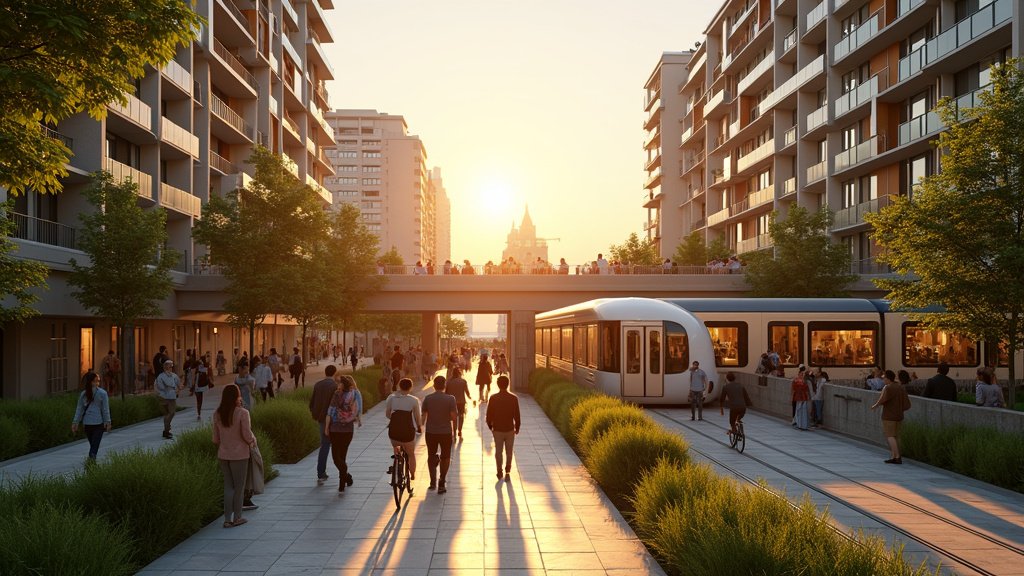
* Environmental Sustainability: TOD is a cornerstone of climate-resilient development. By reducing the need for car ownership and use, these developments lead to lower greenhouse gas emissions and decreased traffic congestion. Shifting travel to public transit, walking, and biking contributes to better air quality and more efficient land use, especially in urban areas. This aligns with goals for sustainable development.
* Economic Revitalization and Connectivity: Investments in TOD can catalyze regional economic growth, improve mobility, and broaden access to jobs, education, and essential services. These projects often revitalize underutilized urban areas, bringing new investment and energy to neighborhoods. When affordable housing is integrated into TOD, it can prevent displacement and ensure that long-term residents benefit from community improvements.
* Improved Quality of Life: TODs promote more active and convenient lifestyles by placing amenities, jobs, and services within walking or short transit distances. This fosters greater community connectivity and can lead to increased resident satisfaction. The focus on building near transit enhances community planning.
States Pave the Way for Building Near Transit with Policy Reforms
Recognizing the critical role of TOD, several American states are enacting bold legislation to dismantle barriers and encourage this type of development. California has been at the forefront, passing a series of pro-housing laws in recent years aimed at boosting supply. A landmark example is Senate Bill 79, the Abundant and Affordable Homes Near Transit Act, signed into law by Governor Gavin Newsom. This legislation allows for taller apartment buildings (up to five or six stories) to be built within a quarter-mile to half-mile radius of qualifying transit stops across eight major cities, overriding restrictive local zoning regulations that previously prohibited such density. This law, effective July 1, 2026, also empowers transit agencies to develop their own land, unlocking new opportunities for housing construction. This zoning reform is a critical step.
Other states are also embracing TOD reforms. Massachusetts has mandated that many communities create zoning districts that permit multi-family housing near transit. Washington State has passed laws enabling greater density for residential and mixed-use developments close to transit stops, while Colorado has enacted legislation allowing increased residential density in designated transit centers. These state-level actions demonstrate a growing understanding that coordinated land use and transportation policy is essential to address the housing crisis through strategies like building near transit.
Success Stories Illustrate the Potential of Building Near Transit
Across the nation, numerous cities are showcasing the tangible benefits of TOD:
* Los Angeles: The Santa Monica and Vermont Apartments, built directly above a metro station, provide affordable housing for formerly homeless individuals, offering them crucial transit access for jobs and services. The Los Angeles County Metropolitan Transportation Authority has an ambitious plan to develop 10,000 housing units near transit sites by 2031.
* Denver, Colorado: The West Line Corridor project integrates affordable housing with access to the city’s light rail system, serving as a model for connected communities.
* Arlington, Virginia: With a history of TOD dating back to the 1960s, the Rosslyn-Ballston Corridor features extensive mixed-use developments and a high transit ridership despite a high average income, demonstrating reduced car dependency. Building near transit here has been successful.
* Oakland, California: The Fruitvale BART station development is a celebrated example of a community-led TOD initiative that transformed an area into a vibrant, mixed-use, mixed-income transit village by reducing parking requirements and prioritizing pedestrian access.
Navigating Persistent Challenges for Building Near Transit
Despite the compelling case for TOD, significant hurdles remain. Restrictive local zoning laws and strong community opposition (often referred to as NIMBYism) continue to be major obstacles, preventing higher-density development even in transit-rich areas. Rising construction costs and financing challenges, particularly for affordable housing components, require innovative subsidy models and partnerships. Furthermore, ensuring that TOD benefits do not lead to gentrification and displacement requires intentional policies that prioritize affordability and protect existing residents. Many transit agencies also struggle with the capacity and resources needed to actively engage in large-scale housing development for building near transit.
The Road Ahead for Building Near Transit
The story of building apartments near public transit is still unfolding, but its potential to reshape the American urban landscape is undeniable. By dismantling outdated zoning regulations, fostering public-private partnerships, and prioritizing affordability within transit-accessible areas, cities can unlock housing supply, reduce living costs for residents, and create more sustainable, equitable, and vibrant communities. As states continue to pass forward-thinking legislation, the focus shifts to implementation and overcoming local resistance to ensure that this top strategy for addressing the housing crisis truly benefits all Americans. Embracing building near transit is essential.